Turtle Tank Size Calculator

Ahmad zee
Table of Contents
Toggle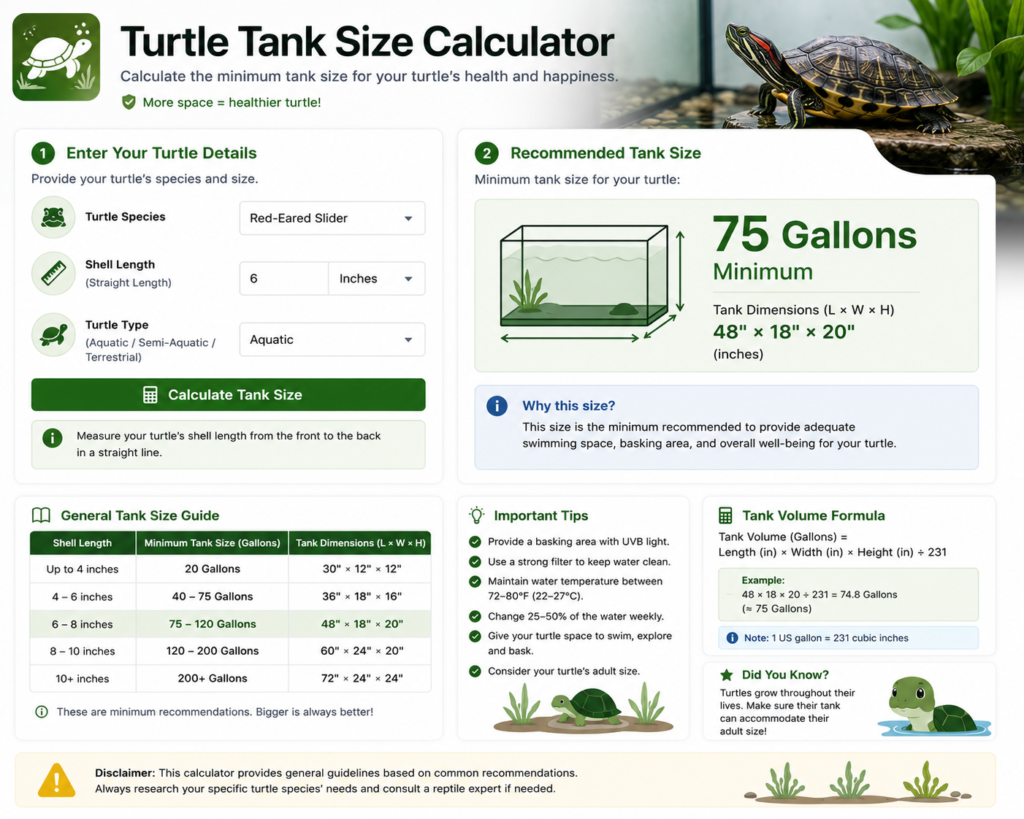
Turtle Tank Size Calculator
A Turtle Tank Size Calculator helps turtle owners determine the appropriate aquarium or enclosure size based on the turtle’s shell length, species, and the number of turtles being housed. Providing adequate living space is essential for maintaining a turtle’s health, encouraging natural behaviours, and creating a safe aquatic environment.
Whether caring for a Red-Eared Slider, Painted Turtle, Musk Turtle, Map Turtle, or another freshwater species, selecting the right tank size supports proper swimming, basking, feeding, and long-term well-being.
What Is a Turtle Tank Size Calculator?
A Turtle Tank Size Calculator estimates the minimum recommended aquarium size for pet turtles using basic information such as shell length and the number of turtles.
Instead of guessing, the calculator provides a practical recommendation that helps owners purchase or upgrade to an appropriately sized habitat.
A properly sized tank should offer enough room for:
- Swimming
- Diving
- Basking
- Feeding
- Exploring
- Resting
How Does the Turtle Tank Size Calculator Work?
The calculator uses common turtle care guidelines to estimate the ideal tank size.
Users typically enter:
- Turtle species (optional)
- Shell length
- Shell length unit (inches or centimetres)
- Number of turtles
The calculator then recommends the minimum aquarium volume needed to comfortably house the turtle.
Why Tank Size Is Important
A turtle spends most of its life inside its enclosure. An undersized tank can lead to poor water quality, stress, limited movement, and health problems.
Choosing the correct tank size helps:
- Improve water quality
- Encourage natural swimming behaviour
- Reduce stress
- Support healthy growth
- Simplify tank maintenance
- Promote overall health
General Turtle Tank Size Guide
The following recommendations serve as a general guideline.
| Turtle Shell Length | Recommended Tank Size |
|---|---|
| Up to 4 inches | 40 gallons |
| 4–6 inches | 55 gallons |
| 6–8 inches | 75 gallons |
| 8–10 inches | 100 gallons |
| Over 10 inches | 125+ gallons |
Larger tanks are always recommended whenever possible.
Factors That Affect Tank Size
Several factors influence the ideal enclosure size.
Turtle Species
Different species vary in adult size and swimming activity.
Shell Length
Longer shells require larger tanks with more swimming space.
Number of Turtles
Housing multiple turtles requires significantly more water volume and basking space.
Aquatic vs Semi-Aquatic Species
Highly aquatic turtles generally need larger swimming areas than species that spend more time on land.
Growth
Young turtles grow quickly, so choosing a larger tank helps avoid frequent upgrades.
What Should a Turtle Tank Include?
A suitable turtle habitat should contain more than just water.
Essential components include:
- Basking platform
- UVB lighting
- Heat lamp
- Water filter
- Water heater (if required)
- Thermometer
- Hiding areas
- Aquatic decorations
- Safe substrate (optional)
Proper filtration is especially important because turtles produce more waste than most aquarium fish.
Benefits of Using a Turtle Tank Size Calculator
A Turtle Tank Size Calculator offers several advantages.
- Helps choose the correct aquarium
- Prevents overcrowding
- Improves water quality
- Supports healthy turtle growth
- Encourages natural behaviours
- Makes habitat planning easier
- Suitable for beginners and experienced owners
Common Mistakes to Avoid
Many turtle owners accidentally purchase tanks that are too small.
Avoid these common mistakes:
- Choosing a tank based on the turtle’s current size only
- Ignoring adult growth
- Providing insufficient swimming depth
- Using weak filtration
- Housing incompatible turtles together
- Forgetting adequate basking space
Planning for the turtle’s adult size saves money and provides a healthier environment.
Tips for Maintaining a Healthy Turtle Habitat
To create a comfortable home for your turtle:
- Choose the largest tank your space allows.
- Install a high-quality filtration system.
- Maintain clean water through regular water changes.
- Provide a dry basking area with UVB lighting.
- Monitor water temperature regularly.
- Feed a balanced diet.
- Clean decorations and equipment routinely.
- Observe your turtle for changes in behaviour or appetite.
Frequently Asked Questions
How large should a turtle tank be?
The ideal tank size depends on the turtle’s shell length and species. Larger tanks generally provide a healthier environment and allow more natural movement.
Can a baby turtle live in a small tank?
A hatchling can temporarily live in a smaller enclosure, but owners should prepare to upgrade as the turtle grows.
Is filtration necessary?
Yes. Turtles generate considerable waste, making a powerful filtration system essential for maintaining water quality.
Can multiple turtles share one tank?
Yes, provided the enclosure is large enough and the turtles are compatible. Additional basking areas and swimming space are usually required.
Does tank size affect turtle health?
Absolutely. Adequate space helps reduce stress, encourages exercise, improves water quality, and supports long-term health.
Other Useful Calculators
Explore more biology and pet care calculators on Omni Calculator Store:
- Hamster Age Calculator
https://omnicalculator.store/hamster-age-calculator/ - Dog Water Intake Calculator
https://omnicalculator.store/home/biology/dog-water-intake-calculator/ - Cat Chocolate Toxicity Calculator
https://omnicalculator.store/home/biology/cat-chocolate-toxicity-calculator/ - Sheep Gestation Calculator
https://omnicalculator.store/home/biology/sheep-gestation-calculator/ - Horse Gestation Calculator
https://omnicalculator.store/home/biology/horse-gestation-calculator/
Conclusion
A Turtle Tank Size Calculator makes it easy to determine the appropriate aquarium size for pet turtles based on their shell length, species, and housing requirements. Providing a spacious enclosure with clean water, proper filtration, UVB lighting, and a comfortable basking area helps turtles thrive throughout their lives. Using the calculator ensures owners can create a healthy habitat that supports natural behaviour and long-term well-being.