Cephalexin For Dogs Dosage Calculator

Ahmad zee
Table of Contents
Toggle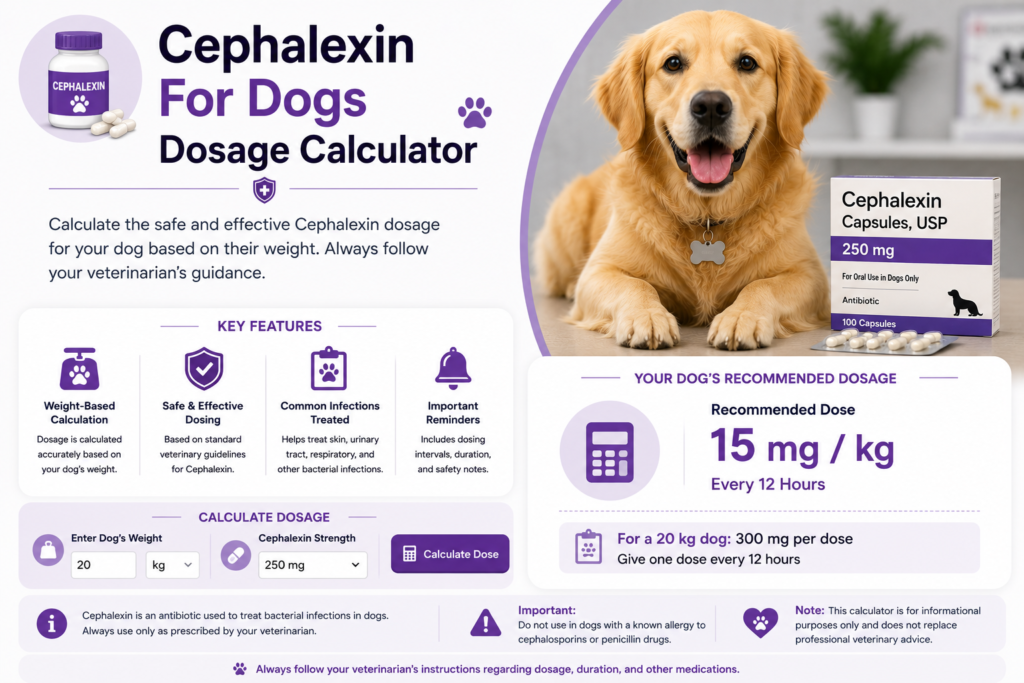
Cephalexin For Dogs Dosage Calculator: The Complete Guide for Pet Owners
When a dog is dealing with a bacterial infection, a veterinarian will often prescribe cephalexin — one of the most widely used antibiotics in veterinary medicine. But figuring out the correct dose isn’t always straightforward, especially when it depends on the dog’s exact weight, the severity of the infection, and the dosing schedule. That’s exactly where a cephalexin for dogs dosage calculator comes in. This handy tool takes the complexity out of antibiotic dosing and helps dog owners feel confident they’re giving their pet exactly the right amount, at the right time.
This guide covers everything dog owners need to know — from what cephalexin is and how it works, to how a dosage calculator helps, what factors affect the dose, and what to watch for during treatment.
What Is Cephalexin?
Cephalexin is a first-generation cephalosporin antibiotic. It belongs to a class of drugs related to penicillin and works by disrupting the formation of bacterial cell walls, ultimately destroying the bacteria causing infection. Because the drug interferes with bacterial reproduction and survival at the cellular level, it is highly effective against a broad range of gram-positive and some gram-negative bacterial strains.
In veterinary medicine, cephalexin is available under several brand names, including Keflex and Rilexine, and is one of the most commonly prescribed antibiotics for dogs. It is typically available in tablet, capsule, and liquid suspension form, making it relatively easy to administer even to dogs that resist taking pills.
One important thing to note is that while cephalexin is sometimes used in cats as well — and there is a separate Cephalexin For Cats Calculator to assist cat owners — the dosing guidelines differ between species, so it’s essential to use species-specific tools and veterinary guidance at all times.
What Conditions Does Cephalexin Treat in Dogs?
Cephalexin is prescribed for a wide variety of bacterial infections in dogs. Veterinarians turn to it regularly because of its broad-spectrum effectiveness and generally good tolerability. Some of the most common conditions it is used to treat include:
Skin Infections (Pyoderma)
Bacterial skin infections, known as pyoderma, are among the most frequent reasons a dog is prescribed cephalexin. These infections can range from superficial (affecting only the surface layers of skin) to deep (penetrating into deeper tissue), and cephalexin is effective for both types. Dogs with allergies, wounds, or compromised immune systems are especially prone to pyoderma.
Urinary Tract Infections (UTIs)
Urinary tract infections in dogs can cause frequent urination, straining, blood in the urine, and general discomfort. Cephalexin is often prescribed when the bacteria responsible are susceptible to cephalosporins, making it an effective choice for uncomplicated UTIs.
Respiratory Infections
Some bacterial respiratory infections in dogs respond well to cephalexin. While viral respiratory illnesses do not respond to antibiotics, secondary bacterial infections that develop alongside or after viral illness can be effectively managed with cephalexin therapy.
Bone and Joint Infections
Deep infections affecting the bones or joints require aggressive antibiotic treatment, and cephalexin is sometimes included as part of a treatment protocol for these more serious conditions. Treatment durations for bone and joint infections are typically longer than for superficial infections.
Wound Infections
Dogs that sustain bite wounds, lacerations, or surgical incisions that become infected may be prescribed cephalexin to control bacterial growth and support healing. The antibiotic helps prevent the spread of infection and reduces the risk of more serious complications.
Ear Infections (Otitis)
While ear infections in dogs often have multiple causes — including yeast, bacteria, or a combination of both — cephalexin is sometimes used when a bacterial component is identified or suspected.
What Is a Cephalexin For Dogs Dosage Calculator?
A cephalexin for dogs dosage calculator is an online tool that helps dog owners and caregivers calculate the appropriate dose of cephalexin based on the dog’s body weight. Since cephalexin dosing in dogs is weight-dependent, the calculator takes the guesswork out of the equation by applying the standard veterinary dosing formula automatically.
Rather than doing the math manually — which can easily lead to errors, especially when dealing with milligrams per kilogram conversions — a dosage calculator produces a clear, reliable result within seconds. Many calculators also factor in the dosing frequency and the form of medication being administered, making it even easier to understand the full treatment plan at a glance.
Using a cephalexin dosage calculator does not replace a veterinarian’s prescription or professional advice. Instead, it serves as a helpful reference tool that helps owners double-check instructions, understand dosing logic, and stay organized during treatment. Because dosing is directly tied to body weight, having an accurate weight measurement is essential — and tools like the Dog BMI Calculator can help owners track their dog’s weight and body condition on an ongoing basis.
Standard Cephalexin Dosage for Dogs
Veterinarians typically prescribe cephalexin at a dose ranging from 10 to 30 mg per kilogram of body weight, administered every 8 to 12 hours depending on the nature and severity of the infection. For most routine skin and urinary tract infections, a dose of approximately 22 mg/kg given twice daily (every 12 hours) is a commonly used guideline.
Here is a general breakdown of how dosing typically scales with body weight:
| Dog’s Weight | Low Dose (10 mg/kg) | Standard Dose (22 mg/kg) | High Dose (30 mg/kg) |
|---|---|---|---|
| 5 kg (11 lbs) | 50 mg | 110 mg | 150 mg |
| 10 kg (22 lbs) | 100 mg | 220 mg | 300 mg |
| 15 kg (33 lbs) | 150 mg | 330 mg | 450 mg |
| 20 kg (44 lbs) | 200 mg | 440 mg | 600 mg |
| 30 kg (66 lbs) | 300 mg | 660 mg | 900 mg |
| 40 kg (88 lbs) | 400 mg | 880 mg | 1,200 mg |
These figures are illustrative and should not be used as a substitute for a veterinarian’s prescription. The actual dose prescribed for any individual dog will depend on the specific infection, the dog’s overall health, and other clinical factors that only a veterinarian can assess.
How to Use a Cephalexin For Dogs Dosage Calculator
Using a cephalexin dosage calculator is designed to be straightforward, even for users without a medical background. Here’s what the process typically looks like:
Step 1 — Enter the Dog’s Weight The first input required is the dog’s current body weight. This should be as accurate as possible, since even small differences in weight can affect the calculated dose. Most calculators allow entry in either kilograms or pounds and convert automatically.
Step 2 — Select the Dosing Rate Some calculators allow the user to select or enter the prescribed dosing rate in mg/kg. If a veterinarian has specified a particular dosing rate, this is the place to enter it. If not, standard rates are often pre-filled as defaults.
Step 3 — Choose the Dosing Frequency The calculator may also ask how frequently the medication is to be given — for example, every 8 hours (three times daily) or every 12 hours (twice daily). This helps the calculator confirm the total daily dose and present it clearly.
Step 4 — Review the Output The calculator then presents the recommended dose per administration. Some tools also display the total daily dose and suggest the appropriate tablet or capsule strength to use, making it easier to match the dose to available medication forms.
Factors That Influence Cephalexin Dosage in Dogs
No two dogs are exactly the same, and several factors can influence how much cephalexin a dog needs and how it responds to treatment. A veterinarian takes all of these into account when writing a prescription.
Body Weight
Weight is the primary variable in calculating cephalexin dose. Because the drug is dosed on a milligrams-per-kilogram basis, heavier dogs receive larger total doses while smaller dogs receive smaller ones. This is why having an accurate, current weight measurement is so important. Weight can change over time, particularly in puppies, recovering dogs, or dogs managing chronic conditions.
Type and Severity of Infection
A superficial skin infection typically requires a lower dose over a shorter period, while a deep tissue infection or bone infection may call for a higher dose sustained over several weeks. The veterinarian’s assessment of the infection type directly shapes the dosage and treatment duration they prescribe.
Dog’s Age
Puppies and senior dogs may metabolize medications differently than healthy adult dogs. Puppies have immature organ systems, while older dogs may have reduced kidney or liver function that slows drug processing. In both cases, the veterinarian may adjust the dose or frequency to account for these differences.
Kidney Function
Cephalexin is primarily excreted through the kidneys. Dogs with reduced kidney function may not clear the drug as efficiently, which can lead to accumulation in the body. In dogs with known kidney disease, a veterinarian may lower the dose or extend the dosing interval to avoid toxicity.
Concurrent Medications
Some medications interact with cephalexin. Dogs on certain drugs may experience altered absorption or effectiveness of the antibiotic. A veterinarian should always be informed of any other medications or supplements the dog is currently receiving before cephalexin is prescribed.
Bacterial Culture and Sensitivity Results
In complex or recurrent infections, veterinarians may order a culture and sensitivity test to identify the exact bacteria involved and confirm which antibiotics are effective against them. This results in a more precisely tailored prescription than general empirical treatment.
How Long Does Cephalexin Treatment Last?
The duration of cephalexin treatment varies depending on the condition being treated:
- Superficial skin infections: 3 to 4 weeks is a common course length, though some cases resolve sooner.
- Deep skin infections (deep pyoderma): These typically require longer treatment — often 6 to 8 weeks or more — to fully resolve.
- Urinary tract infections: A course of 7 to 14 days is common for uncomplicated UTIs.
- Respiratory infections: Treatment duration varies but typically falls in the 10 to 21 day range.
- Bone and joint infections: These may require months of antibiotic therapy, often combined with surgical intervention.
One of the most important aspects of antibiotic therapy is completing the full prescribed course, even if the dog appears to have recovered before the medication runs out. Stopping treatment early can leave residual bacteria alive in the body, increasing the risk of recurrence and antibiotic resistance.
How to Give Cephalexin to a Dog
Cephalexin is generally available in tablets, capsules, and oral liquid suspension. Here are some practical tips for ensuring successful administration:
With Food vs. Without Food
Cephalexin can be given with or without food. However, giving it with a meal can significantly reduce the likelihood of stomach upset, which is a fairly common side effect. If a dog vomits shortly after receiving its dose on an empty stomach, switching to food-paired administration often resolves the problem.
Hiding the Medication
Many dogs resist taking pills. A small amount of soft food, peanut butter (without xylitol), cream cheese, or a commercially made pill pocket can be used to disguise tablets or capsules. Crushing tablets and mixing them into soft food is also an option, though it’s worth confirming with the veterinarian that the specific formulation can be crushed without affecting its performance.
Liquid Suspension
For small dogs or puppies that struggle with solid forms, a liquid suspension may be preferable. Liquid cephalexin needs to be refrigerated and should be shaken well before each dose. Accurate measurement is critical — a proper oral dosing syringe is much more reliable than a household teaspoon.
Maintaining the Schedule
Consistent timing is important for keeping antibiotic levels stable in the bloodstream. Setting phone reminders or alarms can help owners stay on track, especially for three-times-daily dosing schedules. Missing doses or dosing inconsistently may reduce the effectiveness of treatment.
Possible Side Effects of Cephalexin in Dogs
Cephalexin is generally considered safe and well-tolerated in dogs, but like all medications, it carries the potential for side effects. Knowing what to watch for helps owners respond quickly if a problem develops.
Common Side Effects
- Gastrointestinal upset (nausea, vomiting, diarrhea, or reduced appetite) is the most commonly reported side effect. These symptoms are often mild and can frequently be managed by administering the medication with food.
- Drooling or excessive licking may occur in some dogs.
- Lethargy or mild behavioral changes have been reported in a small number of cases.
Less Common but Serious Side Effects
- Allergic reactions: Dogs with a sensitivity or allergy to penicillin-type antibiotics may also react to cephalosporins due to the structural similarity between these drug classes. Signs of an allergic reaction can include facial swelling, hives, difficulty breathing, sudden collapse, or extreme agitation. This is a medical emergency and requires immediate veterinary attention.
- Skin reactions: Some dogs develop skin rashes or irritation while taking cephalexin.
- Changes in urination or thirst: Since the drug is processed through the kidneys, any unusual changes in a dog’s water consumption or urination frequency should be reported to a veterinarian. Tracking normal daily water intake can be supported by using a Dog Water Intake Calculator, which helps owners establish a baseline and notice meaningful changes.
Signs That Warrant Immediate Veterinary Contact
Dog owners should contact their veterinarian right away if the dog experiences:
- Swelling of the face, muzzle, or throat
- Sudden collapse or weakness
- Difficulty breathing or rapid breathing
- Severe or bloody diarrhea
- Seizures
- Marked changes in behavior, consciousness, or responsiveness
What Happens If a Dose Is Missed?
If a scheduled dose of cephalexin is missed, the general guidance is to administer the missed dose as soon as it is remembered — unless it is nearly time for the next scheduled dose. In that case, the missed dose should be skipped entirely and the regular schedule resumed from the next dose. Doubling up on doses to make up for a missed one is not recommended and can increase the risk of side effects.
What to Do in Case of Overdose
If a dog receives significantly more cephalexin than prescribed — whether accidentally or due to a dosing error — owners should contact a veterinarian or animal poison control immediately. Signs of overdose may include severe vomiting, seizures, extreme lethargy, or collapse. Prompt professional attention is critical in these situations.
This is precisely why using a reliable cephalexin for dogs dosage calculator before beginning treatment is so valuable. It helps eliminate dosing errors before they happen. Similarly, for dogs on other medications, dedicated tools like the Benadryl Dosage Calculator for Dogs help owners accurately calculate doses for other common canine medications, reducing the overall risk of medication-related errors at home.
Cephalexin vs. Other Canine Antibiotics
Cephalexin is not the only antibiotic used in dogs, and understanding how it compares to alternatives helps illustrate when and why a veterinarian might choose it.
Cephalexin vs. Amoxicillin
Both cephalexin and amoxicillin are beta-lactam antibiotics with similar mechanisms of action. However, cephalexin tends to be more resistant to certain bacterial enzymes (beta-lactamases), making it more effective against some bacteria that have developed resistance to amoxicillin. Cephalexin is often the preferred choice for stubborn or recurrent skin infections.
Cephalexin vs. Clindamycin
Clindamycin is another antibiotic commonly used for skin and soft tissue infections in dogs. While both are effective against certain bacteria, clindamycin has a more limited spectrum and is often reserved for specific types of infections where it offers a particular advantage.
Cephalexin vs. Enrofloxacin (Baytril)
Enrofloxacin belongs to the fluoroquinolone class of antibiotics and is typically reserved for more serious or resistant infections. It has a broader spectrum than cephalexin and is generally considered a second-line option when first-generation antibiotics have failed or are not appropriate. Due to concerns about antibiotic resistance, it is used more selectively.
Can Cephalexin Be Used Long-Term in Dogs?
In some chronic conditions — particularly recurrent deep pyoderma or other persistent bacterial infections — veterinarians may prescribe extended courses of cephalexin lasting many weeks or even months. While the drug is generally safe for longer use, prolonged treatment requires regular monitoring to check for side effects and assess whether the infection is responding appropriately.
Dogs on long-term antibiotic therapy should receive periodic veterinary check-ins, including blood work to monitor kidney and liver function, and in some cases, repeat culture and sensitivity testing to ensure the antibiotic remains effective against the bacteria present.
Storing Cephalexin Properly
Proper storage helps ensure the medication remains potent throughout the treatment course.
- Tablets and capsules should be stored at room temperature, away from moisture, heat, and direct sunlight.
- Liquid suspension must be refrigerated and should be discarded after 14 days or at the expiration date on the label, whichever comes first.
- Medication should always be kept out of reach of children and other pets.
- Unused or expired cephalexin should be disposed of properly — many pharmacies offer medication take-back programs.
Tips for Supporting Recovery During Antibiotic Treatment
Beyond giving the correct dose on schedule, there are several things dog owners can do to support their pet’s recovery during a course of cephalexin:
Keep the Dog Hydrated
Adequate hydration supports kidney function and helps the body process and excrete the antibiotic efficiently. Encouraging water intake and monitoring how much the dog drinks each day is a good habit during any antibiotic course. The Dog Water Intake Calculator can help owners estimate how much water their dog should be consuming based on its weight and activity level, making it easier to spot signs of dehydration early.
Follow Up with the Veterinarian
A follow-up appointment at the end of the treatment course — or sooner if symptoms worsen — is important to confirm the infection has resolved. Some infections may require a longer course or a change in antibiotic if they don’t respond as expected.
Support Gut Health
Antibiotics can sometimes disrupt the natural balance of bacteria in the gut, leading to loose stools or digestive discomfort. A veterinarian may recommend a canine-appropriate probiotic to help maintain gut health during and after antibiotic treatment.
Keep Wounds Clean
For dogs being treated for wound infections, keeping the affected area clean and dry as directed by the veterinarian supports faster healing. Following post-care instructions carefully helps prevent reinfection and reduces the risk of antibiotic resistance.
Understanding Antibiotic Resistance in Dogs
Antibiotic resistance is a growing concern in both human and veterinary medicine. When bacteria are exposed to antibiotics repeatedly — especially at incorrect doses or for incomplete treatment courses — they can develop mechanisms to survive drug exposure. Over time, this creates strains of bacteria that no longer respond to standard antibiotic treatment.
Dog owners play an important role in preventing antibiotic resistance by:
- Always completing the full prescribed course of antibiotics
- Never giving antibiotics without a veterinary prescription
- Avoiding the use of leftover antibiotics from a previous prescription for a new illness without consulting a vet
- Not sharing antibiotics between pets without specific veterinary guidance for each animal
Using a cephalexin for dogs dosage calculator responsibly — as a complement to veterinary care rather than a substitute — is part of this broader commitment to responsible antibiotic use.
Frequently Asked Questions
Is cephalexin safe for all dogs?
Cephalexin is considered safe for most dogs when used as directed. Dogs with a known allergy to penicillin or other cephalosporins, or those with significant kidney disease, may need special consideration. A veterinarian can assess whether cephalexin is appropriate for any individual dog.
Can cephalexin be given to pregnant or nursing dogs?
Cephalexin is generally considered safe during pregnancy and lactation in dogs, but this should always be discussed with a veterinarian before starting treatment, as individual circumstances vary.
How quickly does cephalexin start working?
Many dog owners notice improvement in their dog’s condition within 48 to 72 hours of starting cephalexin. However, visible improvement doesn’t mean the infection is fully resolved — completing the entire prescribed course is essential.
What should be done if the dog reacts badly to cephalexin?
If a dog shows signs of an allergic reaction or severe side effects, treatment should be stopped immediately and a veterinarian contacted right away. Mild gastrointestinal upset can sometimes be managed by giving the medication with food, but any serious reactions require professional evaluation.
Can a dosage calculator replace a veterinarian’s prescription?
A cephalexin dosage calculator is a helpful reference and verification tool, not a replacement for professional veterinary advice. The correct dose, treatment duration, and decision to prescribe cephalexin at all should always come from a licensed veterinarian.
How is cephalexin dosage different for dogs vs. cats?
Dogs and cats have different metabolic profiles, and cephalexin dosing differs accordingly. Dog owners should always use tools and guidelines specific to dogs. Those with cats can refer to the dedicated Cephalexin For Cats Calculator for appropriate feline dosing guidance.
The Role of a Cephalexin For Dogs Dosage Calculator in Responsible Pet Care
The value of a cephalexin for dogs dosage calculator goes beyond simple arithmetic. It represents a shift toward more informed, engaged pet ownership. When dog owners understand the dosing logic behind their pet’s prescription — when they can see that the dose is based on body weight, adjusted for the type of infection, and timed to maintain stable drug levels — they are more likely to administer the medication correctly and consistently.
This kind of informed ownership is especially important in multi-pet households, where the risk of accidental mix-ups or dose confusion is higher. Knowing exactly how much each dog needs, and using dedicated tools for each species, keeps every animal safe.
For a broader look at the tools available to support dog health — from tracking weight and nutrition to understanding life stages — the Dog Life Expectancy Calculator and the full suite of dog health tools available in the biology calculator section are worth exploring. These resources work together to give dog owners a more complete picture of their pet’s health across every stage of life.
Conclusion
Cephalexin is a trusted, effective antibiotic that plays an important role in treating bacterial infections in dogs. Used correctly — at the right dose, on the right schedule, and for the full prescribed course — it can resolve a wide range of conditions and significantly improve a dog’s quality of life.
A cephalexin for dogs dosage calculator makes accurate dosing accessible to every dog owner, removing the uncertainty that often accompanies at-home medication management. Combined with regular veterinary care, a solid understanding of the drug’s uses and side effects, and the supportive tools available through dedicated pet health platforms, dog owners are better equipped than ever to give their dogs the care they deserve.
Always remember: the calculator is a tool, and the veterinarian is the guide. Together, they give every dog the best possible chance at a healthy, full recovery.
For more dog health calculators and pet care resources, explore the full biology calculator collection at OmniCalculator Store.