Dog Chocolate Toxicity Calculator

Ahmad zee
Table of Contents
Toggle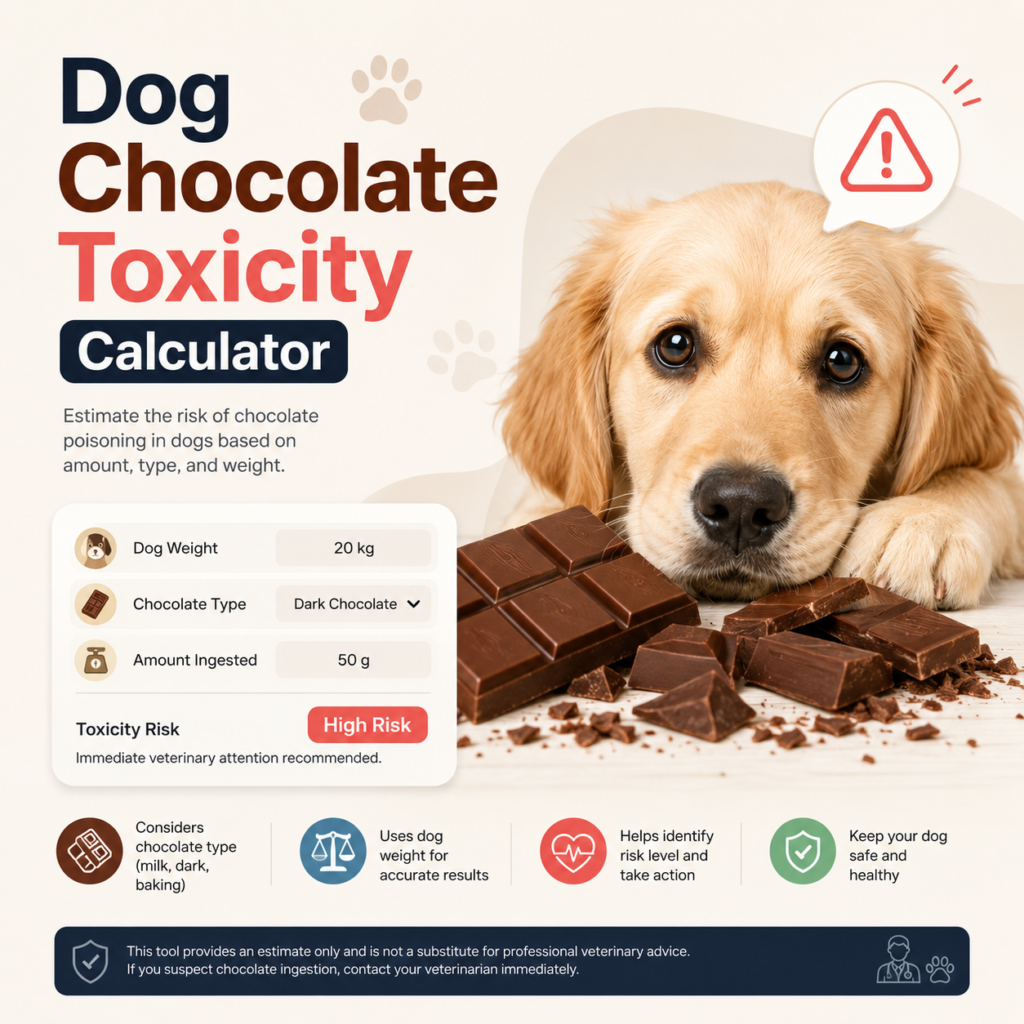
Dog Chocolate Toxicity Calculator: What Every Dog Owner Needs to Know
Chocolate is a beloved treat for humans, but for dogs, it can be genuinely dangerous — and in serious cases, even life-threatening. When a dog gets into a chocolate bar, a box of truffles, or a batch of baking chocolate, the clock starts ticking. That’s exactly why a dog chocolate toxicity calculator exists: to help pet owners quickly assess how dangerous the situation is based on their dog’s weight and the type and amount of chocolate consumed.
This guide covers everything worth knowing about chocolate toxicity in dogs — from the science behind why chocolate is harmful, to how the calculator works, to what steps should be taken immediately after accidental ingestion.
Why Is Chocolate Toxic to Dogs?
Before diving into the calculator itself, it helps to understand why chocolate poses such a serious risk to dogs. The culprit is a compound called theobromine, a naturally occurring stimulant found in cacao. Humans metabolize theobromine quickly and efficiently, but dogs process it far more slowly — allowing it to build up to toxic levels in the bloodstream.
Chocolate also contains caffeine, which compounds the effect. Together, these two substances act on a dog’s central nervous system and cardiovascular system, triggering symptoms that range from mild gastrointestinal upset to severe neurological and cardiac distress.
The severity of the reaction depends on three key variables:
- The type of chocolate consumed
- The amount consumed
- The dog’s body weight
These are the exact same variables that a dog chocolate toxicity calculator uses to assess risk — which is why this tool is such a valuable first response resource for dog owners.
Understanding Theobromine Levels Across Chocolate Types
Not all chocolate is created equal when it comes to theobromine content. The darker and more concentrated the chocolate, the more theobromine it contains — and the more dangerous it becomes for dogs.
White Chocolate
White chocolate contains virtually no theobromine because it’s made from cocoa butter rather than cocoa solids. While it’s unlikely to cause theobromine poisoning, its high fat and sugar content can still cause digestive upset and, in large quantities, pancreatitis.
Milk Chocolate
Milk chocolate is the most commonly consumed type of chocolate and contains a moderate level of theobromine — roughly 44 to 64 mg per ounce. While it takes a larger quantity to cause serious harm compared to darker varieties, it’s still capable of producing significant toxic effects, particularly in small dogs.
Dark Chocolate
Dark chocolate is significantly more dangerous. With theobromine concentrations ranging from 130 to 450 mg per ounce depending on the cocoa percentage, even a relatively small amount can cause serious problems for dogs of most sizes. A medium-sized dog consuming just a few squares of high-percentage dark chocolate may require immediate veterinary attention.
Baking Chocolate and Cocoa Powder
These are the most hazardous forms of chocolate for dogs. Unsweetened baking chocolate can contain 450 mg or more of theobromine per ounce, and cocoa powder is even more concentrated. A dog that has consumed baking chocolate should be treated as a medical emergency until a veterinarian confirms otherwise.
Cocoa Mulch
Often overlooked but equally important — cocoa mulch, used in some gardens, contains theobromine and has been known to poison dogs that ingest it while exploring outdoors. A dog chocolate toxicity calculator may not always account for cocoa mulch specifically, but the same underlying toxicity principles apply.
How Does a Dog Chocolate Toxicity Calculator Work?
A dog chocolate toxicity calculator is designed to be fast, accessible, and easy to use in a stressful moment. Most calculators require just three inputs:
- Dog’s weight — typically entered in pounds or kilograms
- Type of chocolate — selected from a dropdown menu covering white, milk, dark, baking chocolate, cocoa powder, and similar varieties
- Amount consumed — entered in ounces, grams, or pieces
Once these values are entered, the calculator applies established toxicity thresholds based on theobromine content per type and the dog’s body weight. The result is typically presented as one of several risk levels:
- Unlikely to cause harm — the amount consumed is below the threshold for clinical symptoms
- Mild toxicity — symptoms such as vomiting, diarrhea, and restlessness are possible
- Moderate toxicity — more significant symptoms including increased heart rate and muscle tremors may occur; veterinary contact is advised
- Severe toxicity — the situation is potentially life-threatening and requires immediate emergency veterinary care
Because toxic thresholds are calculated on a per-kilogram-of-body-weight basis, knowing a dog’s accurate weight is critical. Using the dog weight calculator to get a precise, up-to-date measurement before entering data into a toxicity calculator ensures the results are as accurate as possible.
Symptoms of Chocolate Toxicity in Dogs
Recognizing the signs of chocolate poisoning early gives dogs the best chance at a full recovery. Symptoms typically appear within six to twelve hours of ingestion, though this can vary depending on the type and amount consumed.
Mild Symptoms
- Vomiting
- Diarrhea
- Increased thirst
- Restlessness or agitation
- Excessive urination
Moderate Symptoms
- Elevated heart rate (tachycardia)
- Muscle tremors
- Panting or labored breathing
- Abdominal bloating
Severe Symptoms
- Seizures
- Cardiac arrhythmia
- Extreme muscle rigidity
- Collapse
- In worst-case scenarios — death
It’s important to note that symptoms can be delayed. Even if a dog appears fine immediately after ingestion, the situation may escalate within hours. This is one of the key reasons why using a toxicity calculator and contacting a veterinarian — even proactively — is always the right call.
Which Dogs Are Most at Risk?
While chocolate is toxic to all dogs, certain dogs face a higher risk of serious complications:
Small and Toy Breeds
Because toxicity thresholds are based on body weight, smaller dogs reach dangerous levels much faster than larger breeds. A single ounce of dark chocolate that causes mild symptoms in a Labrador Retriever could send a Chihuahua or Pomeranian into serious distress. For toy and small breeds, even seemingly trivial exposures should never be dismissed.
Puppies and Senior Dogs
Young puppies and older dogs tend to have less robust systems for processing toxins. Their metabolic rates, organ function, and immune resilience differ from healthy adult dogs, making them more susceptible to the effects of theobromine. The dog age calculator can help owners better contextualize where their dog sits in its life stage, which adds helpful context when assessing risk.
Dogs With Pre-Existing Health Conditions
Dogs with heart conditions, liver disease, kidney issues, or neurological disorders may be significantly more vulnerable to theobromine’s effects. These dogs should be evaluated by a veterinarian even if the calculated risk appears low.
What to Do If a Dog Eats Chocolate
Speed matters. Here’s a clear, step-by-step approach for any dog owner facing this situation:
Step 1: Stay Calm and Gather Information
Panic is understandable, but composure helps. Gather the following before doing anything else:
- The type of chocolate (check the packaging if possible)
- How much the dog consumed (estimate in grams or ounces)
- The dog’s current weight
- The approximate time of ingestion
Step 2: Use the Dog Chocolate Toxicity Calculator
Enter the gathered information into a dog chocolate toxicity calculator immediately. This gives a fast, evidence-based assessment of the risk level and helps determine the urgency of the situation.
Step 3: Call a Veterinarian or Animal Poison Control
Regardless of the calculator’s result, contacting a veterinarian is always recommended after chocolate ingestion. In the United States, the ASPCA Animal Poison Control Center operates a 24/7 hotline. Vets and poison control professionals can provide guidance on whether to induce vomiting, come in for examination, or monitor at home.
Step 4: Do Not Induce Vomiting Without Professional Guidance
Inducing vomiting can help if done within the right timeframe and correctly, but it can also cause harm if done improperly or if symptoms have already begun. This step should only be taken under professional instruction.
Step 5: Monitor Hydration
Vomiting and diarrhea associated with chocolate toxicity can lead to dehydration. The dog water intake calculator can serve as a helpful reference for understanding normal hydration needs, though a vet should guide fluid management during a toxicity event.
How Is Chocolate Toxicity Treated?
Treatment depends on the severity of the poisoning and how quickly the dog receives care. Common approaches include:
Induced vomiting — If the chocolate was ingested recently and the dog is not yet showing symptoms, a veterinarian may induce vomiting to remove the chocolate from the digestive system before more theobromine is absorbed.
Activated charcoal — This is sometimes administered to bind theobromine in the gut and reduce how much is absorbed into the bloodstream.
IV fluids — Intravenous fluids help flush theobromine from the system, maintain hydration, and support kidney function during the detoxification process.
Medication — Dogs showing cardiovascular symptoms may receive medications to stabilize heart rate and rhythm. Anticonvulsants may be used for dogs experiencing seizures.
Monitoring — Mild cases may require only observation, with owners watching for symptom progression over a twelve to twenty-four hour window.
Chocolate Toxicity vs. Other Food Toxicities in Dogs
Chocolate isn’t the only food that poses a toxic risk to dogs. Several other common household foods can be equally or more dangerous. It’s helpful for dog owners to be aware of the broader picture of canine food toxicity.
Onions and garlic, for example, contain compounds called thiosulphates that damage red blood cells and can lead to hemolytic anemia. Like theobromine, the toxic effect of onions is cumulative and dose-dependent — which is why a dog onion toxicity calculator is another tool dog owners should bookmark alongside the chocolate version.
Xylitol, found in sugar-free gum, some peanut butters, and many baked goods, is extremely toxic to dogs and can cause life-threatening drops in blood sugar and liver failure.
Grapes and raisins are also highly toxic to dogs, though the exact mechanism of toxicity isn’t yet fully understood. Even small amounts have caused kidney failure in some dogs.
Keeping a well-rounded awareness of these hazards — and knowing which tools to reach for in an emergency — is one of the most important aspects of responsible pet ownership.
Preventing Chocolate Ingestion: Practical Tips for Dog Owners
Prevention is always preferable to treatment. Here are some straightforward strategies to keep chocolate out of a dog’s reach:
Store chocolate securely. Chocolate should never be left on countertops, tables, or low shelves where dogs can reach it. Pantries, high cabinets, and latched containers are far safer storage options.
Educate household members. Children in particular may not realize the danger chocolate poses to dogs. Teaching them never to share chocolate with the family pet is an important safety habit.
Be extra cautious during holidays. Halloween, Christmas, Valentine’s Day, and Easter all bring larger quantities of chocolate into the home. These periods call for extra vigilance, as more chocolate means more opportunity for accidental ingestion.
Watch for dropped chocolate. During baking or snacking, pieces of chocolate can easily fall to the floor. Dogs are quick to snatch anything edible at nose level, so a watchful eye in the kitchen goes a long way.
Consider the food environment holistically. Diet safety extends beyond toxicity to overall nutritional balance. The dog food calculator helps owners understand what their dog should be eating — making it easier to establish healthy feeding habits that reduce the temptation to offer table scraps or human treats.
Final Thoughts
A dog chocolate toxicity calculator is one of the most genuinely useful tools available to dog owners — not because chocolate emergencies happen every day, but because when they do happen, every minute matters. Having instant access to a risk assessment tool, knowing what the symptoms look like, and understanding when to call a vet can make the difference between a stressful afternoon and a tragic outcome.
Responsible dog ownership means being prepared for the unexpected. Bookmarking a reliable dog chocolate toxicity calculator, pairing it with complementary health tools, and knowing the steps to take in an emergency puts any dog owner in a far stronger position to keep their pet safe.