Cost of Owning a Dog Calculator

Ahmad zee
Table of Contents
Toggle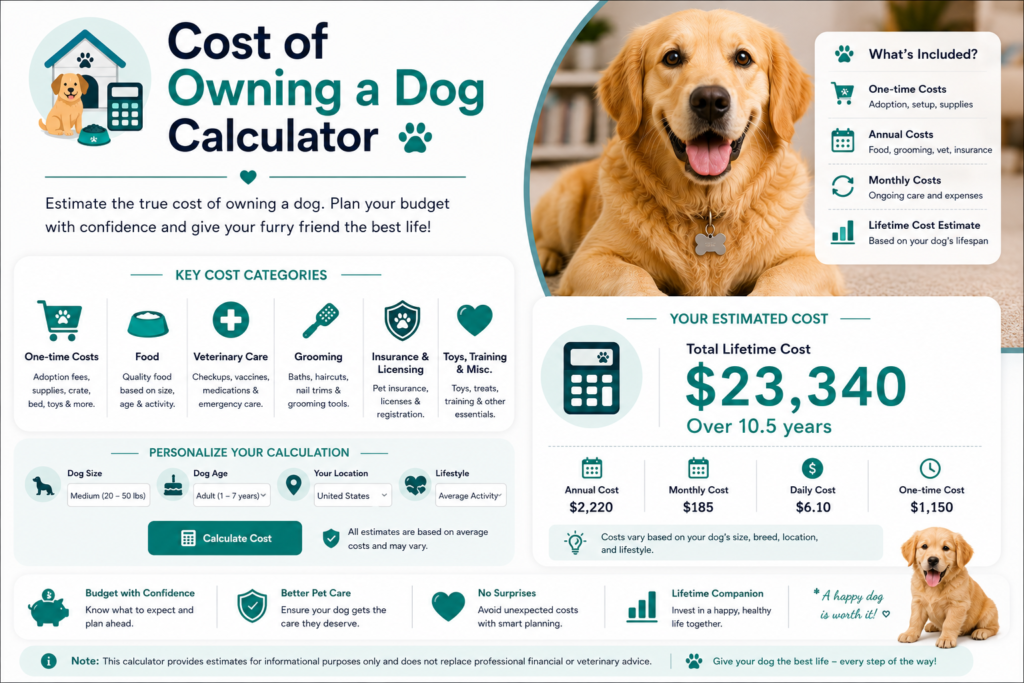
Cost of Owning a Dog Calculator: The Complete Financial Guide for Dog Owners
Bringing a dog into the family is one of life’s most rewarding decisions — but it also comes with a financial commitment that surprises many first-time pet owners. Beyond the initial excitement of choosing a breed and buying supplies, the day-to-day and year-to-year expenses of dog ownership add up to a significant sum over a dog’s lifetime. That’s exactly why a cost of owning a dog calculator has become such a valuable tool for prospective and current dog owners alike. It helps translate the abstract idea of “dogs are expensive” into real, concrete numbers tied to a specific dog’s breed, size, and life stage.
This guide breaks down every major cost category involved in dog ownership, explains how a cost calculator works, and provides practical strategies for managing expenses without compromising on the care dogs deserve.
What Is a Cost of Owning a Dog Calculator?
A cost of owning a dog calculator is an online tool that estimates the total financial investment involved in caring for a dog — typically broken down by first-year costs, annual recurring costs, and total lifetime costs. These calculators take into account variables such as breed, size, geographic location, and lifestyle choices to generate a realistic picture of what a dog owner can expect to spend.
The best dog ownership cost calculators go beyond basic food and vet bills. They factor in housing setup costs, grooming needs, training expenses, pet insurance, boarding, toys, dental care, and the kind of unexpected medical costs that every dog owner will face at some point. Some tools even allow users to toggle between different care choices — home grooming versus professional grooming, for example, or pet insurance versus paying out of pocket — to see how decisions affect the overall cost.
For families considering adding a dog, a cost calculator is an invaluable planning resource. For current dog owners, it provides a clear framework for reviewing spending, identifying potential savings, and budgeting more effectively for the future. The key insight these tools offer is this: the cost of owning a dog is not just what someone spends at the pet store on the first day — it’s a long-term financial relationship that can span ten to fifteen years or more.
Why Calculating the Cost of Dog Ownership Matters
Many people underestimate the true cost of owning a dog because they focus on obvious, visible expenses while overlooking subtler ones. A cost of owning a dog calculator addresses this blind spot by presenting a comprehensive, category-by-category breakdown of what responsible dog ownership actually involves financially.
Understanding the full cost picture matters for several important reasons:
Financial Preparedness
A dog that becomes ill, injured, or requires surgery can generate thousands of dollars in veterinary costs in a very short time. Owners who haven’t planned for these scenarios may face the heartbreaking situation of being financially unable to pursue necessary treatment. Using a cost calculator during the planning stage helps people build appropriate financial buffers and consider whether pet insurance is a worthwhile investment for their situation.
Choosing the Right Dog
Not all dogs cost the same to own. A giant breed like a Saint Bernard will have substantially higher food costs, larger dosages for medications, and potentially higher veterinary bills than a small breed like a Chihuahua. Some breeds require professional grooming every four to six weeks, while others need very little grooming at all. A cost calculator helps future owners compare the ongoing financial realities of different breeds and sizes before making a commitment.
Long-Term Financial Planning
The total lifetime cost of owning a dog can be substantial. Understanding how that cost breaks down annually — and over the full expected lifespan of the dog — allows families to make informed decisions about timing, budget allocation, and savings goals. Tools like the Dog Life Expectancy Calculator can complement financial planning by helping owners understand how many years of care costs they are planning for, which varies significantly by breed and size.
Avoiding Financial Stress
Unexpected expenses are a normal part of dog ownership. Owners who have thought through the likely costs in advance are far less likely to find themselves in financial crisis when a large veterinary bill arrives. Planning ahead transforms unexpected costs from crises into manageable challenges.
First-Year Costs of Owning a Dog
The first year of dog ownership is typically the most expensive. It combines one-time setup costs with the full range of recurring expenses, often concentrated into a short period of time.
Acquisition Cost
The cost of acquiring a dog varies enormously depending on the source. Adoption from a shelter or rescue organization typically costs between $50 and $500, often including initial vaccinations and spay/neuter surgery. Purchasing a puppy from a reputable breeder can range from $500 to several thousand dollars depending on the breed, lineage, and location. Some highly sought-after purebred dogs from championship lines can cost significantly more.
It is worth noting that the acquisition price is just the beginning. A lower acquisition cost from a shelter does not necessarily mean lower lifetime costs — and conversely, paying a premium price for a purebred dog does not guarantee lower veterinary bills.
Initial Veterinary Costs
First-year veterinary expenses for a new puppy or recently adopted adult dog typically include:
- Initial wellness examination — $50 to $150
- Vaccinations — Core vaccines and boosters for puppies can range from $75 to $200 in the first year
- Spaying or neutering — If not already done, this procedure typically costs between $200 and $800 depending on the dog’s size, sex, and the veterinary practice
- Microchipping — Usually $45 to $100, often done at the time of spaying or neutering
- Flea, tick, and heartworm prevention — $100 to $300 per year depending on the product and the dog’s weight
Initial Setup and Supplies
Getting the home ready for a new dog involves a range of one-time purchases:
- Crate or dog bed — $30 to $300 depending on size and quality
- Food and water bowls — $10 to $60
- Collar, harness, and leash — $25 to $100
- ID tag — $5 to $20
- Toys and enrichment items — $30 to $100 for an initial set
- Baby gates or containment equipment — $25 to $150 if needed
- Grooming supplies — $20 to $100 depending on breed needs
- Cleaning supplies — $20 to $50 (enzyme cleaners for accidents, odor control, etc.)
Training Costs
Investing in training early pays dividends throughout a dog’s life in terms of behavior, safety, and the owner-dog relationship. Group puppy classes typically cost $100 to $300 for a multi-week course. Private training sessions range from $75 to $200 per session. For dogs with significant behavioral challenges, board-and-train programs can cost $1,500 to $5,000 or more.
First-Year Food Costs
Food is one of the largest recurring expenses of dog ownership, and its cost varies significantly based on the dog’s size, the quality of food chosen, and whether the owner opts for commercial dry kibble, wet food, raw feeding, or a home-prepared diet.
Using tools like the Dog Food Calculator helps owners determine the right daily feeding amount for their dog’s weight, age, and activity level — which in turn makes it possible to estimate monthly and annual food costs more accurately. Overfeeding not only affects health but also inflates food bills unnecessarily.
Annual Recurring Costs of Dog Ownership
After the first year, dog ownership settles into a more predictable pattern of recurring expenses. Understanding these annual costs helps owners budget effectively year over year.
Food
Annual food costs depend heavily on the dog’s size and the quality of diet. General estimates by size category:
| Dog Size | Estimated Annual Food Cost |
|---|---|
| Extra Small (under 5 kg) | $200 – $500 |
| Small (5–10 kg) | $300 – $700 |
| Medium (10–25 kg) | $500 – $1,200 |
| Large (25–45 kg) | $800 – $1,800 |
| Giant (over 45 kg) | $1,200 – $2,500 |
Premium, grain-free, or specialty diets can push these figures significantly higher. Raw feeding diets can cost two to three times more than standard commercial kibble. Understanding how many calories a dog needs each day — using a resource like the Dog Calorie Calculator — helps owners purchase the right quantity of food without over-buying or underfeeding, keeping both the dog’s health and the grocery bill on track.
Routine Veterinary Care
Annual wellness visits, booster vaccinations, dental cleanings, and parasite prevention represent a consistent and non-negotiable expense of responsible dog ownership.
- Annual wellness exam — $50 to $250
- Annual booster vaccinations — $80 to $200
- Professional dental cleaning (recommended annually or biannually) — $300 to $800, depending on the dog’s size and level of dental disease present
- Flea, tick, and heartworm prevention — $100 to $300 annually
Total routine veterinary care for a healthy adult dog typically falls between $700 and $2,000 per year, not including unexpected illness or injury.
Grooming
Grooming costs depend almost entirely on the dog’s breed and coat type. Short-coated breeds such as Beagles and Boxers require minimal professional grooming — occasional baths and nail trims that might cost $30 to $80 per visit, perhaps two to four times per year. Double-coated and long-haired breeds such as Golden Retrievers, Poodles, Bichon Frisés, and Yorkshire Terriers require professional grooming every four to six weeks, at a cost of $60 to $120 per session — adding up to $720 to $1,500 or more per year.
At-home grooming supplies can reduce these costs for owners willing to invest time in brushing, bathing, and basic maintenance between professional appointments.
Pet Insurance
Pet insurance is an increasingly popular financial tool that helps owners manage the cost of unexpected veterinary care. Monthly premiums vary based on the dog’s breed, age, location, and the level of coverage chosen:
- Accident-only coverage — $10 to $30 per month
- Accident and illness coverage — $25 to $70 per month
- Comprehensive coverage (including wellness care) — $50 to $100+ per month
Over the course of a dog’s lifetime, pet insurance can save thousands of dollars in veterinary bills — particularly for breeds prone to expensive health conditions, or for owners who want peace of mind against large, unexpected expenses.
Boarding and Pet Sitting
Every dog owner will eventually need someone to care for their dog when they travel or work long hours. Options include:
- Professional boarding kennels — $25 to $85 per night depending on location and amenities
- In-home pet sitters — $20 to $50 per visit, or $60 to $120 per day for overnight stays
- Dog daycare — $20 to $45 per day for dogs that need daytime supervision or socialization
For those who use pet-sitting services regularly, the Pet Sitter Rates Calculator is a useful tool for understanding what fair rates look like in different regions and service types, helping dog owners budget appropriately for this recurring cost category.
Toys, Treats, and Enrichment
Dogs need mental and physical enrichment to stay healthy and happy. Annual spending on toys, chews, puzzle feeders, and treats typically ranges from $100 to $500 depending on the owner’s preferences and how destructive the dog is with its toys. Dogs that go through toys quickly — particularly strong chewers — can run up surprisingly high enrichment costs.
Dog Walking and Daycare
For working dog owners whose dogs spend long hours home alone, professional dog walking or daycare services are a meaningful quality-of-life and welfare investment. A daily dog walk might cost $15 to $30 per session. For five days a week, that adds up to $300 to $600 per month — a significant budget line that should be factored into the overall cost of owning a dog calculation.
Licensing and Registration
Most municipalities require dogs to be licensed annually. Licensing fees typically range from $10 to $50 per year and are generally lower for spayed and neutered dogs. Some cities impose higher fees for intact animals as an incentive for responsible pet ownership.
Hidden and Unexpected Costs of Dog Ownership
One of the most valuable functions of a cost of owning a dog calculator is surfacing the costs that many people overlook when planning for a new pet. These hidden and unexpected expenses are real and often significant.
Emergency Veterinary Care
Emergency veterinary visits are among the most financially impactful unexpected costs a dog owner can face. Common emergencies include:
- Ingestion of foreign objects or toxic substances
- Traumatic injuries such as broken bones or lacerations
- Sudden illness such as bloat (gastric dilatation-volvulus), which is life-threatening in large breeds
- Allergic reactions or anaphylaxis
- Urinary blockages or internal bleeding
Emergency veterinary care costs typically range from $500 to $5,000+ depending on the nature and severity of the emergency. Having an emergency fund or pet insurance in place before any crisis occurs is the most financially responsible approach.
Specialist Referrals
Some conditions require referral to a veterinary specialist — a cardiologist, orthopedic surgeon, oncologist, neurologist, or dermatologist. Specialist consultations typically cost $200 to $500, and subsequent procedures or treatments can add significantly to that total.
Medication for Chronic Conditions
Dogs that develop chronic health conditions such as arthritis, hypothyroidism, diabetes, epilepsy, or allergies may require ongoing medication that becomes a permanent line item in the monthly budget. These costs can range from $30 to several hundred dollars per month depending on the condition and the medications involved.
Home Repairs and Damage
Young dogs, anxious dogs, and highly active dogs can cause damage to flooring, furniture, carpets, walls, and gardens. While difficult to predict, home repair or replacement costs associated with dog ownership are a real financial consideration that a cost calculator should acknowledge.
Travel Adjustments
Travel becomes more complex and expensive with a dog. Owners who fly may face pet fees of $100 to $200 per flight for in-cabin pets, or significantly more for cargo travel. Hotels and vacation rentals that accept pets often charge pet deposits or nightly pet fees of $25 to $100. Some destinations are simply not dog-friendly, limiting travel options and potentially requiring boarding costs for every trip.
End-of-Life Care
As dogs age, end-of-life care costs can be significant. Palliative care, hospice services, and finally humane euthanasia are expenses that every dog owner will eventually face. Euthanasia services typically cost $50 to $300 at a veterinary clinic, or $150 to $500 for in-home services. Some owners also choose to invest in cremation or burial services.
Total Lifetime Cost of Owning a Dog
When all costs are combined across a dog’s full lifetime, the numbers are often striking. Estimates vary widely based on dog size, breed, health history, and lifestyle choices, but general lifetime cost ranges by size give a useful sense of the commitment involved:
| Dog Size | Estimated Lifetime Cost |
|---|---|
| Small breeds (12–16 year lifespan) | $15,000 – $35,000 |
| Medium breeds (11–14 year lifespan) | $18,000 – $40,000 |
| Large breeds (10–12 year lifespan) | $20,000 – $50,000 |
| Giant breeds (7–10 year lifespan) | $22,000 – $55,000 |
These figures illustrate an important and sometimes counterintuitive point: larger dogs, despite shorter lifespans, often cost more over their lifetime due to higher food costs, larger medication doses, and generally higher veterinary bills for size-related health conditions.
Because lifespan plays such a direct role in total cost, understanding a dog’s expected longevity is a valuable input for any financial plan. The Dog Life Expectancy Calculator can help owners estimate how many years of care they are planning for, allowing for a more accurate projection of total lifetime spending.
How to Use a Cost of Owning a Dog Calculator
A well-designed cost of owning a dog calculator guides users through a series of inputs and outputs that together paint a complete financial picture. Here is what the typical process looks like:
Step 1 — Enter Basic Dog Information
The calculator typically starts with the basics: breed or size category, age, and whether the dog is already owned or being considered for adoption. Some calculators also ask about geographic location, since costs vary significantly between urban and rural areas and between countries.
Step 2 — Customize Care Choices
Many calculators allow users to specify their intended approach to key cost categories — for example, whether they plan to use pet insurance, how often they anticipate professional grooming, whether they will use a dog walker or daycare, and what quality of food they intend to feed. These choices can dramatically affect the total cost estimate.
Step 3 — Review Category Breakdowns
The calculator presents costs broken down by category — food, veterinary care, grooming, training, boarding, supplies, and so on — so users can see exactly where their money will go. This level of detail is far more useful than a single lump-sum estimate.
Step 4 — Compare First-Year vs. Ongoing Costs
Good cost calculators distinguish between one-time first-year costs and the lower annual costs that follow, helping users understand the shape of their spending commitment over time.
Step 5 — Plan and Budget
With a clear cost estimate in hand, users can begin building a realistic pet budget — allocating a monthly amount that covers routine costs, setting aside an emergency fund, and deciding whether insurance makes financial sense for their specific situation.
Strategies for Managing Dog Ownership Costs
Understanding costs is the first step — managing them effectively is the second. Here are some practical, evidence-based strategies that help dog owners provide excellent care without unnecessary financial strain.
Invest in Preventive Health Care
Preventive care is almost always less expensive than treating illness or injury after the fact. Regular wellness check-ups, vaccinations, dental cleanings, and parasite prevention help catch problems early and avoid the kind of costly emergency situations that arise from neglected health. Maintaining a healthy weight is also one of the most powerful preventive health measures available — the Dog BMI Calculator helps owners monitor their dog’s body condition and catch problematic weight trends before they become expensive health problems.
Consider Pet Insurance Early
Pet insurance is significantly less expensive when purchased for a young, healthy dog. Pre-existing conditions are typically excluded from coverage, so purchasing insurance before any health issues develop provides the most comprehensive protection. Evaluating multiple providers and policy types helps owners find the best value for their specific circumstances.
Feed Appropriately, Not Excessively
Overfeeding is both a health risk and a financial one — it increases food costs while also raising the risk of obesity-related health conditions that carry their own expensive consequences. Understanding exactly how much food a dog of a particular size and age actually needs, and feeding that amount consistently, is one of the simplest ways to manage food costs while supporting the dog’s health.
Shop Smart for Supplies
Many dog supplies — particularly consumables like treats, toys, and grooming products — are available at significantly lower prices through online retailers, warehouse stores, and subscription services than at traditional pet stores. Building a relationship with a trusted online supplier and taking advantage of subscription discounts can meaningfully reduce annual supply costs.
Learn Basic Grooming Skills
For owners of breeds that require regular grooming, learning to perform basic maintenance tasks at home — brushing, bathing, ear cleaning, and even simple trims — can substantially reduce professional grooming costs. Even cutting the frequency of professional appointments from once a month to once every two months by doing at-home maintenance in between saves hundreds of dollars per year.
Build a Dedicated Emergency Fund
Setting aside a fixed monthly amount into a pet-specific emergency fund is one of the most financially responsible things a dog owner can do. Even $25 to $50 per month adds up to $300 to $600 per year — which, combined with prior savings, can make a meaningful difference when a large veterinary bill arrives. This fund is particularly valuable during the gap between when a dog develops a condition and when an insurance claim is processed.
Compare Veterinary Practices
Veterinary pricing is not uniform. Costs for the same services can vary significantly between practices, particularly in urban areas where there may be many options. Veterinary schools often offer quality care at reduced rates for routine procedures. Low-cost vaccination clinics are another option for keeping core prevention costs manageable for budget-conscious owners.
Cost Differences by Dog Size
Size is one of the most significant determinants of dog ownership cost, and understanding these differences before choosing a dog is particularly important. Here is a comparison of key cost categories by size:
Food Costs
A ten-kilogram dog eating a mid-range commercial kibble might consume around $400 worth of food per year. A forty-kilogram dog eating the same brand could easily spend $1,200 to $1,500 on food annually. For owners considering premium or raw diets, these figures scale even more dramatically with size.
Medication Costs
Most veterinary medications are dosed by body weight, which means larger dogs always pay more for the same drug. Flea and tick preventatives, heartworm medication, antibiotics, anti-inflammatory drugs, and anesthesia for surgical procedures all scale with the dog’s weight. A dose that costs $10 for a small dog might cost $30 to $50 for a large or giant breed.
Surgical and Veterinary Procedure Costs
Surgeries and many veterinary procedures are also priced according to the dog’s size — more anesthesia, longer procedure time, and more materials are required for larger animals. Spaying a large female dog typically costs two to three times more than the same procedure in a small breed female.
Boarding and Grooming
Boarding kennels and grooming salons typically charge more for larger dogs due to the additional space, materials, and time they require. A large dog’s grooming appointment might cost 30 to 50 percent more than the same service for a small breed.
Cost of Owning Different Types of Dogs
Purebred Dogs
Purebred dogs often come with higher acquisition costs and, in some cases, elevated lifetime health costs due to breed-specific genetic conditions. Certain breeds are notably prone to expensive conditions — Bulldogs and respiratory issues, Dachshunds and spinal disease, German Shepherds and hip dysplasia, Golden Retrievers and cancer. Pet insurance is especially worth considering for breeds with known health predispositions.
Mixed-Breed Dogs
Mixed-breed dogs are frequently acquired at lower cost through shelters or rescue organizations and may benefit from reduced risk of certain inherited conditions due to greater genetic diversity. However, they are not immune to health problems, and the unpredictability of their eventual size and health trajectory can make cost estimation slightly less precise.
Senior Dogs
Adopting an older dog often means lower acquisition costs and skipping the expensive puppy phase — but it typically also means higher veterinary costs sooner, as age-related health conditions begin to emerge. Senior dog adopters should budget generously for veterinary care and consider whether pet insurance is available and appropriate for the dog’s age and current health status.
Working and High-Energy Breeds
Breeds with high exercise and enrichment needs — such as Border Collies, Siberian Huskies, Belgian Malinois, and Jack Russell Terriers — may require more investment in professional training, dog walking, daycare, and enrichment products to meet their needs appropriately. Underestimating the time and financial investment required for high-energy breeds is a common source of unexpected cost for unprepared owners.
Frequently Asked Questions
How much does it cost to own a dog per year on average?
Annual costs of dog ownership typically range from $1,500 to $5,000 for a healthy adult dog, depending on size, breed, geographic location, and lifestyle choices. Higher-need breeds, dogs with health conditions, and those in high-cost urban areas can exceed $5,000 per year.
What is the biggest expense of owning a dog?
For most dog owners, food and veterinary care are the two largest expense categories. However, for breeds requiring frequent professional grooming, grooming costs can rival or exceed veterinary expenses. Unexpected emergency veterinary care is often the single largest one-time expense a dog owner faces.
Is it cheaper to own a small dog or a large dog?
Small dogs are generally less expensive to own on an ongoing basis due to lower food costs and lower medication costs. However, some small breeds are prone to expensive dental problems and other breed-specific conditions. Giant breeds tend to have the highest lifetime costs despite shorter lifespans.
Does pet insurance save money?
Pet insurance can save significant amounts of money in the event of serious illness or injury — often thousands of dollars. Whether it saves money overall depends on the dog’s individual health history. On average, insurance tends to offer the best value for breeds prone to expensive conditions, for owners who would pursue aggressive medical treatment for their pets, and for those who want financial peace of mind.
Can the cost of owning a dog be reduced without compromising care?
Yes. Strategic approaches such as preventive health care, appropriate feeding, home grooming, building an emergency fund, and shopping smartly for supplies can all reduce costs meaningfully without reducing the quality of care a dog receives.
Conclusion
A cost of owning a dog calculator is one of the most practical and thoughtful tools available to anyone considering or currently navigating dog ownership. By making the full financial picture visible — from first-year setup costs to annual recurring expenses to total lifetime projections — it empowers dog owners to plan deliberately, budget effectively, and avoid the kind of financial surprises that too often lead to compromised care.
Dogs bring immeasurable joy, companionship, and meaning to people’s lives. The financial commitment they represent is significant — but for owners who go in with clear eyes and a solid plan, it is entirely manageable. Understanding what dog ownership costs is not a reason to hesitate; it is a foundation for doing it well.
The most important thing a cost calculator reveals is not a number — it’s a mindset. Responsible dog ownership is a long-term commitment, and planning for the financial side of that commitment is every bit as important as planning for the love and care side.
Explore the full suite of dog health and care tools, including nutrition, weight, medication, and lifespan calculators, in the complete biology calculator collection at OmniCalculator Store.