Cat Age Calculator

Ahmad zee
Table of Contents
Toggle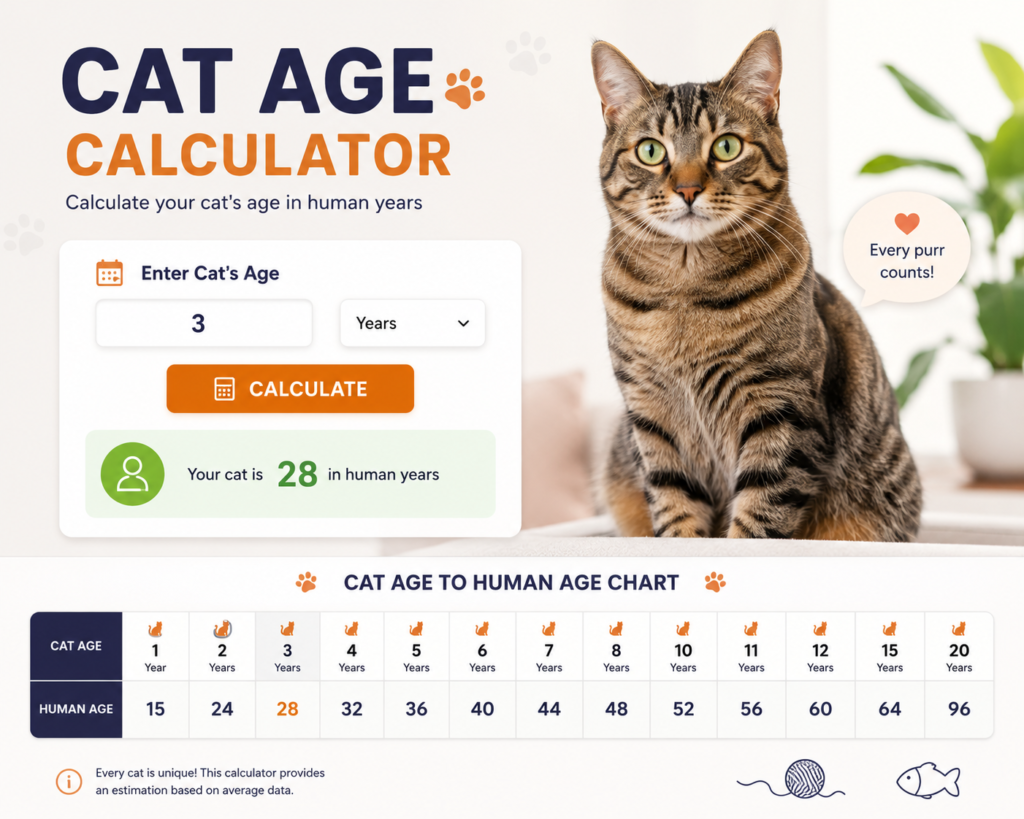
Cat Age Calculator: How Old Is Your Cat in Human Years?
One of the most common questions cat owners ask their veterinarian — or type into a search engine late at night — is some version of: “How old is my cat in human years?” It’s a deceptively simple question with a surprisingly nuanced answer. A cat age calculator translates a cat’s chronological age into its human equivalent, giving owners a far more meaningful picture of where their cat sits in its life journey and what that means for health, nutrition, and day-to-day care.
Whether someone has a playful six-month-old kitten, a settled five-year-old adult, or a distinguished fifteen-year-old senior, understanding feline age in human terms helps put behavioural changes, health milestones, and veterinary recommendations into practical, relatable context.
Why the “Multiply by Seven” Rule Doesn’t Work
Most people have heard the popular rule of thumb: multiply a cat’s age by seven to get its human equivalent. It’s simple, memorable — and largely inaccurate. The problem is that cats don’t age at a uniform rate throughout their lives. Like humans, cats age most rapidly in their earliest years and then slow down considerably as they enter adulthood.
A cat reaches the approximate human equivalent of fifteen years old by the end of its very first year of life. By the end of year two, a cat has reached roughly twenty-four in human terms. After that, each additional cat year equates to approximately four human years — a considerably slower rate than the multiply-by-seven formula suggests.
This non-linear ageing pattern means that a two-year-old cat is far more developmentally mature than the “fourteen” produced by the old formula would imply — and that a ten-year-old cat at approximately fifty-six in human terms is genuinely middle-aged, not elderly. A cat age calculator applies the correct non-linear conversion to produce a meaningful, accurate human-age equivalent.
The Feline Life Stages: A Framework for Understanding Cat Age
Veterinary organisations — including the American Association of Feline Practitioners (AAFP) and the International Society of Feline Medicine (ISFM) — have developed a standardised life stage framework for cats that goes beyond simple age conversion. Understanding these stages helps owners interpret cat age calculator results in the context of practical care decisions.
Kitten — Birth to Six Months
The kitten stage is one of the most rapid developmental periods in any mammal’s life. In just six months, a kitten grows from a helpless newborn to a sexually mature young cat. By six months, a kitten has reached the approximate human equivalent of ten years old — a child on the cusp of adolescence.
During this stage, kittens require:
- High-calorie, nutrient-dense kitten food to fuel rapid growth
- Core vaccinations and parasite prevention
- Socialisation with people, other animals, and varied environments
- Neutering or spaying, typically recommended around four to six months
Junior — Six Months to Two Years
The junior stage covers a cat’s adolescence and young adulthood. By twelve months, most cats have reached physical maturity — though some larger breeds like Maine Coons continue growing until three to four years of age. In human terms, a one-year-old cat is approximately fifteen, and a two-year-old cat is approximately twenty-four.
Junior cats are typically at peak physical fitness, highly energetic, and mentally engaged. Play and environmental enrichment are critical during this stage to channel energy appropriately and prevent boredom-related behavioural issues.
Prime — Three to Six Years
Prime adult cats — the equivalent of roughly twenty-eight to forty in human years — are in the most stable, settled phase of their lives. They’ve reached full physical maturity, their personalities are well established, and health issues are generally at their lowest during this period.
Routine veterinary care remains important during the prime years, including annual health checks, dental assessments, and weight monitoring. The cat calorie calculator is particularly useful during this stage, as prime adult cats can begin to gain weight if their food intake isn’t adjusted to match their lower activity levels compared to the junior years.
Mature — Seven to Ten Years
Mature cats — the feline equivalent of roughly forty-four to fifty-six in human years — begin to show the first subtle signs of ageing during this stage. Metabolism slows, muscle mass may begin to decline slightly, and the first signs of age-related conditions such as dental disease, early kidney changes, or thyroid issues can emerge.
Biannual veterinary check-ups are typically recommended from this stage onwards, along with baseline bloodwork to establish reference values and catch emerging health issues early. Weight management becomes increasingly important — both obesity and unintended weight loss carry significant health implications for mature cats.
Senior — Eleven to Fourteen Years
Senior cats — equivalent to approximately sixty to seventy-two in human years — require more attentive, proactive health management. Common conditions affecting senior cats include:
- Chronic kidney disease (CKD)
- Hyperthyroidism
- Dental and periodontal disease
- Osteoarthritis
- Hypertension
- Diabetes mellitus
- Cognitive dysfunction syndrome
Regular veterinary monitoring, age-appropriate nutrition, and environmental modifications that accommodate reduced mobility help senior cats maintain quality of life through this stage. The cat quality of life calculator becomes an increasingly valuable tool during the senior years, helping owners make informed assessments of their cat’s overall wellbeing as health challenges emerge.
Super Senior / Geriatric — Fifteen Years and Above
Cats reaching fifteen years and beyond — the equivalent of seventy-six or more in human years — are genuinely geriatric and remarkable for their longevity. While some cats of this age remain surprisingly active and healthy, many require significant veterinary support and lifestyle accommodation to maintain comfort and dignity.
The world’s oldest verified cat on record — Creme Puff of Austin, Texas — lived to thirty-eight years and three days, the equivalent of an extraordinary 168 in human years. While most cats won’t approach this milestone, the fact that domestic cats regularly live into their late teens and early twenties is a testament to the advances in feline veterinary care and nutrition over recent decades.
Cat Age to Human Age Conversion Chart
The following chart applies the veterinary-standard non-linear conversion formula to provide a comprehensive reference for owners using a cat age calculator:
| Cat Age | Human Age Equivalent | Life Stage |
|---|---|---|
| 1 month | 1 year | Kitten |
| 3 months | 4 years | Kitten |
| 6 months | 10 years | Kitten |
| 9 months | 13 years | Kitten |
| 1 year | 15 years | Junior |
| 18 months | 21 years | Junior |
| 2 years | 24 years | Junior |
| 3 years | 28 years | Prime |
| 4 years | 32 years | Prime |
| 5 years | 36 years | Prime |
| 6 years | 40 years | Prime |
| 7 years | 44 years | Mature |
| 8 years | 48 years | Mature |
| 9 years | 52 years | Mature |
| 10 years | 56 years | Mature |
| 11 years | 60 years | Senior |
| 12 years | 64 years | Senior |
| 13 years | 68 years | Senior |
| 14 years | 72 years | Senior |
| 15 years | 76 years | Super Senior |
| 16 years | 80 years | Super Senior |
| 18 years | 88 years | Super Senior |
| 20 years | 96 years | Super Senior |
| 25 years | 116 years | Super Senior |
Factors That Influence How Cats Age
While a cat age calculator provides a reliable human-age equivalent based on chronological years, several factors influence how quickly or slowly an individual cat ages biologically — meaning two cats of the same chronological age can be in very different physiological conditions.
Indoor vs. Outdoor Lifestyle
Indoor cats consistently outlive their outdoor counterparts by a significant margin. The average lifespan of an exclusively indoor cat is estimated at twelve to eighteen years, while outdoor cats average just two to five years in some urban environments — with risks including traffic, predators, infectious disease, and environmental toxins all contributing to shortened lives. A cat age calculator produces the same human-age equivalent regardless of lifestyle, but the biological age of a ten-year-old outdoor cat may be considerably higher than that of a ten-year-old indoor cat.
Breed
Certain breeds are associated with longer or shorter lifespans based on genetic factors and breed-specific health predispositions. Siamese and Burmese cats are among the longest-lived breeds, with many individuals reaching their late teens and early twenties. Persian cats are prone to polycystic kidney disease, which can shorten lifespan significantly if not managed. Maine Coons are predisposed to hypertrophic cardiomyopathy, which requires monitoring from middle age onwards.
Nutrition
Diet quality has a profound effect on how cats age. Cats are obligate carnivores — they have a strict biological requirement for animal-based protein and specific nutrients including taurine, arachidonic acid, and vitamin A that cannot be obtained from plant sources. A nutritionally complete, species-appropriate diet that evolves with the cat’s life stage supports healthier ageing at every phase. The cat calorie calculator helps owners ensure their cat’s caloric intake remains appropriate across life stages — preventing the obesity that accelerates age-related disease in middle-aged cats and the unintended weight loss that signals declining health in seniors.
Reproductive Status
Spayed and neutered cats generally live longer than intact cats, largely because sterilisation eliminates the risks associated with reproductive cancers, pyometra (uterine infection), and the physical demands of pregnancy and lactation. For owners tracking the reproductive timeline of an intact female cat, the cat pregnancy calculator provides essential gestational tracking support.
Veterinary Care
Regular preventive veterinary care — including vaccinations, parasite control, dental cleaning, and health screening — significantly impacts how well cats age. Cats that receive consistent veterinary attention have conditions identified and managed earlier, which typically translates to better long-term outcomes and longer, healthier lives.
Stress and Environment
Chronic stress has measurable physiological effects on cats, accelerating cellular ageing and suppressing immune function. Cats in enriched, stable environments with consistent routines, appropriate social interaction, and adequate opportunities for play and exploration age more healthily than those in stressful, unpredictable, or understimulating environments.
How a Cat Age Calculator Supports Better Health Decisions
Understanding a cat’s age in human terms isn’t just a fun fact — it has direct, practical implications for how owners and veterinarians approach care at each stage.
Scheduling Appropriate Veterinary Care
Veterinary visit frequency recommendations are closely tied to life stage. Kittens need frequent visits for vaccinations and developmental monitoring. Healthy adult cats benefit from annual check-ups. Senior and geriatric cats are best served by biannual visits that include bloodwork, blood pressure monitoring, and urinalysis. Knowing that a twelve-year-old cat is the equivalent of a sixty-four-year-old human helps owners understand why biannual health screening becomes so important — and why “she seems fine” is less reliable as a health barometer in older cats whose bodies compensate for disease quietly until problems are advanced.
Adjusting Nutrition by Life Stage
Nutritional requirements change substantially across a cat’s life. Kittens need high protein and fat for growth. Prime adults need maintenance-level nutrition with careful calorie management. Senior cats benefit from highly digestible, high-quality protein to preserve muscle mass, along with phosphorus restriction if kidney disease is present. A cat age calculator helps owners identify which nutritional phase their cat is in — making it easier to select the right food formulation and portion size.
Recognising Age-Related Behavioural Changes
Behavioural changes in cats are often mistaken for personality quirks when they actually reflect age-related physical changes. Increased vocalisation in senior cats can indicate hypertension, hyperthyroidism, or cognitive dysfunction. Reduced grooming may signal arthritis pain or dental disease. Changes in litter box habits can be early indicators of kidney disease or diabetes. Understanding a cat’s life stage through a cat age calculator helps owners contextualise these changes appropriately and seek veterinary attention sooner.
Making End-of-Life Decisions With Greater Clarity
For owners of elderly cats facing serious health challenges, understanding human-age equivalents can provide valuable emotional context for difficult decisions. Knowing that a nineteen-year-old cat is the equivalent of approximately ninety-two in human years helps frame quality-of-life discussions with veterinarians in terms that many owners find more intuitive and easier to process. The cat quality of life calculator provides structured, evidence-based support for these conversations — helping owners assess their cat’s comfort, happiness, and dignity objectively during what is often one of the most emotionally challenging experiences of pet ownership.
Cat Age vs. Dog Age: Key Differences in Ageing Patterns
For owners of both cats and dogs, comparing ageing patterns across species is a natural point of curiosity. While both cats and dogs age more rapidly in early life and slow down as adults, there are meaningful differences in their ageing trajectories.
Cats generally live longer than dogs of comparable size — a reflection of differences in metabolic rate, reproductive biology, and evolutionary history. The average domestic cat lives twelve to fifteen years, with many reaching eighteen to twenty or beyond. Medium to large breed dogs typically live ten to thirteen years, with giant breeds often living just seven to nine.
The dog age calculator applies a similar non-linear conversion formula to dogs — though the specific equivalencies differ from feline calculations, particularly in the senior years where dogs age more rapidly than cats of the same chronological age. In multi-pet households, using both calculators helps owners understand each pet’s individual life stage context and tailor care accordingly.
Body Condition and Age in Cats
A cat’s chronological age tells one part of the story — its body condition tells another. Two cats of the same age can be in very different physical health depending on their weight, muscle mass, coat quality, and mobility. Monitoring body condition alongside chronological age provides a much more complete picture of how well a cat is ageing.
The cat BMI calculator offers an objective assessment of a cat’s body condition relative to its size — helping owners identify whether their cat is at a healthy weight, underweight, or overweight. This distinction carries particular importance at opposite ends of the age spectrum: obesity in middle-aged cats accelerates the onset of diabetes, joint disease, and hepatic lipidosis, while unintended weight loss in senior cats is one of the earliest and most reliable indicators of underlying disease including hyperthyroidism, kidney disease, or cancer.
Signs of Healthy Ageing in Cats
Knowing what healthy ageing looks like helps owners distinguish between normal age-related changes and signs that warrant veterinary attention.
Normal Age-Related Changes
- Slightly reduced activity and play frequency in mature and senior cats
- Mild greying around the muzzle in some cats
- Slightly stiffer movement upon waking that loosens with activity
- Increased sleeping duration
- More selective food preferences
- Slightly less efficient coat self-grooming in very senior cats
Changes That Warrant Veterinary Attention
- Noticeable weight loss or gain over weeks to months
- Increased thirst and urination
- Changes in litter box habits — frequency, consistency, or missing the box
- Persistent vomiting or diarrhoea
- Sudden changes in behaviour or temperament
- Visible difficulty jumping, climbing, or navigating familiar spaces
- Significant reduction in grooming leading to a dull, matted coat
- Sustained loss of appetite
Early detection of age-related health conditions almost always leads to better management outcomes. Regular use of a cat age calculator helps owners maintain appropriate vigilance at each life stage — prompting timely veterinary conversations rather than reactive crisis management.
Tips for Supporting Healthy Cat Ageing at Every Stage
Regardless of where a cat sits on the age spectrum, several consistent habits support the healthiest possible ageing trajectory.
Provide life stage-appropriate nutrition. Feed a food formulated for the cat’s current life stage and monitor portion sizes carefully. Caloric needs shift meaningfully between kittenhood, prime adulthood, and the senior years.
Schedule regular veterinary check-ups. Annual visits for adult cats and biannual visits for seniors — including bloodwork and urinalysis from middle age onwards — catch emerging health issues before they become serious.
Maintain a healthy weight throughout life. Obesity is one of the most significant preventable contributors to early-onset age-related disease in cats. Weight monitoring and calorie management from the prime years onwards pays long-term health dividends.
Provide appropriate environmental enrichment. Cats of all ages benefit from stimulating environments — scratching posts, climbing structures, interactive toys, and regular play sessions. Senior cats with reduced mobility benefit from lower-access versions of their favourite resting spots and easier litter box entry.
Monitor water intake. Adequate hydration is critical for kidney health, particularly in senior cats prone to chronic kidney disease. Wet food, water fountains, and multiple water stations around the home all encourage healthy drinking habits.
Minimise chronic stress. Stable routines, appropriate social interaction, and a calm household environment all support healthy immune function and slower biological ageing in cats.
Final Thoughts
A cat age calculator does far more than satisfy curiosity — it provides a meaningful framework for understanding a cat’s life stage, anticipating evolving health and nutritional needs, and making informed, proactive care decisions at every phase of life. By translating chronological years into their human equivalents and placing cats within a structured life stage framework, the calculator helps owners see their cat’s health journey with greater clarity and context.
Combined with tools that assess body condition, caloric needs, quality of life, and reproductive health, a cat age calculator becomes part of a comprehensive, lifelong approach to feline care — one that supports longer, healthier, and more fulfilling lives for cats and their owners alike.