Omega-3 For Dogs Calculator

Ahmad zee
Table of Contents
Toggle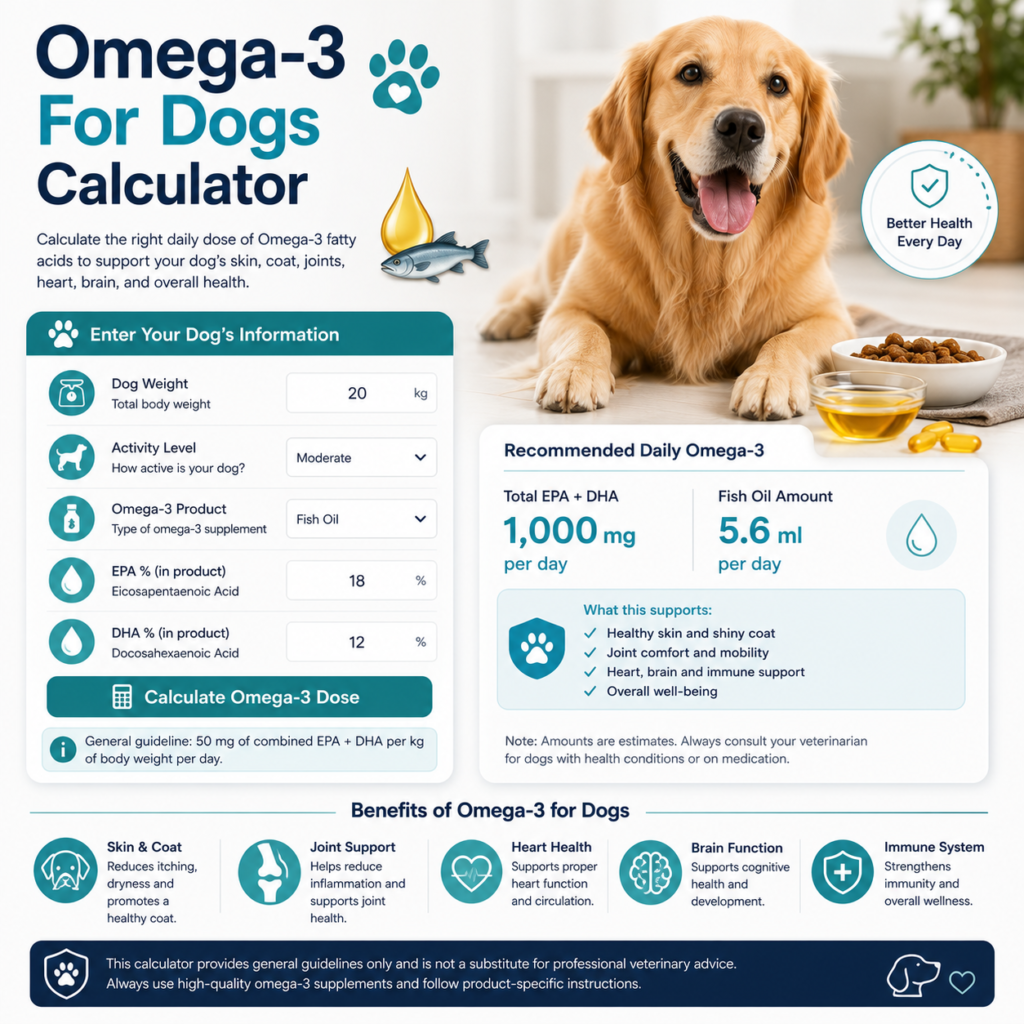
Omega-3 For Dogs Calculator: The Right Dose for a Healthier, Happier Dog
Omega-3 fatty acids have earned a well-deserved reputation as one of the most beneficial nutritional supplements available for dogs. From supporting a glossy coat and healthy joints to promoting heart health and cognitive function, the research behind omega-3s for canine health is compelling. But like any supplement, the benefits only materialize when the right dose is given — and that’s precisely where an omega-3 for dogs calculator becomes an essential tool for responsible pet owners.
Rather than guessing or following generic label instructions, an omega-3 calculator provides a personalized, weight-based dosage recommendation tailored to an individual dog’s needs. This guide covers everything worth knowing — from the science of omega-3s in canine health, to how the calculator works, to practical guidance on choosing the best source and getting supplementation right.
What Are Omega-3 Fatty Acids and Why Do Dogs Need Them?
Omega-3 fatty acids are a family of polyunsaturated fats that play critical roles in numerous biological processes. They are considered essential fatty acids — meaning the body cannot synthesize them in adequate quantities on its own and must obtain them through diet or supplementation.
For dogs, the three most relevant omega-3 fatty acids are:
EPA (Eicosapentaenoic Acid)
EPA is a marine-derived omega-3 with powerful anti-inflammatory properties. It plays a central role in managing chronic inflammation, which underlies many common canine health conditions including arthritis, allergies, and skin disorders. EPA is widely considered the most therapeutically active omega-3 for dogs.
DHA (Docosahexaenoic Acid)
DHA is critical for brain and eye development, making it especially important for puppies and senior dogs. In developing puppies, adequate DHA supports neurological growth and cognitive function. In older dogs, it helps preserve mental sharpness and may slow cognitive decline. DHA is also a structural component of cell membranes throughout the body.
ALA (Alpha-Linolenic Acid)
ALA is a plant-derived omega-3 found in sources like flaxseed, chia seeds, and hemp. While ALA is technically an omega-3, dogs convert it to EPA and DHA very inefficiently — at rates often below 15%. As a result, ALA-based supplements are significantly less effective for dogs than marine-based EPA and DHA sources, and most veterinary nutritionists recommend fish oil or algae-based supplements over plant-based alternatives.
How Does an Omega-3 For Dogs Calculator Work?
An omega-3 for dogs calculator uses a dog’s body weight as its primary input and applies veterinary-recommended dosage guidelines to generate a target EPA and DHA intake in milligrams per day. Some calculators also incorporate additional variables such as:
- Health condition being addressed — therapeutic doses for joint disease or kidney disease differ from maintenance doses for general wellness
- Current diet — dogs eating fish-based kibble may already be receiving some omega-3s through food
- Age and life stage — puppies, adults, and seniors have different supplementation needs
- Body condition — dogs that are overweight or underweight may need adjusted doses
The standard maintenance dosage recommended by most veterinary references falls in the range of 20 to 55 mg of combined EPA and DHA per kilogram of body weight per day. For therapeutic purposes — such as managing osteoarthritis, kidney disease, or inflammatory skin conditions — doses can be significantly higher, sometimes reaching 100 mg per kilogram per day or more, always under veterinary supervision.
Because dosage scales directly with body weight, an accurate current weight is the most important input. The dog weight calculator helps owners obtain a precise measurement before calculating supplementation needs, ensuring the resulting dose is as accurate as possible.
The Science-Backed Benefits of Omega-3s for Dogs
The case for omega-3 supplementation in dogs isn’t built on marketing — it’s grounded in a substantial and growing body of veterinary research. Here are the key health areas where omega-3 fatty acids have demonstrated meaningful benefits.
Joint Health and Osteoarthritis
Osteoarthritis is one of the most common chronic conditions in dogs, affecting an estimated 20% of adult dogs and a significantly higher proportion of senior and large breed dogs. EPA’s anti-inflammatory properties help reduce joint inflammation, decrease pain, and improve mobility. Multiple clinical studies have found that dogs with osteoarthritis supplemented with omega-3 fatty acids showed measurable improvements in walking, rising from rest, and overall activity levels compared to unsupplemented controls.
Skin and Coat Health
One of the most immediately visible benefits of omega-3 supplementation is improved coat quality. EPA and DHA support the skin’s natural barrier function, reduce inflammatory responses that contribute to itching and irritation, and promote the production of healthy oils that give coats their characteristic shine and softness. Dogs with chronic skin allergies, atopic dermatitis, or dull, dry coats often show noticeable improvement within four to eight weeks of consistent supplementation.
Heart Health
DHA and EPA have been shown to support cardiovascular function in dogs. They help maintain healthy heart rhythm, reduce triglyceride levels, and may slow the progression of certain heart conditions. Breeds predisposed to dilated cardiomyopathy — including Doberman Pinschers, Boxers, and Great Danes — are of particular interest in omega-3 cardiac research.
Kidney Disease Management
Chronic kidney disease (CKD) is a significant health concern in dogs, particularly as they age. Research has demonstrated that omega-3 supplementation can help slow the progression of CKD by reducing inflammation within the kidneys and supporting healthy blood flow through renal tissue. Some veterinary nutritionists consider omega-3 supplementation a standard component of nutritional management for dogs with diagnosed kidney disease.
Cognitive Function and Brain Health
DHA is a major structural component of brain tissue. In puppies, adequate DHA during development supports learning, memory formation, and trainability. In senior dogs, DHA supplementation has been associated with slower cognitive decline and improved performance on behavioral and cognitive assessments. The dog age calculator helps owners identify where their dog sits in its cognitive development or aging journey — useful context when deciding whether to incorporate DHA-focused supplementation.
Cancer Support
Emerging research suggests that omega-3 fatty acids may help slow the growth of certain tumors, improve the effectiveness of some chemotherapy protocols, and support the overall nutritional status of dogs undergoing cancer treatment. While omega-3s are not a cancer treatment in their own right, they represent a meaningful supportive nutritional intervention for affected dogs.
Immune System Support
EPA and DHA influence the production of signaling molecules that regulate immune responses. Appropriate omega-3 levels help maintain a balanced immune response — reducing excessive inflammation without suppressing the immune system’s ability to respond to genuine threats.
Choosing the Right Omega-3 Source for Dogs
Not all omega-3 supplements are created equal. The source, formulation, and quality of the supplement significantly affect both its efficacy and safety.
Fish Oil
Fish oil — derived from fatty fish like salmon, sardines, anchovies, mackerel, and herring — is the most widely used and extensively researched omega-3 source for dogs. It provides pre-formed EPA and DHA directly, making it the most bioavailable option. High-quality fish oil supplements are the gold standard recommendation from most veterinary nutritionists.
When selecting a fish oil supplement, owners should look for:
- Third-party testing and certification — products tested for heavy metals, PCBs, and other contaminants
- Clear EPA and DHA content labeling — the actual mg of EPA and DHA per capsule or teaspoon, not just total fish oil content
- Freshness indicators — rancid fish oil loses potency and can cause digestive upset; a good product should smell fresh, not overpoweringly fishy
Algae Oil
Algae-based omega-3 supplements represent a sustainably sourced, plant-based alternative that still provides pre-formed EPA and DHA. Fish obtain their omega-3s by eating microalgae, so algae oil essentially cuts out the middleman. It’s an excellent option for dogs with fish allergies or for owners who prefer a more environmentally sustainable supplement. Algae oil tends to be more expensive than fish oil but is increasingly available and well-supported by research.
Krill Oil
Krill oil is derived from tiny crustaceans and provides EPA and DHA in phospholipid form, which some research suggests may improve absorption compared to the triglyceride form found in standard fish oil. It also contains astaxanthin, a potent antioxidant. However, krill oil is typically more expensive and the EPA/DHA concentration per serving is often lower than fish oil, which can make hitting target doses more challenging.
Salmon Oil
Salmon oil is a popular specific form of fish oil that many dogs find palatable due to its flavor. It’s a solid omega-3 source, though the EPA and DHA concentrations can vary more than in oils derived from smaller, fattier fish like sardines and anchovies. Quality varies significantly between brands, making third-party testing particularly important for salmon oil products.
Flaxseed and Plant-Based Oils
As discussed earlier, plant-based omega-3 sources provide ALA rather than pre-formed EPA and DHA. Because dogs convert ALA so poorly, these sources are not recommended as primary omega-3 supplements, though they can be a minor dietary contributor when combined with a marine-based supplement.
How Omega-3 Needs Vary Across Life Stages
Just as caloric and nutritional needs shift across a dog’s life, omega-3 requirements change with age and developmental stage. Understanding these differences helps owners use an omega-3 for dogs calculator more meaningfully.
Puppies
DHA is especially critical during puppyhood for neurological development, visual acuity, and cognitive function. Research on Labrador Retriever puppies has shown that those receiving DHA-enriched diets performed significantly better on learning and memory tasks than those on standard diets. Many high-quality puppy foods now include added DHA, but supplementation may still be beneficial — particularly for working dog breeds or puppies showing slower developmental progress.
Active Adult Dogs
Healthy adult dogs in good body condition benefit from maintenance-level omega-3 supplementation to support skin, coat, joint, and cardiovascular health. Dogs with high activity levels — working dogs, sporting dogs, or dogs engaged in regular agility or endurance training — may benefit from slightly higher doses to support the anti-inflammatory effects during physical exertion and recovery.
Pairing omega-3 supplementation with an accurate dietary overview from the dog calorie calculator and dog food calculator helps owners build a complete nutritional picture, ensuring the supplement integrates sensibly with the dog’s overall diet rather than doubling up on nutrients already present in sufficient quantities in the food.
Senior Dogs
Senior dogs face a range of age-related health challenges — joint degeneration, cognitive decline, cardiovascular changes, and increased inflammation — all of which are areas where omega-3 supplementation has demonstrated clinical benefit. Therapeutic doses are often more appropriate for older dogs than maintenance doses, but any significant increase in supplementation should be discussed with a veterinarian.
Dogs With Specific Health Conditions
Dogs managing chronic conditions — particularly osteoarthritis, atopic dermatitis, kidney disease, or heart disease — often benefit from therapeutic omega-3 doses that are substantially higher than general maintenance recommendations. These therapeutic protocols should always be developed in consultation with a veterinarian or veterinary nutritionist, as higher doses require monitoring for potential side effects and interactions with other treatments or medications.
Body Condition and Omega-3 Supplementation
A dog’s body condition score provides useful context when interpreting omega-3 dosage recommendations. Overweight dogs often carry higher levels of systemic inflammation driven by excess adipose tissue, which may make them more responsive to anti-inflammatory omega-3 supplementation — but also more in need of addressing the underlying weight issue. The dog BMI calculator helps owners assess their dog’s body condition accurately, which can inform both supplementation decisions and broader nutritional planning alongside a veterinarian.
Underweight dogs, on the other hand, may have underlying health conditions driving their low body weight — and any supplementation plan for these dogs should be part of a broader veterinary-supervised nutritional intervention.
Potential Side Effects and Safety Considerations
Omega-3 fatty acids have an excellent safety profile when used appropriately, but it’s important for owners to be aware of potential side effects — particularly at higher doses.
Digestive Upset
The most common side effect, particularly when starting supplementation, is mild gastrointestinal disturbance — including loose stools, diarrhea, or a fishy odor to the breath or skin. Starting with a lower dose and gradually increasing over one to two weeks typically minimizes digestive issues.
Blood Thinning Effects
At high therapeutic doses, omega-3s can have mild anticoagulant effects. This is generally not a concern for healthy dogs at maintenance doses, but it becomes relevant for dogs scheduled for surgery, dogs on anticoagulant medications, or dogs with clotting disorders. Veterinary guidance is particularly important in these cases.
Vitamin E Considerations
Fish oil can deplete vitamin E over time because omega-3 fatty acids are susceptible to oxidation. Some veterinary nutritionists recommend supplementing with a small amount of vitamin E alongside fish oil, particularly at higher doses or for long-term supplementation. This is worth discussing with a veterinarian when establishing a supplementation protocol.
Caloric Contribution
Fats are calorie-dense, and significant amounts of fish oil do contribute meaningfully to daily caloric intake. This is generally not a concern at typical supplementation doses, but it’s worth factoring in for dogs that are already calorie-restricted or managing their weight.
Rancidity Risk
Rancid fish oil is not only less effective — it can also be harmful. Proper storage is essential: fish oil supplements should be kept in a cool, dark location and refrigerated after opening. Capsules tend to stay fresher longer than liquid oil, making them a practical choice for dogs that tolerate them well.
Practical Tips for Supplementing Dogs With Omega-3s
Getting omega-3 supplementation right comes down to a few consistent habits:
Calculate before purchasing. Use an omega-3 for dogs calculator to establish the target EPA and DHA milligrams per day before buying a product. Then check the supplement’s label for actual EPA and DHA content per serving — not just total fish oil — to determine the right serving size.
Introduce gradually. Start with half the target dose for the first week and build up to the full recommended amount. This gives the digestive system time to adjust and reduces the likelihood of loose stools or other gastrointestinal side effects.
Choose quality over price. The omega-3 supplement market is heavily variable in quality. Third-party certifications from organizations such as IFOS (International Fish Oil Standards) or NSF International provide assurance that a product has been independently tested for purity, potency, and freshness.
Give with food. Omega-3 supplements are fat-soluble and absorb better when taken with a meal. Mixing liquid fish oil into food or giving capsules alongside a meal is the most effective approach.
Monitor and adjust. After four to eight weeks of supplementation, owners should observe whether the targeted health outcomes — improved coat, reduced scratching, better mobility — are materializing. If results are underwhelming, it may indicate the dose needs adjustment or the product quality needs revisiting.
Recheck dosage as weight changes. Because omega-3 dosage is weight-dependent, it should be recalculated whenever a dog’s weight changes significantly — whether due to growth, weight loss, or weight gain. Regular weigh-ins keep supplementation on track.
What to Look for on an Omega-3 Supplement Label
Navigating supplement labels can be confusing, but a few key pieces of information are essential:
- Total EPA content per serving — in milligrams
- Total DHA content per serving — in milligrams
- Total fish oil per serving — useful for cross-referencing but not the primary dosing metric
- Source of the fish oil — species and origin matter for quality and sustainability
- Expiration date — freshness is critical for omega-3 efficacy
- Third-party certification logo — evidence of independent quality testing
A product that lists only “total omega-3s” or “total fish oil” without breaking out EPA and DHA individually makes accurate dosing difficult and should be approached with caution.
Final Thoughts
An omega-3 for dogs calculator removes one of the most common barriers to effective supplementation — uncertainty about how much to give. By anchoring dosage recommendations to body weight and health context, the calculator transforms a potentially confusing process into a clear, actionable plan.
When combined with a broader suite of nutritional and health tools — covering weight, body condition, caloric intake, age, and dietary content — omega-3 supplementation becomes part of a comprehensive, well-informed approach to canine care. The science is clear: the right dose of the right omega-3 source, given consistently, can make a meaningful and measurable difference in a dog’s quality of life at every stage.