Dog Food Calculator

Ahmad zee
Table of Contents
Toggle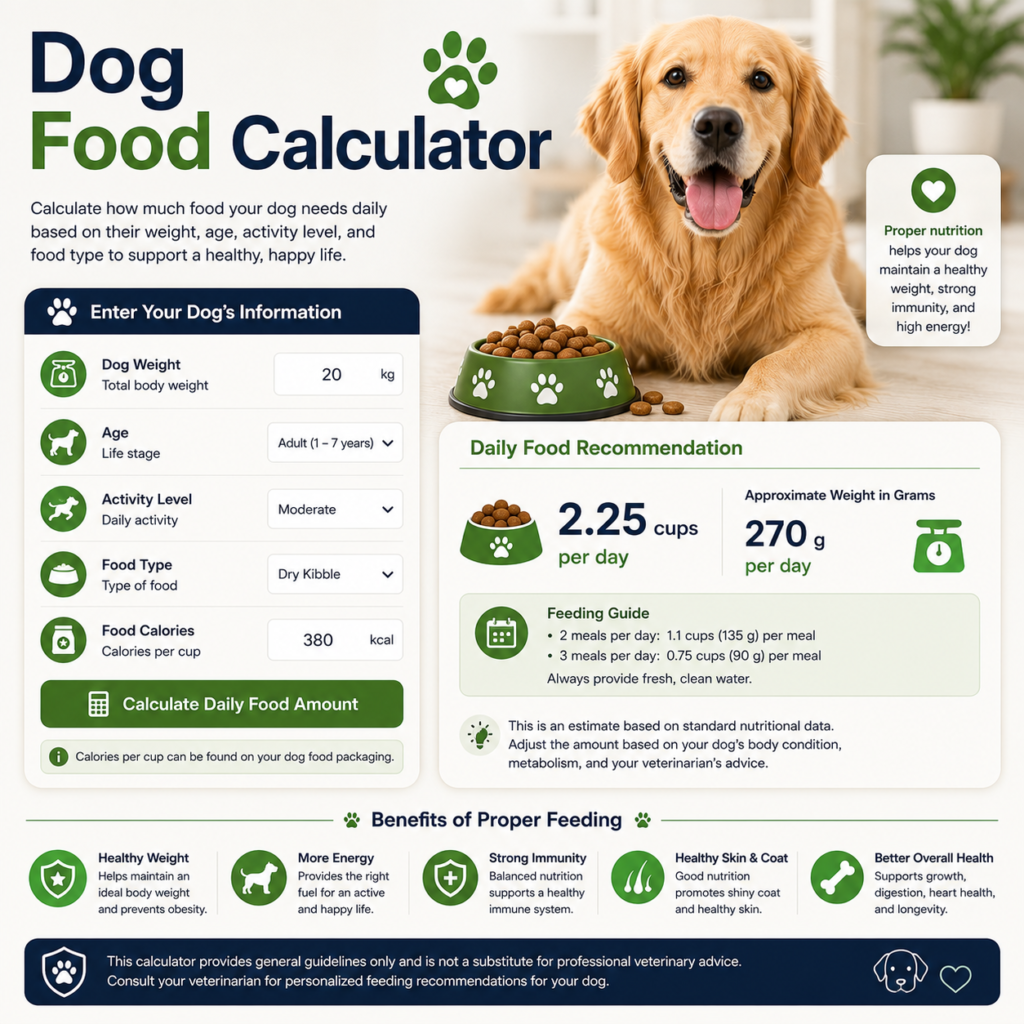
Dog Food Calculator: How Much Should You Really Be Feeding Your Dog?
Feeding a dog seems simple enough — scoop food into a bowl, twice a day, done. But the reality of canine nutrition is considerably more nuanced than that. Overfeeding is one of the leading causes of obesity in dogs, while underfeeding can result in nutritional deficiencies, stunted growth, and a host of health complications. A dog food calculator bridges the gap between guesswork and genuinely informed feeding — giving owners a precise, personalized daily food recommendation based on their dog’s individual characteristics.
Whether someone is feeding a growing puppy, managing the weight of a middle-aged Labrador, or adjusting portions for a senior dog with changing nutritional needs, a dog food calculator provides the kind of data-driven guidance that makes a real difference in long-term health outcomes.
Why Guessing Portions Gets Dangerous
Most dog food packaging includes feeding guidelines — but these are notoriously generic. They’re designed for the average dog of a given weight range, which means they rarely account for activity level, body condition, reproductive status, or health history. Following package guidelines blindly is one of the most common reasons dogs end up overweight.
Consider this: a 30-pound Beagle that lounges around the house most of the day has dramatically different caloric needs than a 30-pound Border Collie that spends hours herding, running, and training. A single feeding recommendation can’t serve both dogs well — and that’s exactly the gap a dog food calculator is designed to fill.
Beyond weight management, accurate portion control directly influences:
- Digestive health — consistent, correctly sized meals reduce the risk of bloat, vomiting, and irregular digestion
- Nutrient balance — too little food can mean insufficient intake of essential vitamins and minerals; too much disrupts the intended nutrient ratios of even the best foods
- Energy levels — dogs fed appropriate portions tend to have more consistent energy throughout the day
- Long-term disease prevention — obesity in dogs is linked to diabetes, joint disease, heart conditions, and shortened lifespan
How Does a Dog Food Calculator Work?
A dog food calculator works by calculating a dog’s daily caloric requirement — known as the Daily Energy Requirement (DER) — and then translating that calorie target into a specific food quantity based on the caloric density of the food being fed.
The calculation follows a two-step process:
Step 1: Calculate Resting Energy Requirement (RER)
The Resting Energy Requirement is the number of calories a dog needs at complete rest to maintain basic bodily functions — breathing, circulation, digestion, and cell repair. The standard veterinary formula for RER is:
RER = 70 × (body weight in kg)^0.75
This formula accounts for the non-linear relationship between body size and metabolic rate — larger dogs need more calories in total, but fewer calories per kilogram of body weight than smaller dogs.
Step 2: Apply a Life Stage Multiplier to Get DER
The Daily Energy Requirement adjusts RER based on the dog’s life stage, reproductive status, and activity level. Common multipliers include:
| Life Stage / Condition | Multiplier |
|---|---|
| Neutered adult (typical activity) | 1.6 × RER |
| Intact adult | 1.8 × RER |
| Inactive / obese prone | 1.2–1.4 × RER |
| Lightly active adult | 2.0 × RER |
| Moderately active adult | 3.0 × RER |
| Working / highly active dog | 4.0–8.0 × RER |
| Puppy (weaning to 4 months) | 3.0 × RER |
| Puppy (4 months to adult size) | 2.0 × RER |
| Senior dog | 1.4 × RER |
| Weight loss | 1.0 × RER |
| Pregnant dog (last 3 weeks) | 3.0 × RER |
| Nursing mother | 4.0–8.0 × RER |
Step 3: Convert Calories to Food Quantity
Once the DER is established, the calculator divides it by the caloric density of the specific food — measured in kilocalories per cup or per kilogram — to arrive at a daily serving size in cups, grams, or ounces.
This is why using an accurate current weight is essential before running the calculation. The dog weight calculator provides a reliable baseline measurement that feeds directly into the dog food calculator for maximum accuracy.
Factors That Influence How Much a Dog Should Eat
Beyond the core formula, several factors meaningfully affect how much food a dog needs on a day-to-day basis.
Age and Life Stage
Puppies need more calories per pound of body weight than adult dogs because they’re fueling both activity and rapid growth. Senior dogs, conversely, often need fewer calories as their metabolism slows and activity levels decline — though their need for high-quality protein may actually increase to preserve muscle mass.
The dog age calculator helps owners contextualize where their dog sits in its life journey, making it easier to select the correct life stage multiplier and feeding approach. A dog transitioning from adulthood into its senior years, for example, may benefit from a gradual reduction in portion size rather than a sudden shift.
Breed and Size
Small breeds have faster metabolisms relative to their body size and often need more calories per pound than large breeds. Giant breeds, meanwhile, have unique nutritional needs — particularly around calcium and phosphorus balance during growth — that standard calculators may not fully capture without breed-specific adjustments.
Activity Level
This is one of the most significant variables in daily caloric need. A sedentary house dog may need barely half the calories of a dog doing regular agility training, herding work, or distance running. Owners should assess their dog’s true activity level honestly — it’s easy to overestimate how active a dog is when much of its day is spent sleeping.
Reproductive Status
Spayed and neutered dogs typically have lower caloric needs than intact dogs of the same size and activity level. This is a well-documented metabolic effect of sterilization, and it’s one reason obesity rates tend to be higher in neutered pets when feeding amounts aren’t adjusted accordingly.
Body Condition Score
A dog’s current body condition — whether it’s underweight, ideal, or overweight — should directly influence feeding targets. The dog BMI calculator provides an objective body condition assessment that helps owners and veterinarians calibrate portion sizes appropriately. Dogs carrying excess weight need a calorie deficit to lose weight gradually and safely, while underweight dogs need a measured increase to restore healthy body composition.
Food Type and Caloric Density
Not all dog foods have the same caloric density. A premium, protein-rich kibble may have significantly more calories per cup than a standard grocery store brand. Wet food, raw food, and home-cooked meals all have different caloric densities that must be accounted for when converting a daily calorie target into a practical serving size.
Feeding Across Life Stages
A dog’s nutritional needs shift meaningfully at each stage of life. A dog food calculator that accounts for life stage provides far more useful guidance than a one-size-fits-all recommendation.
Feeding Puppies
Puppies have unique and demanding nutritional needs. They require more protein, fat, calcium, phosphorus, and overall calories than adult dogs of the same size to support skeletal development, organ growth, muscle formation, and the extraordinary energy demands of puppyhood.
Large and giant breed puppies require particular attention. Overfeeding large breed puppies — particularly with calcium-rich foods or supplements — can accelerate bone growth beyond what joints can handle, increasing the risk of developmental orthopedic conditions like hip dysplasia and osteochondrosis. A dog food calculator specifically configured for large breed puppy growth helps navigate these risks.
Puppies should typically be fed three to four small meals per day during early puppyhood, transitioning to two meals per day around four to six months of age. This frequent feeding schedule supports stable blood sugar, healthy digestion, and consistent energy levels throughout the day.
Feeding Adult Dogs
Most healthy adult dogs do well on twice-daily feeding — one meal in the morning and one in the evening. This schedule supports digestive regularity and helps dogs maintain steady energy levels. Free-feeding — leaving food available at all times — is generally not recommended, as it makes portion control difficult and can contribute to overeating.
The daily food amount for adult dogs should be revisited periodically rather than remaining static. Weight fluctuations, seasonal activity changes, and aging all affect caloric needs, and the portion that was appropriate at age two may no longer be ideal at age five or seven.
Feeding Senior Dogs
Senior dogs — generally considered those in the last third of their expected lifespan — often benefit from dietary adjustments that go beyond simple portion reduction. Many older dogs benefit from:
- Higher protein content to preserve muscle mass despite reduced activity
- Lower caloric density to prevent weight gain without reducing meal volume
- Added joint-supporting nutrients such as glucosamine and chondroitin
- Increased digestibility to compensate for less efficient nutrient absorption
The dog calorie calculator is particularly useful for senior dog owners, helping establish an age-appropriate caloric target that accounts for the metabolic shifts that come with aging — without inadvertently underfeeding a dog that still has high protein needs.
Feeding Pregnant and Nursing Dogs
Pregnancy and lactation dramatically increase a dog’s caloric requirements. In the final three weeks of pregnancy, energy needs increase by approximately 25 to 50% above maintenance. During peak lactation — around three to four weeks after birth — a nursing mother may need three to four times her normal caloric intake to sustain milk production and maintain her own body condition.
Most veterinarians recommend transitioning pregnant dogs to a high-quality puppy food in the final weeks of gestation, as the higher caloric density and elevated nutrient levels support both the developing puppies and the mother’s increased demands. Portion sizes should increase gradually and be monitored closely in consultation with a veterinarian.
Wet Food vs. Dry Food vs. Raw: How Food Type Affects Calculator Results
One of the most important inputs in any dog food calculator is the type of food being fed. Different food formats have dramatically different caloric densities and moisture contents, which directly affects the serving size calculation.
Dry Kibble
Dry kibble is the most commonly fed dog food format. It typically contains around 10% moisture and ranges from approximately 300 to 500 kilocalories per cup depending on the brand and formulation. Premium, meat-first kibbles tend to have higher caloric density than standard or budget options, which means a smaller physical volume provides the same number of calories.
Wet / Canned Food
Wet food contains 70 to 80% moisture, which means it has significantly fewer calories per gram than dry food. Dogs eating exclusively wet food will consume larger physical volumes to meet their caloric needs — which can actually be beneficial for dogs that need to feel fuller on fewer calories. Wet food is also highly palatable, making it useful for picky eaters or dogs with reduced appetite.
Raw Food
Raw feeding — which includes commercially prepared raw diets and home-formulated raw meals — has its own set of nutritional considerations. Raw diets typically target 2 to 3% of the dog’s body weight per day as a starting point, though this varies considerably based on the dog’s activity level and the specific composition of the diet. The raw dog food calculator is the most appropriate tool for owners following a raw feeding protocol, as it accounts for the unique nutritional profile and moisture content of raw diets more accurately than a standard kibble-focused calculator.
Mixed Feeding
Many owners feed a combination of wet and dry food. When mixing formats, a dog food calculator should account for the caloric contribution of each component separately, adding them together to confirm the total daily intake remains within the target range.
How to Use the Dog Food Calculator Effectively
Getting the most out of a dog food calculator comes down to the accuracy and completeness of the information entered.
Weigh the dog accurately and recently. Food portions based on an outdated or estimated weight will be off target from the start. Regular weigh-ins — ideally monthly for puppies and every three months for adults — keep the calculation current.
Know the caloric content of the food being fed. This information should appear on the packaging as kilocalories per cup (kcal/cup) or kilocalories per kilogram (kcal/kg). If it’s not on the label, the manufacturer’s website or a direct inquiry to the brand should provide it.
Select the correct life stage and activity level. Honest self-assessment here matters. Owners who overestimate their dog’s activity level will end up overfeeding; those who underestimate may be leaving their dog under-fueled.
Start with the calculator recommendation and monitor. The calculator provides a scientifically grounded starting point, not a fixed prescription. Owners should monitor their dog’s weight and body condition over the following four to six weeks and adjust portions accordingly. A dog that’s maintaining ideal weight is on the right feeding plan; one that’s gaining or losing weight needs a portion adjustment.
Recalculate whenever circumstances change. A dog that transitions from intact to neutered, moves from a highly active outdoor lifestyle to a quieter indoor one, or crosses into the senior life stage needs a fresh calculation. Treating the dog food calculator as a one-time exercise rather than an ongoing tool is one of the most common mistakes owners make.
Reading Dog Food Labels: What Actually Matters
Understanding what’s on a dog food label helps owners use a dog food calculator more effectively and make better purchasing decisions.
Ingredients list — Ingredients are listed in descending order by weight before processing. A named animal protein (chicken, beef, salmon) as the first ingredient is a positive indicator of food quality.
Guaranteed analysis — This section lists minimum percentages of crude protein and fat, and maximum percentages of moisture and fiber. It’s useful for comparing macronutrient profiles between foods.
Caloric content statement — The most important number for calculator purposes. This appears as kilocalories per kilogram and often per cup or can as well.
AAFCO statement — The Association of American Feed Control Officials statement confirms whether the food meets minimum nutritional standards for a specific life stage. Look for foods formulated for the dog’s actual life stage, not just “all life stages” when breed-specific or age-specific nutrition matters.
Feeding guidelines — Useful as a rough starting reference but should be superseded by the dog food calculator’s personalized recommendation.
Signs That a Dog’s Feeding Amount Needs Adjustment
Even the best calculator is a starting point. Ongoing observation of the dog’s body condition is the ultimate feedback mechanism.
Signs of Overfeeding
- Visible weight gain over weeks or months
- Difficulty feeling the ribs without pressing firmly
- Loss of waist definition when viewed from above
- Reduced energy or reluctance to exercise
- Digestive irregularities such as loose stools
Signs of Underfeeding
- Visible rib, hip, or spine prominence
- Pronounced waist tuck when viewed from the side
- Lethargy or reduced stamina during exercise
- Increased food-seeking behavior or begging
- Slow coat growth or dull, dry fur
A body condition score between 4 and 5 on a 9-point scale — where ribs are easily felt but not visible, and a waist is visible from above — represents the ideal target for most adult dogs. Regular assessments using the dog BMI calculator help track whether current portions are achieving and maintaining this condition.
Common Dog Feeding Mistakes to Avoid
Ignoring treat calories. Treats can account for a surprisingly large portion of a dog’s daily caloric intake — sometimes 10 to 20% or more. These calories should be factored into the daily total, not added on top of full meal portions.
Feeding table scraps routinely. Beyond the caloric implications, many human foods are inappropriate or outright dangerous for dogs. Building a feeding routine around consistent, calculated portions of appropriate dog food is far safer and more nutritionally sound.
Not adjusting for seasonal activity changes. Many dogs are significantly more active in cooler months and less active during summer heat. Portion sizes that were appropriate in autumn may lead to weight gain if maintained through a sedentary winter without adjustment.
Using volumetric measures inconsistently. “One cup” of kibble can vary significantly depending on how loosely or tightly the food is scooped. Using a kitchen scale to measure food by weight rather than volume is the most accurate approach, particularly for dogs on precise caloric management plans.
Switching foods without transition. When changing dog foods — whether due to a life stage change, a new formula, or a dietary shift — abrupt transitions can cause significant digestive upset. A gradual transition over seven to ten days, mixing increasing proportions of the new food with decreasing proportions of the old, allows the digestive system to adapt smoothly.
Final Thoughts
A dog food calculator is one of the simplest, highest-impact tools available to dog owners. By replacing guesswork with a structured, evidence-based approach to portion sizing, it directly supports healthier weight management, better long-term health outcomes, and a higher quality of life for dogs at every stage.
Used consistently — and updated whenever a dog’s circumstances change — a dog food calculator becomes a cornerstone of responsible, informed pet ownership. Paired with complementary tools that track calories, body condition, age, and diet type, it gives owners everything they need to make confident, well-grounded decisions about one of the most fundamental aspects of caring for a dog.