Cat Benadryl Dosage Calculator

Ahmad zee
Table of Contents
Toggle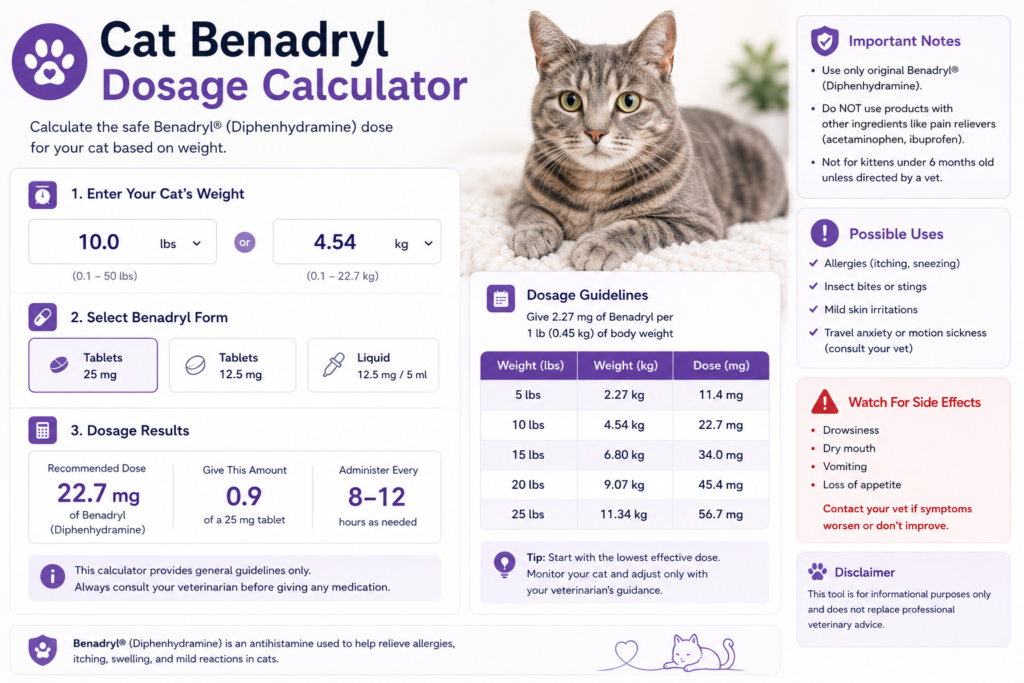
Cat Benadryl Dosage Calculator: Safe Antihistamine Use for Cats
Benadryl is one of the most recognised over-the-counter antihistamine medications in the world — and cat owners frequently wonder whether it’s safe to give to their cats, how much to give, and under what circumstances it might be appropriate. A cat Benadryl dosage calculator provides weight-based dosage guidance that helps owners understand the correct amount for their individual cat, removing the dangerous guesswork that comes with applying human dosage instructions to a much smaller feline body.
This guide covers everything worth knowing about Benadryl use in cats — from the active ingredient and how it works, to safe dosing ranges, appropriate uses, formulation warnings, potential side effects, and the critical situations where veterinary guidance must come before any medication is administered.
What Is Benadryl and How Does It Work in Cats?
Benadryl is the brand name for diphenhydramine hydrochloride — a first-generation antihistamine that works by blocking histamine H1 receptors throughout the body. Histamine is a chemical released by immune cells in response to allergens, injury, or irritation. When histamine binds to H1 receptors, it triggers the familiar symptoms of allergic reaction — itching, swelling, redness, runny eyes, nasal discharge, and in severe cases, the systemic response of anaphylaxis.
By blocking these receptors before histamine can bind to them, diphenhydramine reduces or prevents these allergic symptoms from developing. In cats, the mechanism works similarly to how it works in humans — though the dosage, metabolism, and appropriate applications differ significantly from human use.
Diphenhydramine also has mild sedative and antiemetic properties — it crosses the blood-brain barrier and acts on histamine receptors in the central nervous system, producing drowsiness as a side effect that can be therapeutically useful in certain situations such as travel anxiety or motion sickness management.
How Does a Cat Benadryl Dosage Calculator Work?
A cat Benadryl dosage calculator uses the cat’s body weight as its primary input to generate a safe, weight-based dosage recommendation. The standard veterinary dosage guideline for diphenhydramine in cats is:
1 mg of diphenhydramine per kilogram of body weight
or equivalently:
0.5 mg per pound of body weight
administered every 8 to 12 hours as needed, up to a maximum of three times per day.
For a typical domestic cat weighing 4 kg (approximately 9 lbs), this translates to approximately 4 mg of diphenhydramine per dose. For a larger cat weighing 6 kg (approximately 13 lbs), the dose would be approximately 6 mg.
Because body weight is the central variable in this calculation, accurate and current weight data is essential. The cat BMI calculator helps owners obtain a reliable weight measurement and body condition assessment before calculating any medication dose — ensuring the resulting guideline reflects the cat’s actual size rather than an estimated or outdated figure.
Standard Benadryl Formulations and Which Are Safe for Cats
One of the most critical aspects of giving Benadryl to a cat is choosing the correct formulation. Not all Benadryl products contain only diphenhydramine — many combination formulas include additional active ingredients that are safe for humans but potentially dangerous or even fatal for cats.
Plain Diphenhydramine — The Only Safe Option
The only formulation appropriate for cats is plain diphenhydramine — a single-ingredient product containing diphenhydramine hydrochloride and no other active medications. This is the formulation a cat Benadryl dosage calculator is designed around.
Formulations to Absolutely Avoid
Several common Benadryl variants contain additional ingredients that pose serious risks to cats:
Benadryl-D (with pseudoephedrine) — Pseudoephedrine is a decongestant that is highly toxic to cats, causing dangerous elevations in heart rate, blood pressure, and body temperature. Even small amounts can be life-threatening.
Benadryl Allergy Plus Congestion — Contains phenylephrine, another decongestant that is unsafe for cats.
Benadryl with acetaminophen — Acetaminophen (paracetamol) is one of the most dangerous substances a cat can ingest. Even a single regular-strength acetaminophen tablet can cause fatal methemoglobinaemia in a cat — a condition where red blood cells lose their ability to carry oxygen. Any Benadryl product containing acetaminophen must never be given to cats under any circumstances.
Sugar-free formulations with xylitol — Liquid Benadryl products may contain xylitol as a sweetener. While xylitol toxicity in cats is less well documented than in dogs, it remains a substance to avoid in cat medications whenever possible.
Benadryl liqui-gels or gel caps — Some liquid-filled formulations contain propylene glycol, a substance that is toxic to cats and can cause haemolytic anaemia.
The fundamental rule: always read the complete ingredient list before giving any Benadryl product to a cat, and use only plain, single-ingredient diphenhydramine.
What Is Benadryl Used for in Cats?
Benadryl is not a first-line treatment for most feline conditions — but there are specific situations where a veterinarian may recommend or approve its use.
Allergic Reactions
Mild to moderate allergic reactions — including reactions to insect stings, contact allergens, or certain foods — are among the most appropriate uses of diphenhydramine in cats. For mild reactions characterised by localised swelling, itching, hives, or mild facial swelling, Benadryl can help reduce histamine-driven symptoms while veterinary attention is sought.
It is critically important to understand that Benadryl is not appropriate as the sole treatment for anaphylaxis or severe allergic reactions. Anaphylaxis — characterised by difficulty breathing, collapse, extreme swelling of the face or throat, pale gums, or loss of consciousness — is a life-threatening emergency requiring immediate veterinary intervention including epinephrine and supportive care. In a severe allergic reaction, Benadryl may be given on the way to the emergency vet but must never replace emergency veterinary care.
Motion Sickness and Travel Anxiety
The sedative properties of diphenhydramine make it mildly useful for reducing motion sickness and travel-related anxiety in some cats. Cats that become distressed during car travel — vocalising, drooling, vomiting, or showing extreme stress — may benefit from a dose of diphenhydramine given approximately 30 minutes before travel.
However, cats vary considerably in their response to diphenhydramine. Some cats experience the expected sedation; others paradoxically become more agitated and hyperactive — a response that makes Benadryl counterproductive for travel management in these individuals. Trialling the medication at home before travel day is advisable.
Vaccine Reactions
Some cats experience localised or systemic reactions to vaccinations — swelling at the injection site, facial puffiness, lethargy, or mild hives. Diphenhydramine is sometimes pre-administered or recommended as a follow-up by veterinarians for cats with a documented history of vaccine reactions.
Insect Stings
Bee stings, wasp stings, and other insect stings trigger localised histamine release that causes pain, swelling, and itching at the sting site. Diphenhydramine can help manage these localised symptoms, though the sting site should also be checked for a retained stinger and cleaned appropriately.
Environmental and Seasonal Allergies
While diphenhydramine is less effective for managing chronic environmental allergies in cats than more targeted treatments, it may provide some relief during acute flare-ups of itching, sneezing, or eye discharge associated with seasonal allergens. Long-term allergy management in cats typically requires veterinary evaluation and may involve more targeted antihistamines, corticosteroids, or immunotherapy.
Cats That Should Not Receive Benadryl
Not all cats are appropriate candidates for diphenhydramine, even at correct doses. Certain conditions and circumstances require veterinary consultation before any antihistamine is administered.
Kittens
Very young kittens have immature liver function and metabolise medications far more slowly than adult cats. The standard dosing guidelines are not appropriate for kittens, and any medication use in very young cats should be discussed with a veterinarian. The cat age calculator helps owners determine their cat’s life stage and whether age-related dosage adjustments are warranted.
Pregnant and Nursing Cats
Diphenhydramine’s safety profile in pregnant and lactating cats has not been extensively studied. Given the potential for drug transfer through the placenta or milk, any medication use in pregnant or nursing cats should be approved by a veterinarian. For owners tracking a cat’s pregnancy, the cat pregnancy calculator provides important gestational context that a veterinarian will need when assessing medication safety.
Cats With Glaucoma
Diphenhydramine has anticholinergic properties that can increase intraocular pressure. In cats with glaucoma or a predisposition to elevated eye pressure, this effect can worsen the condition significantly.
Cats With Hyperthyroidism
Hyperthyroidism is extremely common in senior cats and affects the cardiovascular system, increasing heart rate and blood pressure. Diphenhydramine’s mild cardiovascular effects may be poorly tolerated in cats with uncontrolled hyperthyroidism.
Cats With Urinary Retention Issues
The anticholinergic effects of diphenhydramine can worsen urinary retention — a concern for cats with a history of feline lower urinary tract disease, urethral obstruction, or bladder dysfunction.
Cats With Cardiovascular Disease
Diphenhydramine can affect heart rate and rhythm. Cats with diagnosed cardiac conditions — particularly hypertrophic cardiomyopathy, which is common in certain breeds — should not receive diphenhydramine without explicit veterinary approval.
Cats on Other Medications
Diphenhydramine interacts with several medications commonly prescribed for cats, including:
- Other central nervous system depressants — including sedatives, tranquillisers, and some pain medications
- Monoamine oxidase inhibitors (MAOIs)
- Certain antifungal medications
- Erythromycin and other macrolide antibiotics
A complete medication review with a veterinarian before administering Benadryl is essential for any cat receiving other treatments.
Potential Side Effects of Benadryl in Cats
Even at appropriate doses, diphenhydramine produces side effects in some cats. Understanding these helps owners distinguish between expected responses and signs that something is wrong.
Common Side Effects
Sedation and drowsiness — the most frequently observed side effect, often noticeable within thirty to sixty minutes of administration. Most cats become noticeably quieter, less active, and more inclined to rest. This typically resolves within eight to twelve hours as the medication clears the system.
Dry mouth — anticholinergic effects reduce saliva production, which may cause mild lip licking, increased water consumption, or a slightly sticky appearance to the mouth.
Urinary retention — some cats experience reduced urge to urinate under diphenhydramine’s anticholinergic influence. Owners should monitor litter box usage after administration.
Reduced appetite — mild appetite suppression is common during the period of medication effect.
Paradoxical Excitement
A minority of cats — particularly highly strung or anxious individuals — experience a paradoxical stimulant effect from diphenhydramine rather than sedation. These cats become more agitated, hyperactive, or vocal after administration. If this response is observed, the medication should be discontinued and a veterinarian consulted for alternative approaches.
Signs of Overdose
Diphenhydramine overdose is a veterinary emergency. Signs include:
- Extreme sedation or unresponsiveness
- Rapid or irregular heart rate
- Dilated pupils
- Tremors or seizures
- Difficulty breathing
- Hyperthermia (elevated body temperature)
- Complete loss of coordination
Any cat displaying these signs after diphenhydramine administration requires immediate emergency veterinary care. The cat quality of life calculator is not a substitute for emergency veterinary assessment — call a veterinarian or animal poison control immediately.
Practical Dosing Tips for Giving Benadryl to Cats
Cats are notoriously difficult to medicate — their sensitivity to taste, their ability to detect hidden tablets, and their general lack of cooperation make medication administration a significant practical challenge for many owners.
Choosing the Right Form
Plain diphenhydramine is available in tablet, capsule, and liquid form. For cats:
Tablets and capsules — standard 25 mg tablets are far too large for most cats at the recommended 1 mg/kg dose. Tablets must be cut or crushed to achieve the appropriate dose — a task that requires a pill cutter and careful measurement. Some compounding pharmacies can prepare diphenhydramine in cat-appropriate doses and formulations, which is often the most practical option for regular use.
Liquid diphenhydramine — liquid formulations allow for more precise dosing at small quantities but require careful label checking to confirm the absence of xylitol, alcohol, or other unsafe additives. Children’s liquid diphenhydramine formulations (12.5 mg per 5 ml) are sometimes used, but the flavourings and sweeteners used in these products may not be appropriate for all cats.
Administration Techniques
Pill pockets and treats — soft treat pockets designed to hide medication are a useful first approach, though cats often detect and reject the tablet even when concealed.
Compounding — having diphenhydramine compounded into a transdermal gel that is applied to the inner ear flap (pinna) is an increasingly popular option for cats that resist oral medication. Bioavailability of transdermal diphenhydramine in cats is variable, but it remains a practical alternative when oral administration is genuinely not possible.
Pilling technique — when direct oral administration is necessary, the correct technique involves gently tilting the cat’s head back, opening the mouth, placing the tablet as far back on the tongue as possible, and immediately following with a small amount of water via syringe to ensure the tablet reaches the stomach and does not lodge in the oesophagus.
Timing with food — giving Benadryl with a small amount of food can help mask bitterness and reduce gastrointestinal discomfort, though it may slightly affect absorption rate.
When Benadryl Is Not Enough: Seeking Veterinary Alternatives
While diphenhydramine has its place in feline first aid and symptom management, it is a relatively weak antihistamine for many of the conditions cat owners hope to treat. Cats with significant allergic conditions, chronic itching, or complex sensitivities often need more targeted veterinary intervention.
Veterinary Antihistamine Alternatives
Several antihistamines are used off-label in cats and may offer better efficacy or tolerability than diphenhydramine for specific conditions:
Chlorpheniramine — often considered more effective than diphenhydramine for allergic conditions in cats, with a similar safety profile and available in smaller dose forms that suit feline dosing requirements.
Cetirizine (Zyrtec) — a second-generation antihistamine with less sedating properties, sometimes used in cats though efficacy data is more limited than in dogs.
Loratadine (Claritin) — occasionally used in cats, though absorption and efficacy in the feline GI tract is variable.
Corticosteroids
For moderate to severe allergic conditions in cats, corticosteroids such as prednisolone remain the most consistently effective anti-inflammatory and antipruritic treatment. They carry their own side effect profile with long-term use, but for acute flare-ups or short-term management they are significantly more potent than antihistamines alone.
Immunotherapy
For cats with documented environmental allergies, allergen-specific immunotherapy — developed following allergy testing — offers the possibility of genuine long-term desensitisation rather than ongoing symptom suppression.
Storing Benadryl Safely in a Multi-Pet Household
Medication safety in households with multiple pets requires particular attention — the correct dose for one species can be dangerous for another, and medications left accessible to curious animals create unnecessary risk.
Store all medications in a secure, inaccessible location. High cabinets, latched containers, or dedicated medicine storage boxes prevent accidental ingestion by pets or children.
Never share medications between species without veterinary guidance. A dose appropriate for a dog is almost certainly too high for a cat of the same weight — and formulations safe for dogs (particularly those containing xylitol or other additives) may be dangerous for cats.
Keep packaging and dosage records. In any accidental ingestion scenario, having the product packaging readily available allows a veterinarian or poison control specialist to assess the situation accurately and quickly.
For owners managing both cats and dogs with allergy-related conditions, the dog Benadryl dosage calculator provides species-appropriate guidance for the canine members of the household — reinforcing the importance of calculating doses separately for each animal rather than applying a single guideline across species.
Final Thoughts
A cat Benadryl dosage calculator is a valuable tool for cat owners navigating the specific, weight-based dosing requirements that make antihistamine use in cats so different from human self-medication. By providing a clear, personalised dose recommendation based on the cat’s actual body weight, the calculator helps owners avoid the under-dosing that produces no benefit and the over-dosing that creates serious risk.
Used within its appropriate scope — mild allergic reactions, travel anxiety, insect stings, and veterinarian-approved situations — and always with correct formulation selection, diphenhydramine can be a genuinely useful addition to a cat owner’s first aid toolkit. But it remains a supportive tool, not a replacement for veterinary care. Any serious allergic reaction, any uncertainty about appropriateness, and any cat with pre-existing health conditions or concurrent medications deserves veterinary consultation before any medication is administered.