Benadryl Dosage Calculator for Dogs

Ahmad zee
Table of Contents
Toggle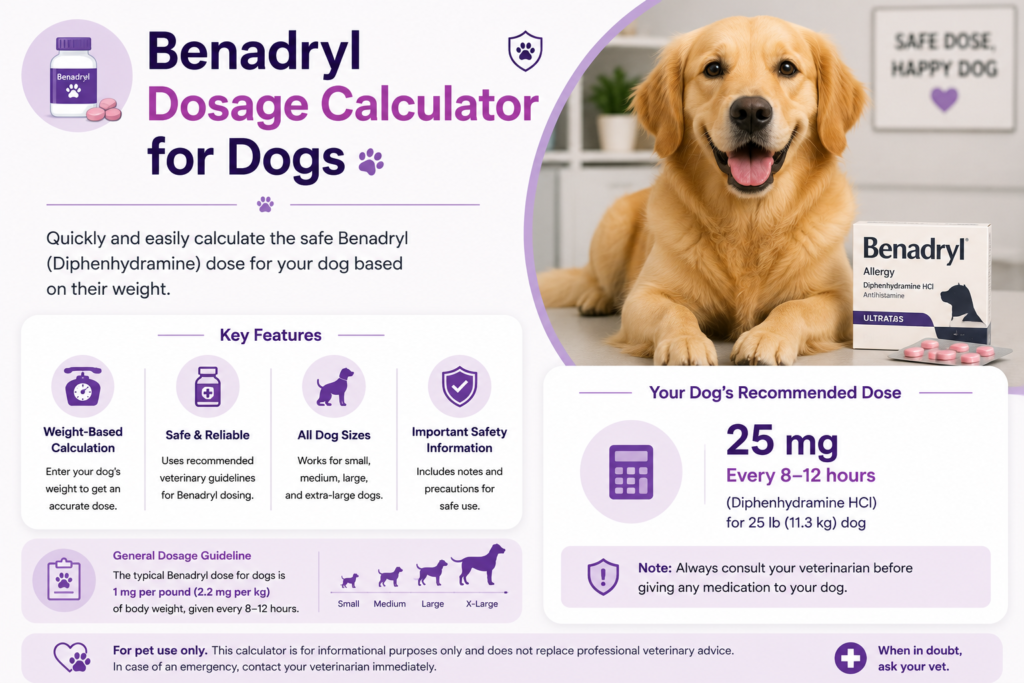
Benadryl Dosage Calculator for Dogs: A Complete Guide to Safe Use
When a dog starts scratching relentlessly, sneezing through allergy season, or trembling with anxiety during a thunderstorm, many pet owners reach for something familiar — Benadryl. It’s a medication most households already have, and the good news is that veterinarians do commonly recommend it for dogs in specific situations. The challenge is knowing exactly how much to give. Too little and it won’t help; too much and it can cause real harm. That’s precisely why a Benadryl dosage calculator for dogs is such a practical tool — it takes the guesswork out of the equation and helps owners get the dose right the first time.
This guide covers everything a dog owner needs to know about Benadryl for dogs — how a dog Benadryl dose calculator works, what the correct dosage looks like by weight, when the medication is appropriate, what side effects to watch for, and when to call a veterinarian instead.
⚠️ Important Disclaimer: This article is for informational purposes only and does not constitute veterinary medical advice. Always consult a licensed veterinarian before giving any medication to a dog, including Benadryl. Individual health conditions, medications, and weight variations can all affect safe dosing.
What Is a Benadryl Dosage Calculator for Dogs?
A Benadryl dosage calculator for dogs is a digital tool that calculates the appropriate dose of Benadryl (diphenhydramine) for a dog based on its body weight. Rather than relying on rough estimates or guessing how much is safe, the calculator applies the standard veterinary dosing formula — typically 1 mg of diphenhydramine per pound of body weight — to generate a specific, weight-appropriate dose recommendation.
These tools are particularly useful for owners who want a fast, reliable reference before contacting their vet or administering a dose in response to a sudden allergic reaction. A dog Benadryl dose calculator removes the need for manual arithmetic and reduces the risk of accidental overdosing — especially in households with small or toy breed dogs where the margin between a safe dose and an excessive one is very narrow.
The Benadryl Dosage Calculator is part of the comprehensive Dog Calculators collection on the biology hub — a suite of tools covering everything from canine nutrition and weight management to medication dosing and toxicity assessments for dogs of all sizes and breeds.
What Is Benadryl and How Does It Work in Dogs?
Benadryl is the brand name for diphenhydramine hydrochloride — a first-generation antihistamine that works by blocking H1 histamine receptors throughout the body. When a dog is exposed to an allergen, the immune system releases histamine, which triggers the classic symptoms of an allergic reaction: itching, swelling, sneezing, watery eyes, and skin irritation. By blocking histamine receptors, diphenhydramine for dogs reduces or prevents these reactions from fully developing.
Because diphenhydramine also crosses the blood-brain barrier, it has a secondary sedative effect — which is why Benadryl is sometimes used for mild situational anxiety in dogs (such as during car travel or fireworks) as well as for its antihistamine properties.
It’s important to note that while Benadryl is generally well-tolerated by most healthy adult dogs, it is a pharmaceutical medication with real pharmacological effects — not a harmless supplement. Dosing accuracy and awareness of contraindications are both essential.
Is Benadryl Safe for Dogs?
Benadryl is generally considered safe for dogs when used at the correct dose, in an appropriate formulation, and in dogs without contraindicated health conditions. It is one of the over-the-counter medications most commonly recommended by veterinarians for short-term use at home.
That said, “generally safe” comes with important qualifications. Several factors determine whether Benadryl is appropriate for an individual dog:
- Body weight — the dose is weight-dependent; very small dogs require very small amounts
- Age — senior dogs and very young puppies metabolize medications differently
- Health status — dogs with glaucoma, prostate disease, hyperthyroidism, cardiovascular conditions, or urinary retention should not receive Benadryl without direct veterinary guidance
- Concurrent medications — diphenhydramine interacts with several drug classes, including sedatives, monoamine oxidase inhibitors (MAOIs), and certain antifungals
- Formulation — not all Benadryl products are safe for dogs; some contain additional active ingredients that are toxic to dogs
When in doubt, a quick call to a veterinarian before the first dose is always the safest approach.
Benadryl Dosage for Dogs by Weight
The standard dog Benadryl dosage recommended in veterinary practice is:
1 mg of diphenhydramine per pound (lb) of body weight
or equivalently
2.2 mg of diphenhydramine per kilogram (kg) of body weight
Most standard Benadryl tablets contain 25 mg of diphenhydramine, and Benadryl extra-strength tablets contain 50 mg. Liquid formulations vary in concentration.
This dosing formula is typically administered 2–3 times per day, with a maximum interval of every 8 hours.
Here’s a general Benadryl dosage chart for dogs based on body weight:
| Dog Weight (lbs) | Dog Weight (kg) | Recommended Dose (mg) | Standard Tablets (25 mg) |
|---|---|---|---|
| 5 lbs | 2.3 kg | 5 mg | ¼ tablet |
| 10 lbs | 4.5 kg | 10 mg | ½ tablet |
| 15 lbs | 6.8 kg | 15 mg | ½–¾ tablet |
| 20 lbs | 9.1 kg | 20 mg | ¾ tablet |
| 25 lbs | 11.3 kg | 25 mg | 1 tablet |
| 30 lbs | 13.6 kg | 30 mg | 1 tablet |
| 40 lbs | 18.1 kg | 40 mg | 1½ tablets |
| 50 lbs | 22.7 kg | 50 mg | 2 tablets |
| 60 lbs | 27.2 kg | 60 mg | 2 tablets |
| 75 lbs | 34.0 kg | 75 mg | 3 tablets |
| 100 lbs | 45.4 kg | 100 mg | 4 tablets |
⚠️ Maximum single dose: Most veterinary references cap the dose at 50 mg per administration regardless of the dog’s weight, unless specifically directed otherwise by a veterinarian. Very large breed dogs should not exceed this ceiling without professional guidance.
These figures are general guidelines only. Always confirm the appropriate dose for a specific dog with a veterinarian before administering.
How to Use a Benadryl Dosage Calculator for Dogs
A Benadryl dog dosage calculator simplifies the weight-based calculation into a fast, accurate, and repeatable process. Here’s how these tools typically work:
- Enter the dog’s body weight — in pounds or kilograms, depending on the tool.
- Select the diphenhydramine concentration — usually 25 mg standard tablet, 50 mg extra-strength tablet, or a liquid concentration in mg/ml.
- Generate the dose recommendation — the calculator applies the 1 mg/lb formula and expresses the result in both milligrams and the number of tablets or milliliters of liquid.
- Review dosing frequency guidance — the tool may also indicate the recommended administration interval (typically every 8 hours).
Tips for using a Benadryl dosage calculator for dogs accurately:
- Always use the dog’s current body weight — an outdated weight can result in under- or overdosing, particularly in growing puppies or dogs that have recently gained or lost weight
- Double-check the concentration of the specific product being used — not all liquid Benadryl formulations have the same mg/ml concentration
- Cross-reference the calculator output with the maximum dose cap of 50 mg per administration
- Use the calculated dose as a starting point for a veterinary conversation — not as a replacement for professional advice
Keeping the dog’s weight current is especially important for small and toy breeds. For owners who want to monitor their dog’s weight and body condition as part of ongoing health management, the Dog BMI Calculator on the biology hub provides a quick and practical way to track body condition alongside medication dosing.
What Is Benadryl Used for in Dogs?
Veterinarians recommend Benadryl for dogs across several common situations. Here are the most frequently cited uses:
Benadryl for Dog Allergies
Seasonal environmental allergies, contact allergies, and food-triggered skin reactions are among the most common reasons veterinarians suggest Benadryl for dog allergies. Dogs suffering from pollen, dust, mold, or grass allergies may display symptoms including:
- Excessive scratching or licking of the paws, belly, or face
- Watery or red eyes
- Sneezing or nasal discharge
- Skin redness, hives, or hotspots
Diphenhydramine for dog allergies works by reducing histamine-driven inflammation and itch signals. While it doesn’t address the underlying allergen or provide long-term allergy management, it can offer meaningful short-term relief during peak allergy periods.
Benadryl for Dog Anxiety
The sedative side effect of diphenhydramine — typically considered an unwanted effect in human use — is sometimes useful for dogs experiencing mild situational anxiety. Benadryl for dog anxiety is sometimes recommended for:
- Car sickness and travel anxiety
- Mild fear responses to thunderstorms or fireworks
- Short-term stress from veterinary visits or grooming appointments
It’s important to note that Benadryl is not a reliable anxiety medication for dogs with moderate to severe anxiety disorders. Its sedative effect is inconsistent between individual dogs — some are significantly calmed, others show little to no response. For dogs with chronic or severe anxiety, a veterinarian should be consulted about more targeted behavioral or pharmaceutical interventions.
Allergic Reactions to Insect Stings and Bites
Bee stings, wasp stings, and insect bites can trigger localized or, in some cases, systemic allergic reactions in dogs. A single dose of Benadryl administered quickly after a sting can help manage mild reactions — reducing swelling, redness, and itching at the site.
However, it’s critical to distinguish between a mild local reaction (appropriate for home Benadryl management) and an anaphylactic reaction (a life-threatening emergency requiring immediate veterinary care). Signs of anaphylaxis in dogs include sudden collapse, difficulty breathing, severe facial swelling, pale gums, and vomiting — none of which should be treated at home with Benadryl alone.
Motion Sickness
Diphenhydramine has mild antiemetic (anti-nausea) properties and is sometimes used to reduce motion sickness symptoms in dogs during car travel. It works best when administered 30–60 minutes before travel so that it reaches effective plasma concentrations by the time the journey begins.
Vaccine Reaction Prevention
Some veterinarians recommend pre-medicating dogs that have a history of mild vaccine reactions with a dose of Benadryl approximately 30 minutes before vaccination. This proactive approach can reduce the likelihood of histamine-mediated reactions at the injection site.
Benadryl Formulations: Which Type Is Safe for Dogs?
Not all Benadryl products are created equal — and this distinction is critically important for dog owners. Here’s what to look for and what to avoid:
Safe Formulations
- Plain diphenhydramine tablets (25 mg) — the safest and most commonly recommended form; contains only diphenhydramine as the active ingredient
- Plain diphenhydramine liquid (12.5 mg/5 ml) — useful for small dogs where tablet splitting becomes impractical; confirm the product contains only diphenhydramine and no other active ingredients
Formulations to Avoid
- Benadryl-D or any product containing decongestants — formulations containing pseudoephedrine or phenylephrine are toxic to dogs and should never be used
- Products containing xylitol — some liquid or chewable Benadryl products use xylitol as a sweetener; xylitol is highly toxic to dogs and can cause rapid hypoglycemia and liver failure
- Combination cold and flu products — many multi-symptom Benadryl variants contain acetaminophen, alcohol, or other ingredients that are dangerous for dogs
- Benadryl Itch Cream or topical products — formulated for external human use; not appropriate for administration to dogs
The golden rule: always read the full ingredient list. The only active ingredient in the product given to a dog should be diphenhydramine hydrochloride. Any additional active ingredient is a potential red flag.
Benadryl Side Effects in Dogs
Even at the correct dose, Benadryl side effects in dogs can occur. The most commonly observed include:
Central nervous system effects:
- Sedation and drowsiness — the most common and expected side effect
- Mild disorientation or unsteadiness
- Hyperactivity (paradoxical excitation) — more commonly seen in some individual dogs, particularly those prone to stimulant responses
Gastrointestinal effects:
- Dry mouth — owners may notice increased water seeking or lip-licking
- Reduced appetite or mild nausea
- Vomiting (less common at appropriate doses)
- Constipation with prolonged use
Anticholinergic effects:
- Urinary retention — particularly in male dogs with any prostate enlargement
- Increased heart rate
- Dry eyes
Most side effects at appropriate doses are mild and self-limiting — they resolve once the medication clears the dog’s system. Owners should monitor the dog for 1–2 hours after the first dose and note any unusual responses.
Signs of Benadryl Overdose in Dogs
Accidental overdose is a genuine risk — particularly in households with small or toy breed dogs where a single extra tablet can represent a significant excess dose. Knowing the signs of Benadryl overdose in dogs allows owners to seek help quickly if something goes wrong.
Warning signs of Benadryl overdose include:
- Extreme sedation or unresponsiveness
- Profound disorientation or incoordination
- Rapid or irregular heartbeat
- Dilated pupils
- Tremors or seizures
- Difficulty breathing
- High body temperature
- Agitation or severe restlessness (paradoxical excitation at toxic doses)
- Collapse
If a dog displays any of these signs after receiving Benadryl, contact a veterinarian or animal poison control center immediately. The ASPCA Animal Poison Control Center (APCA) operates a 24-hour hotline for poisoning emergencies.
For owners concerned about other household substances that may be toxic to dogs, the Dog Onion Toxicity Calculator on the biology hub provides a practical reference for one of the most common household food toxicity risks — a useful tool to have bookmarked alongside medication dosing resources.
When NOT to Give a Dog Benadryl
Benadryl is contraindicated — meaning it should not be used — in several specific situations:
- Dogs with glaucoma — diphenhydramine increases intraocular pressure and can worsen glaucoma significantly
- Dogs with benign prostatic hyperplasia (BPH) — anticholinergic effects can worsen urinary retention
- Dogs with hyperthyroidism — diphenhydramine can exacerbate cardiac symptoms associated with thyroid disease
- Dogs with cardiovascular disease — particularly those with pre-existing arrhythmias or high blood pressure
- Dogs currently receiving MAO inhibitors or other sedatives — significant drug interactions exist
- Pregnant or nursing dogs — safety in pregnancy has not been adequately established in canines
- Puppies under 8 weeks of age — neonatal dogs have underdeveloped drug metabolism systems
- Dogs with known hypersensitivity to diphenhydramine — rare but possible
This list reinforces why veterinary consultation before administering Benadryl for dogs is always the appropriate first step — even when the medication is generally considered safe.
How Long Does Benadryl Take to Work in Dogs?
When administered orally, Benadryl typically begins working in dogs within 30–60 minutes of ingestion. Peak plasma concentration is usually reached within 1–2 hours, and the effects typically last 4–8 hours, which is why dosing every 8 hours (three times daily) is the standard recommendation.
For situations where Benadryl is being used proactively — such as pre-medicating before travel, a storm, or a veterinary visit — giving the dose 30–45 minutes in advance allows the medication to reach effective levels before the anticipated trigger.
Benadryl vs. Other Dog Allergy and Medication Options
While Benadryl for dog allergies is a practical short-term option, it’s worth understanding where it fits in the broader landscape of canine allergy and medication management:
- First-generation antihistamines (like Benadryl/diphenhydramine) — fast-acting, inexpensive, widely available; sedating; variable effectiveness between individual dogs; suitable for mild, short-term allergy management
- Second-generation antihistamines (like cetirizine/Zyrtec or loratadine/Claritin) — less sedating; some can be used in dogs under veterinary guidance; consult a vet before use as some formulations contain xylitol
- Corticosteroids — more powerful anti-inflammatory and anti-itch drugs used for more severe allergic conditions; require veterinary prescription
- Apoquel or Cytopoint — targeted allergy medications specifically developed for dogs; highly effective for chronic allergic dermatitis; require veterinary prescription
- Immunotherapy (allergy shots) — long-term desensitization treatment for dogs with identified allergen sensitivities
For dogs requiring other prescription medications alongside allergy management, tools like the Cephalexin Dosage Calculator for Dogs and the Metacam Dosage Calculator for Dogs on the biology hub provide the same weight-based dosing clarity for other commonly prescribed canine medications.
Hydration and General Health During Benadryl Use
Because diphenhydramine can cause dry mouth and mild dehydration, maintaining good hydration during Benadryl use is important. Dogs taking antihistamines should always have access to fresh, clean water throughout the day.
For owners monitoring daily fluid needs alongside medication use, the Dog Water Intake Calculator provides a practical estimate of how much water a dog should be drinking based on its weight and activity level — a useful companion to medication management tools.
Frequently Asked Questions About Benadryl for Dogs
How much Benadryl can a dog have?
The standard dose is 1 mg per pound of body weight, given up to three times daily (every 8 hours). Most veterinary references recommend a maximum of 50 mg per dose regardless of weight. Always confirm with a veterinarian before dosing.
Can dogs take Benadryl every day?
Short-term daily use during an acute allergy episode is generally acceptable under veterinary guidance. Long-term daily Benadryl use is not typically recommended without veterinary oversight, as it doesn’t address underlying causes and can lose effectiveness over time as dogs develop tolerance.
Can I give my dog children’s Benadryl?
Children’s Benadryl liquid (12.5 mg/5 ml) is sometimes used for very small dogs where tablet splitting is impractical — provided the formulation contains only diphenhydramine and no xylitol, alcohol, or other active ingredients. Always read the full label before use.
How often can dogs have Benadryl?
The standard recommendation is every 8 hours (three times daily). Do not exceed this frequency without veterinary guidance.
What if my dog doesn’t respond to Benadryl?
Some dogs simply don’t respond well to diphenhydramine — antihistamine response varies significantly between individual dogs. If Benadryl isn’t providing adequate relief for allergy symptoms, a veterinarian can recommend alternative treatments, including second-generation antihistamines, prescription allergy medications, or immunotherapy.
Is liquid Benadryl or tablet form better for dogs?
Both are acceptable when they contain only diphenhydramine. Tablets are generally easier to dose accurately for medium to large dogs. Liquid formulations can be more precise for very small dogs but require careful measurement and label verification to ensure no harmful additives are present.
Can Benadryl help a dog with food allergies?
Benadryl can reduce skin and gastrointestinal symptoms triggered by food allergies in the short term, but it does not treat the underlying cause. Dogs with suspected food allergies should be evaluated by a veterinarian for a proper elimination diet trial to identify the offending ingredient.
Conclusion
A Benadryl dosage calculator for dogs is a genuinely useful tool — it turns the weight-based dosing formula into a fast, accurate, and easily repeatable reference that any dog owner can use. By calculating the right amount of diphenhydramine for dogs based on body weight, it removes the guesswork that can lead to ineffective underdosing or dangerous overdosing, particularly in smaller breeds.
The key takeaways are straightforward: use plain diphenhydramine only, stick to the 1 mg per pound guideline with a 50 mg per dose maximum, confirm the formula contains no xylitol or decongestants, monitor for side effects after the first dose, and always involve a veterinarian before beginning any medication regimen — even one as familiar as Benadryl.
For a complete set of dog health, dosing, and nutrition tools in one convenient location, explore the full Dog Calculators collection on the biology hub — covering everything from medication dosing to calorie needs, body condition, water intake, and more.