Cephalexin For Cats Dosage Calculator

Ahmad zee
Table of Contents
Toggle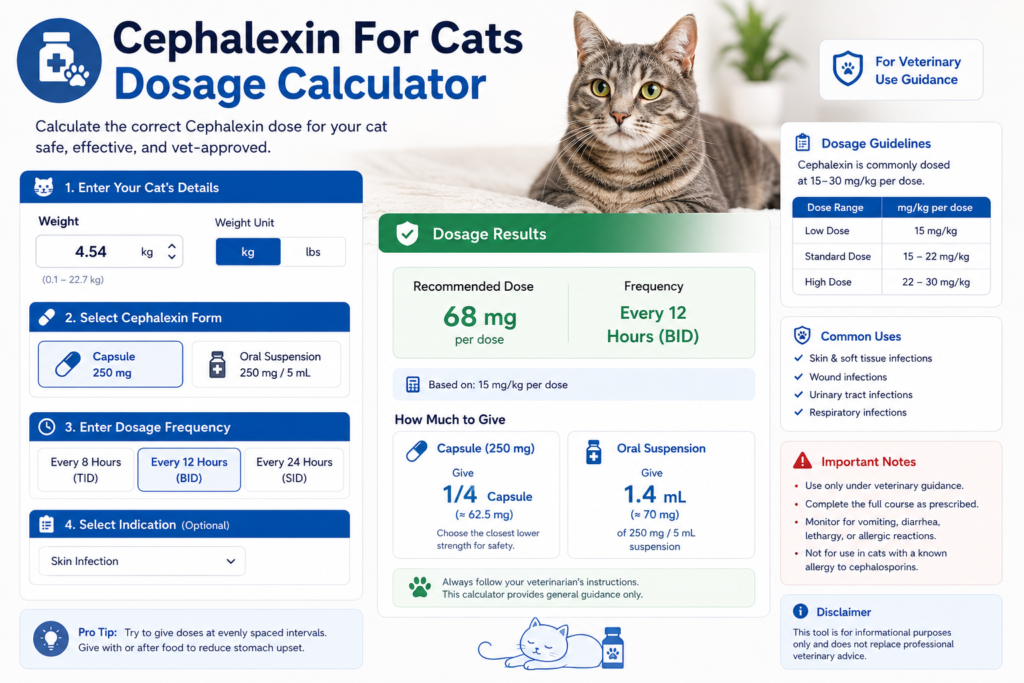
Cephalexin For Cats Dosage Calculator: A Complete Guide to Safe Antibiotic Use in Cats
When a cat develops a bacterial infection — whether it’s a skin wound that won’t heal, a stubborn urinary tract infection, or a respiratory illness with a bacterial component — a veterinarian may prescribe cephalexin as part of the treatment plan. For cat owners tasked with administering this antibiotic at home, understanding the correct dose, the appropriate schedule, and the safety considerations involved is essential to ensuring the medication works as intended and the cat recovers fully.
A cephalexin for cats dosage calculator provides weight-based dosage guidance that translates veterinary prescription information into a clear, personalised daily treatment plan — helping owners administer the right amount at the right intervals for the right duration.
What Is Cephalexin?
Cephalexin is a first-generation cephalosporin antibiotic — a class of antibiotics closely related to penicillins that work by disrupting bacterial cell wall synthesis. Without an intact cell wall, bacteria cannot maintain their structural integrity and die — making cephalexin a bactericidal antibiotic, meaning it actively kills bacteria rather than simply inhibiting their growth.
Cephalexin is effective against a broad range of gram-positive bacteria and some gram-negative bacteria, including:
- Staphylococcus species — the most common cause of skin and wound infections in cats
- Streptococcus species — associated with respiratory and soft tissue infections
- E. coli — a common cause of urinary tract infections
- Proteus mirabilis — associated with urinary and wound infections
- Pasteurella multocida — frequently implicated in bite wound infections
Cephalexin is not effective against all bacteria — it has limited activity against certain gram-negative organisms and no activity against anaerobic bacteria or organisms like Pseudomonas. This is why veterinary culture and sensitivity testing — growing a sample of the infecting bacteria and testing which antibiotics kill it — is the gold standard for antibiotic selection, particularly for chronic or recurrent infections.
How Does a Cephalexin For Cats Dosage Calculator Work?
A cephalexin for cats dosage calculator uses the cat’s body weight as its primary input and applies veterinary-standard dosage guidelines to generate a personalised daily treatment recommendation — including the dose per administration and the dosing frequency.
The standard veterinary dosage range for cephalexin in cats is:
15 to 30 mg per kilogram of body weight
administered every 8 to 12 hours (two to three times daily)
For most routine infections, the lower end of this range — 15 mg/kg every 12 hours — is appropriate. For more serious infections, deeper tissue infections, or cases where the bacteria are known to have higher minimum inhibitory concentrations, doses toward the upper end of the range — up to 30 mg/kg every 8 hours — may be prescribed.
Practical Dosage Examples
| Cat Weight | Dose at 15 mg/kg | Dose at 22 mg/kg | Dose at 30 mg/kg |
|---|---|---|---|
| 2 kg (4.4 lbs) | 30 mg | 44 mg | 60 mg |
| 3 kg (6.6 lbs) | 45 mg | 66 mg | 90 mg |
| 4 kg (8.8 lbs) | 60 mg | 88 mg | 120 mg |
| 5 kg (11 lbs) | 75 mg | 110 mg | 150 mg |
| 6 kg (13.2 lbs) | 90 mg | 132 mg | 180 mg |
| 7 kg (15.4 lbs) | 105 mg | 154 mg | 210 mg |
Because these calculations are entirely weight-dependent, accurate body weight is the most important input. The cat BMI calculator provides a reliable current weight and body condition assessment — ensuring dosage calculations reflect the cat’s actual size rather than an estimated or remembered figure.
What Conditions Is Cephalexin Used to Treat in Cats?
Cephalexin is one of the most versatile antibiotics in feline medicine, with applications across several common infection types.
Skin and Wound Infections
Bacterial skin infections — known as pyoderma — are among the most common reasons cephalexin is prescribed for cats. These infections can arise from:
- Bite wounds from other cats or animals — a particularly common source of deep bacterial infection in outdoor cats
- Scratches and lacerations that become secondarily infected
- Abscess formation beneath the skin — a classic consequence of cat bite injuries where bacteria become trapped under the skin surface and proliferate in a walled-off pocket of pus
- Hot spots — areas of acute moist dermatitis where bacterial overgrowth compounds inflammatory skin changes
Cat bite abscesses in particular respond well to cephalexin following surgical drainage — the combination of physical removal of infected material and appropriate antibiotic coverage significantly accelerates healing and prevents recurrence.
Urinary Tract Infections
Bacterial urinary tract infections (UTIs) are more common in female cats and older cats of both sexes. Cephalexin provides good coverage against the most common uropathogens including E. coli and Proteus species, making it a frequently prescribed antibiotic for uncomplicated lower urinary tract infections.
It’s worth noting that not all feline urinary signs are caused by bacterial infection — feline idiopathic cystitis (FIC) is actually far more common in younger cats and is not bacterial in origin. Cephalexin is only appropriate when a bacterial infection has been confirmed or is strongly suspected based on urinalysis and culture results.
Respiratory Infections
While many upper respiratory infections in cats have a viral component — feline herpesvirus and calicivirus are the most common primary pathogens — secondary bacterial infections frequently complicate the picture, causing mucopurulent nasal discharge, conjunctivitis, and pneumonia. Cephalexin may be prescribed to address these secondary bacterial complications, though it is not effective against the primary viral causes.
Bone and Joint Infections
Osteomyelitis (bone infection) and septic arthritis are serious conditions that require aggressive, prolonged antibiotic treatment. Cephalexin penetrates bone tissue reasonably well and is sometimes included in treatment protocols for these conditions, often in combination with other antibiotics or following surgical debridement.
Post-Surgical Prophylaxis
In some surgical situations — particularly procedures involving contaminated tissue or implanted materials — cephalexin may be prescribed as a prophylactic antibiotic to prevent post-operative infection. Treatment courses in this context are typically shorter than those for established infections.
Dental Infections
Dental disease is extraordinarily common in cats — studies suggest that more than 70% of cats over three years of age have some degree of periodontal disease. When dental infections have a significant bacterial component causing pain, swelling, or systemic signs, cephalexin may be prescribed as part of the management plan — typically alongside or following dental cleaning and extraction procedures.
Cephalexin Formulations Available for Cats
Cephalexin is available in several formulations, and the most appropriate choice depends on the cat’s size, the required dose, and the practicalities of administration.
Capsules
Cephalexin capsules are available in 250 mg and 500 mg strengths — both of which are significantly larger than the typical dose required for most cats. Capsules can be opened and a portion of the powder mixed into food, though accurate dosing from a partial capsule is difficult without precise measurement. This formulation is generally less practical for cats than smaller options.
Tablets
Cephalexin tablets are available in various strengths and can be split or quartered to achieve smaller doses. However, cephalexin has a notably bitter taste that cats frequently detect and reject even when tablets are hidden in food. Coating split tablets in a small amount of butter or a palatable treat may help mask the bitterness.
Oral Liquid Suspension
Cephalexin oral suspension — typically available at 125 mg per 5 ml or 250 mg per 5 ml — allows for more precise dosing at cat-appropriate quantities. The liquid can be administered directly into the mouth via syringe or mixed into a small amount of food. Some liquid formulations require refrigeration and should be checked for expiry date regularly.
Compounded Formulations
For cats that resist oral medication reliably, compounding pharmacies can prepare cephalexin in specialised formulations including:
- Flavoured oral liquids — fish, chicken, or other flavours that cats find more palatable than plain cephalexin
- Tiny capsules or mini-tablets — dose-appropriate sizes that reduce the need for tablet splitting
- Transdermal gels — applied to the inner ear flap, though bioavailability of cephalexin via this route is considerably lower than oral administration and may not achieve therapeutic blood levels reliably
Administering Cephalexin to Cats: Practical Guidance
Getting a cat to accept oral medication is one of the most common challenges of at-home veterinary care. Several techniques can make cephalexin administration more consistent and less stressful for both cat and owner.
The Pill Pocket Method
Soft treat pockets designed to conceal tablets or capsules are a convenient first approach. Many cats will readily accept a treat-wrapped tablet — at least initially. Cats that learn to eat around the hidden tablet require additional strategies.
The Butter or Soft Food Method
Coating a tablet or capsule in a thin layer of butter, cream cheese, or a small amount of the cat’s favourite wet food can help mask both the taste and the texture of the medication. Offering the medicated food first — before the cat’s regular meal, when hunger is highest — improves acceptance rates.
The Direct Pilling Technique
When other methods fail, direct oral administration is necessary. The technique involves:
- Wrapping the cat in a towel to minimise movement
- Positioning the cat facing away from the dominant hand
- Gently tilting the head back with one hand while using the other to open the lower jaw
- Placing the tablet or capsule as far back on the tongue as possible — ideally past the base of the tongue to trigger swallowing
- Immediately following with a small syringe of water (approximately 6 ml) to ensure the medication reaches the stomach and does not lodge in the oesophagus — where it can cause serious irritation or ulceration
The Two-Person Method
For particularly resistant cats, having one person hold and restrain the cat while the other administers the medication significantly improves both safety and success rates.
Syringe Administration of Liquid
Liquid cephalexin can be drawn into a small oral dosing syringe and administered by inserting the syringe tip into the corner of the cat’s mouth — between the cheek and the teeth — and slowly dispensing the liquid while the cat swallows. Administering in small increments rather than all at once reduces the risk of the cat spitting the medication out or inhaling it.
Duration of Treatment: Why Completing the Full Course Matters
One of the most important — and most commonly neglected — aspects of antibiotic treatment is completing the full prescribed course, even when the cat appears to have fully recovered before the medication runs out.
Antibiotic courses are designed based on the pharmacokinetics of the drug and the biology of bacterial infection. When antibiotics are discontinued prematurely:
- The most susceptible bacteria die first, leaving the most resistant survivors
- These resistant bacteria repopulate the infection site
- The resulting infection is harder to treat and may require stronger or different antibiotics
- The risk of developing antibiotic-resistant infections — both in the individual cat and in the broader environment — increases
Typical cephalexin treatment courses for cats range from:
- 7 to 10 days for uncomplicated skin infections and urinary tract infections
- 14 to 21 days for deeper tissue infections, abscesses, and respiratory infections
- 4 to 8 weeks or longer for bone infections and chronic or recurrent infections
The cat quality of life calculator provides a useful framework for monitoring overall wellbeing during antibiotic treatment — helping owners track whether the cat is responding to treatment, maintaining appropriate appetite and hydration, and showing signs of improvement across the key quality of life dimensions.
Potential Side Effects of Cephalexin in Cats
Cephalexin is generally well tolerated in cats, but side effects can occur — particularly with higher doses or prolonged treatment courses.
Gastrointestinal Effects
The most commonly reported side effects of cephalexin in cats are gastrointestinal:
- Vomiting — most commonly occurring shortly after administration, particularly on an empty stomach. Giving cephalexin with food reduces vomiting frequency significantly for most cats.
- Diarrhoea — antibiotic-associated diarrhoea results from disruption of the normal gut microbiome. Mild, transient loose stools are relatively common and typically resolve when treatment ends. Severe or bloody diarrhoea requires veterinary attention.
- Reduced appetite — some cats eat less while on cephalexin, particularly if nausea accompanies treatment. Monitoring food intake during treatment helps catch significant appetite loss early. The cat calorie calculator provides a useful baseline for assessing whether caloric intake during treatment remains adequate for the cat’s size and condition.
- Excessive drooling — the bitter taste of cephalexin, particularly if a tablet is crushed or a capsule opens in the mouth, can trigger profuse salivation and drooling. This is unpleasant but not medically dangerous — though it may indicate the need for a different administration method or formulation.
Allergic Reactions
Cephalexin belongs to the beta-lactam antibiotic family, which includes penicillins. Cross-reactivity between cephalosporins and penicillins is possible, meaning cats with documented penicillin allergies may also react to cephalexin — though cross-reactivity rates are lower than once believed.
Signs of an allergic reaction to cephalexin include:
- Facial swelling — particularly around the muzzle, eyes, or throat
- Hives or skin redness
- Vomiting and diarrhoea occurring together
- Difficulty breathing
- Sudden lethargy or collapse
Any suspected allergic reaction to cephalexin requires immediate discontinuation of the medication and urgent veterinary attention.
Neurological Effects at High Doses
At very high doses — well above therapeutic ranges — cephalosporins can cause neurological signs including tremors and seizures. This is an uncommon complication at standard therapeutic doses but serves as a reminder of the importance of accurate weight-based dosing.
Microbiome Disruption and Secondary Infections
Prolonged antibiotic use can disrupt the normal bacterial populations of the gut and other mucosal surfaces, potentially creating conditions that favour overgrowth of resistant organisms or fungal species like Candida. Probiotic supplementation — using veterinary-appropriate probiotic formulations — is sometimes recommended alongside extended antibiotic courses to support gut microbiome health during and after treatment.
Cats That Require Special Consideration Before Receiving Cephalexin
Kittens
Very young kittens have immature renal and hepatic function, which affects how they metabolise and excrete cephalexin. Standard adult dosing guidelines are not directly applicable to neonates and very young kittens. The cat age calculator helps establish a cat’s life stage, which the veterinary team will use alongside body weight when determining appropriate paediatric dosing.
Senior Cats
Older cats frequently have reduced kidney function — even when not formally diagnosed with chronic kidney disease. Since cephalexin is primarily eliminated through the kidneys, cats with reduced renal clearance may accumulate the drug more than younger, healthy adults. Dose adjustment or reduced dosing frequency may be appropriate for cats with documented kidney disease.
Cats With Known Antibiotic Allergies
Any cat with a documented reaction to penicillin-class antibiotics — amoxicillin, ampicillin, amoxicillin-clavulanate — should be flagged to the veterinarian before cephalexin is prescribed, as cross-reactive allergy is possible.
Cats on Other Medications
Cephalexin has relatively few significant drug interactions compared to some other antibiotics, but owners should always disclose the complete medication list to the prescribing veterinarian. Of particular note:
- Probenecid — reduces renal excretion of cephalexin, potentially increasing blood levels
- Nephrotoxic drugs — combining cephalexin with other medications that stress the kidneys (such as certain NSAIDs or aminoglycoside antibiotics) requires careful monitoring of renal function
- Metformin — cephalexin may inhibit renal tubular secretion of metformin, potentially increasing metformin levels in cats receiving this medication for diabetes management
Antibiotic Stewardship: Using Cephalexin Responsibly
Antibiotic resistance is one of the most significant public health challenges of the current era — affecting human medicine, veterinary medicine, and the broader environment in interconnected ways. Responsible antibiotic use in cats is part of this larger picture.
Use Antibiotics Only When Necessary
Antibiotics are only effective against bacterial infections — they have no effect on viral infections, which cause the majority of upper respiratory illnesses in cats. Using cephalexin for a viral infection exposes the cat to side effects, disrupts the gut microbiome, and contributes to resistance without providing any therapeutic benefit.
Complete Every Course
Stopping treatment early — even when the cat appears recovered — leaves surviving bacteria that are more likely to carry resistance traits. Completing every prescribed course is the single most important individual action owners can take to use antibiotics responsibly.
Never Use Leftover Antibiotics Without Veterinary Guidance
Administering leftover cephalexin from a previous prescription — without a current veterinary assessment confirming an appropriate indication, correct dose, and suitable treatment duration — is a common but genuinely harmful practice. The dose may be wrong for the current cat’s weight, the infection may not be bacterial, and the treatment duration may be insufficient to clear the infection completely.
Follow Up as Directed
For infections that require culture and sensitivity testing, or that involve prolonged treatment courses, following up with the veterinarian as directed — including repeat culture testing to confirm resolution — ensures that treatment is working and that any emerging resistance is identified and addressed promptly.
Storage and Handling of Cephalexin
Proper storage preserves medication efficacy and prevents accidental ingestion by pets or household members.
Capsules and tablets — store at room temperature in a dry location away from direct sunlight and humidity. Keep in the original dispensing container with the child-resistant cap secured.
Oral liquid suspension — many liquid cephalexin formulations require refrigeration after reconstitution and have a limited shelf life of 7 to 14 days once mixed. Always check the label for specific storage requirements and discard unused liquid after the stated expiry period.
Keep out of reach of all pets and children — medication storage should always prioritise preventing accidental access. Cats in multi-pet households are particularly curious and can access medications left on countertops or tables.
When Cephalexin Isn’t the Right Choice
While cephalexin is effective against a broad range of bacterial infections in cats, it is not universally appropriate — and recognising when a different antibiotic is needed is as important as knowing when cephalexin is the right choice.
Culture and sensitivity results indicating resistance — if laboratory testing reveals that the infecting bacteria are resistant to cephalexin, continuing treatment is ineffective and potentially harmful by allowing resistant organisms to proliferate.
Infections caused by organisms outside cephalexin’s spectrum — Pseudomonas aeruginosa, Mycoplasma, Bartonella, and anaerobic infections require different antibiotic classes.
Cats with confirmed penicillin allergy — where cross-reactive allergy is a genuine concern, alternative antibiotic classes should be used.
Deep or life-threatening infections — severe sepsis, endocarditis, or other serious systemic infections may require injectable antibiotics and hospitalised care rather than oral cephalexin at home.
Final Thoughts
A cephalexin for cats dosage calculator provides the structured, weight-based guidance that responsible antibiotic administration in cats requires. By translating veterinary prescription information into a clear daily treatment plan — with the correct dose, the correct frequency, and the correct duration — it helps owners fulfil their role in the treatment partnership accurately and confidently.
Cephalexin is a safe, effective, and versatile antibiotic for many common feline bacterial infections — but like all antibiotics, its benefits are only fully realised when it is used appropriately, dosed correctly, administered consistently, and completed in full. Combined with regular monitoring of the cat’s response, nutritional support during recovery, and open communication with the veterinary team, a well-managed cephalexin course gives cats the best possible chance of a complete and lasting recovery.