Animal Mortality Rate Calculator

Ahmad zee
Table of Contents
Toggle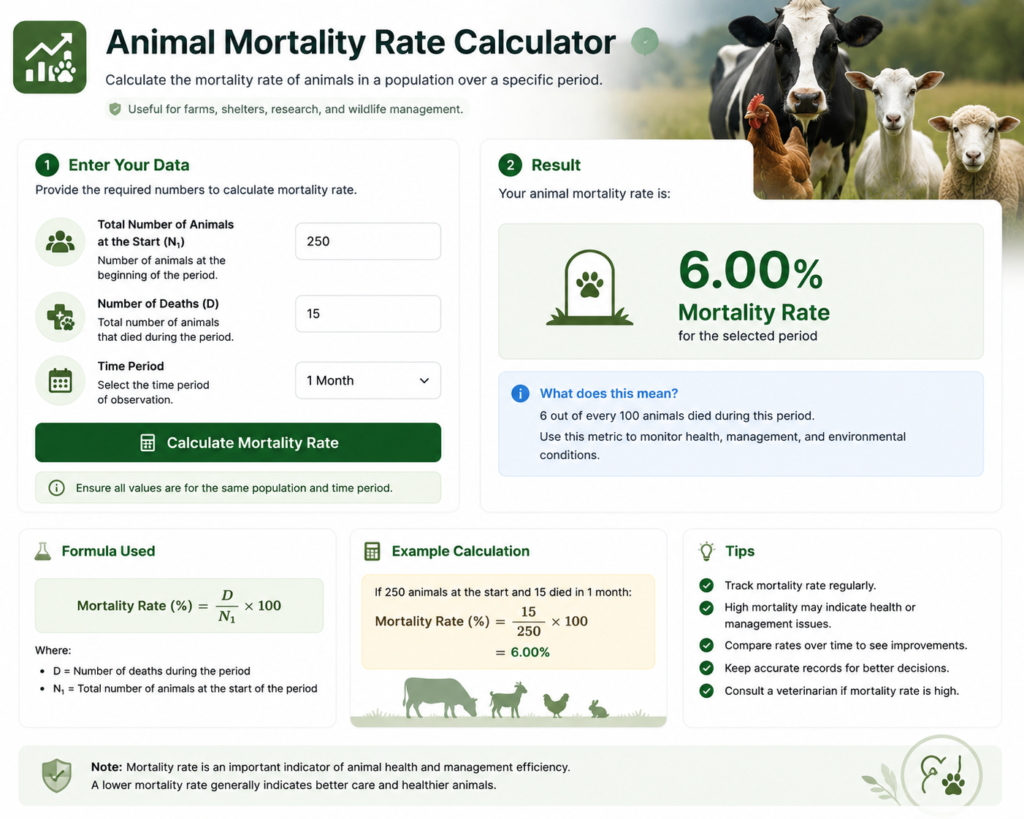
Animal Mortality Rate Calculator
An Animal Mortality Rate Calculator helps farmers, veterinarians, researchers, and animal caretakers calculate the percentage of animals that have died within a population over a specific period. Monitoring mortality rates is an essential part of animal health management because it helps identify disease outbreaks, environmental issues, nutritional deficiencies, and management challenges.
Whether managing livestock, poultry, aquaculture, laboratory animals, or wildlife populations, calculating mortality rates provides valuable insights for improving animal welfare and operational efficiency.
What Is an Animal Mortality Rate Calculator?
An Animal Mortality Rate Calculator determines the percentage of animals that died from an original population during a defined period.
The calculator requires basic information such as:
- Initial number of animals
- Number of animal deaths
- Observation period (optional)
It then calculates the mortality rate as a percentage, making it easier to monitor herd or flock health over time.
How Does the Animal Mortality Rate Calculator Work?
The calculator uses a straightforward formula based on the total population and the number of deaths.
Formula
Mortality Rate (%) = (Number of Deaths ÷ Total Population) × 100
For example:
| Total Animals | Deaths | Mortality Rate |
|---|---|---|
| 100 | 2 | 2% |
| 250 | 10 | 4% |
| 500 | 15 | 3% |
| 1,000 | 20 | 2% |
| 2,000 | 100 | 5% |
The result shows the percentage of the population lost during the selected period.
Why Calculate Animal Mortality Rate?
Tracking mortality rates helps identify problems before they become severe.
Common reasons include:
- Monitoring herd health
- Detecting disease outbreaks
- Measuring farm performance
- Evaluating veterinary treatments
- Improving animal welfare
- Supporting breeding programmes
- Reducing financial losses
Regular monitoring allows caretakers to take corrective action more quickly.
Factors That Affect Mortality Rate
Several factors influence mortality within animal populations.
Disease
Infectious diseases are one of the leading causes of increased mortality.
Nutrition
Poor-quality feed or nutritional deficiencies can weaken animals and increase death rates.
Housing Conditions
Overcrowding, poor ventilation, and unsanitary environments contribute to illness.
Environmental Stress
Extreme temperatures, humidity, and poor water quality can negatively affect survival.
Age
Young and elderly animals generally have higher mortality risks than healthy adults.
Predators and Accidents
In outdoor environments, predators and accidental injuries may also increase mortality.
Benefits of Using an Animal Mortality Rate Calculator
Using this calculator provides several advantages.
- Quickly calculates mortality percentage
- Supports health monitoring
- Helps detect management problems
- Assists veterinary record-keeping
- Improves farm productivity
- Supports research and conservation projects
- Suitable for many animal species
Common Applications
An Animal Mortality Rate Calculator is commonly used for:
- Cattle farms
- Sheep farms
- Goat farms
- Pig production
- Poultry operations
- Rabbit breeding
- Fish farming
- Wildlife conservation
- Veterinary clinics
- Animal research
Tips for Reducing Animal Mortality
Reducing mortality starts with good management practices.
- Provide balanced nutrition.
- Maintain clean housing.
- Ensure access to clean drinking water.
- Follow vaccination schedules.
- Isolate sick animals promptly.
- Monitor animals daily.
- Reduce overcrowding.
- Work closely with a veterinarian.
Frequently Asked Questions
What is an animal mortality rate?
It is the percentage of animals that die within a population during a specific period.
Why is mortality rate important?
It helps monitor animal health, evaluate management practices, and detect potential disease outbreaks.
Can this calculator be used for pets?
Yes. It can be used for pets, livestock, poultry, wildlife, aquaculture, and laboratory animals.
How often should mortality be monitored?
Most farms and animal facilities monitor mortality daily, weekly, monthly, or annually depending on the species and production system.
Does a higher mortality rate always indicate disease?
Not always. Nutrition, environmental conditions, injuries, age, and management practices can also influence mortality.
Other Useful Calculators
Explore more biology and animal care calculators on Omni Calculator Store:
- Dry Matter Calculator
https://omnicalculator.store/dry-matter-calculator/ - Horse Weight Calculator
https://omnicalculator.store/horse-weight-calculator/ - Dog Life Expectancy Calculator
https://omnicalculator.store/home/biology/dog-life-expectancy-calculator/ - Goat Gestation Calculator
https://omnicalculator.store/home/biology/goat-gestation-calculator/ - Hamster Age Calculator
https://omnicalculator.store/hamster-age-calculator/
Conclusion
An Animal Mortality Rate Calculator is a valuable tool for monitoring the health and performance of animal populations. By calculating the percentage of deaths within a herd, flock, or group, caretakers can quickly identify trends, improve management practices, and make informed decisions to protect animal welfare. Whether used in farming, veterinary medicine, research, or wildlife conservation, regular mortality monitoring contributes to healthier animals and more effective long-term