Horse Weight Calculator

Ahmad zee
Table of Contents
Toggle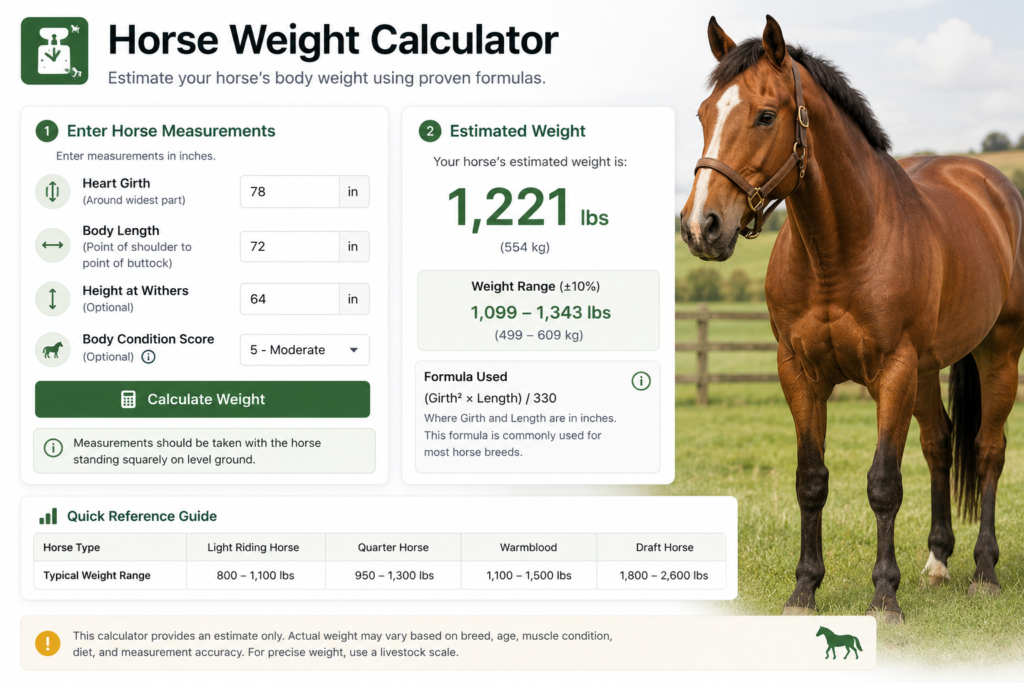
Horse Weight Calculator
A Horse Weight Calculator helps horse owners estimate a horse’s body weight without needing a livestock scale. By using simple body measurements such as the heart girth and body length, this calculator provides a reliable estimate that supports proper feeding, medication dosing, exercise planning, and overall health management.
Knowing a horse’s approximate weight is essential for responsible care. Whether someone owns a pony, riding horse, draft horse, or performance horse, regular weight monitoring helps identify changes that may indicate health issues or dietary adjustments.
Why Horse Weight Matters
Maintaining an appropriate body weight plays a significant role in a horse’s wellbeing. Underweight horses may lack sufficient nutrition, while overweight horses are more susceptible to metabolic disorders, laminitis, and joint stress.
A healthy weight helps with:
- Creating balanced feeding plans
- Administering accurate medication doses
- Monitoring growth in young horses
- Managing breeding programs
- Improving athletic performance
- Supporting senior horse care
- Preventing obesity-related conditions
How a Horse Weight Calculator Works
A Horse Weight Calculator estimates weight using body measurements instead of a scale.
The most commonly used measurements include:
- Heart Girth: Circumference around the horse’s chest, just behind the front legs.
- Body Length: Distance from the point of the shoulder to the point of the buttock.
After entering these values, the calculator estimates the horse’s weight using an established formula developed for equine body measurements.
Although it is an estimate, it is generally accurate enough for routine management.
How to Measure a Horse Correctly
Accurate measurements improve the reliability of the calculated weight.
Step 1: Measure the Heart Girth
Wrap a measuring tape around the widest part of the horse’s chest just behind the front legs.
Step 2: Measure the Body Length
Measure from the point of the shoulder to the point of the buttock while keeping the tape straight.
Step 3: Enter Measurements
Input the values into the Horse Weight Calculator.
Step 4: Review the Estimated Weight
The calculator instantly provides an estimated body weight.
Average Horse Weights
| Horse Type | Average Weight |
|---|---|
| Miniature Horse | 70–160 kg |
| Pony | 180–400 kg |
| Arabian | 360–450 kg |
| Quarter Horse | 430–590 kg |
| Thoroughbred | 450–590 kg |
| Warmblood | 500–700 kg |
| Draft Horse | 700–1,000+ kg |
Actual weight varies depending on age, breed, muscle condition, and overall health.
Factors That Affect Horse Weight
Several factors influence a horse’s body weight.
Breed
Larger breeds naturally weigh more than smaller breeds and ponies.
Age
Foals, young horses, adults, and senior horses all have different growth and maintenance needs.
Diet
Proper nutrition supports healthy weight maintenance throughout the year.
Exercise
Regular work helps build muscle while preventing excess fat accumulation.
Health Conditions
Parasites, dental issues, illness, or metabolic disorders can lead to unexpected weight changes.
Benefits of Using a Horse Weight Calculator
Using a calculator offers several practical advantages.
- No expensive livestock scale required
- Fast and convenient estimation
- Supports accurate medication dosing
- Helps monitor weight changes over time
- Improves feeding management
- Useful for veterinarians and horse owners
- Ideal for regular health checks
Horse Body Condition vs. Weight
Weight alone does not determine whether a horse is healthy.
A horse with a normal weight may still carry too much or too little body fat. Combining weight estimation with a Body Condition Score (BCS) provides a more complete assessment.
Horse owners should regularly evaluate:
- Ribs
- Neck crest
- Withers
- Shoulder
- Back
- Tailhead
How Often Should a Horse Be Weighed?
Most experts recommend checking weight:
- Every month for healthy adult horses
- Every two weeks during weight-loss or weight-gain programs
- Before adjusting feed
- Before administering medications
- During pregnancy
- Throughout a foal’s growth
Recording results helps identify gradual changes before they become serious.
Tips for Maintaining a Healthy Horse Weight
Healthy weight management involves consistent care.
Some best practices include:
- Provide balanced nutrition.
- Feed according to workload.
- Ensure constant access to fresh water.
- Offer high-quality forage.
- Exercise regularly.
- Schedule routine veterinary examinations.
- Monitor body condition throughout the year.
- Adjust feed during seasonal changes.
Common Mistakes When Estimating Horse Weight
Many people make simple errors that affect accuracy.
Avoid:
- Measuring too loosely
- Measuring over thick winter coats
- Using incorrect body landmarks
- Estimating by appearance alone
- Ignoring regular weight checks
Consistent measuring techniques provide the most reliable results.
Frequently Asked Questions
How accurate is a Horse Weight Calculator?
A properly measured horse usually receives an estimate within approximately 5–10% of its actual weight, making the calculator suitable for everyday management.
Can a Horse Weight Calculator replace a livestock scale?
No. A livestock scale provides the most precise measurement, but a calculator offers an excellent estimate for routine use.
Should horse weight be checked regularly?
Yes. Regular monitoring helps detect health changes early and supports better feeding and medication decisions.
Does breed affect the estimated weight?
Yes. Different breeds naturally vary in body size, muscle mass, and overall build.
Is body condition more important than weight?
Both are important. Weight provides an estimate of body mass, while body condition assesses fat distribution and overall health.
Helpful Animal Calculators
Readers interested in animal health may also find these calculators useful:
- Dog Nutrition Calculator
- Dog Water Intake Calculator
- Cat BMI Calculator
- Bird Age Calculator
- Rabbit Cage Size Calculator
Conclusion
A Horse Weight Calculator is a practical tool that helps estimate a horse’s body weight quickly and conveniently. Regular weight monitoring supports healthier feeding practices, safer medication dosing, and improved long-term care. While it does not replace a livestock scale, it provides dependable estimates for most day-to-day management needs. Combined with regular veterinary care and body condition assessments, this calculator helps owners make informed decisions that contribute to a healthier and happier horse.
Other Useful Calculators
Explore more animal and biology calculators that may be helpful:
- Horse Gestation Calculator
https://omnicalculator.store/home/biology/horse-gestation-calculator/ - Bird Age Calculator
https://omnicalculator.store/bird-age-calculator/ - Dog Nutrition Calculator
https://omnicalculator.store/home/biology/dog-nutrition-calculator/ - Cat BMI Calculator
https://omnicalculator.store/home/biology/cat-bmi-calculator/ - Rabbit Gestation Calculator
https://omnicalculator.store/home/biology/rabbit-gestation-calculator/