Dog Size Calculator

Ahmad zee
Table of Contents
Toggle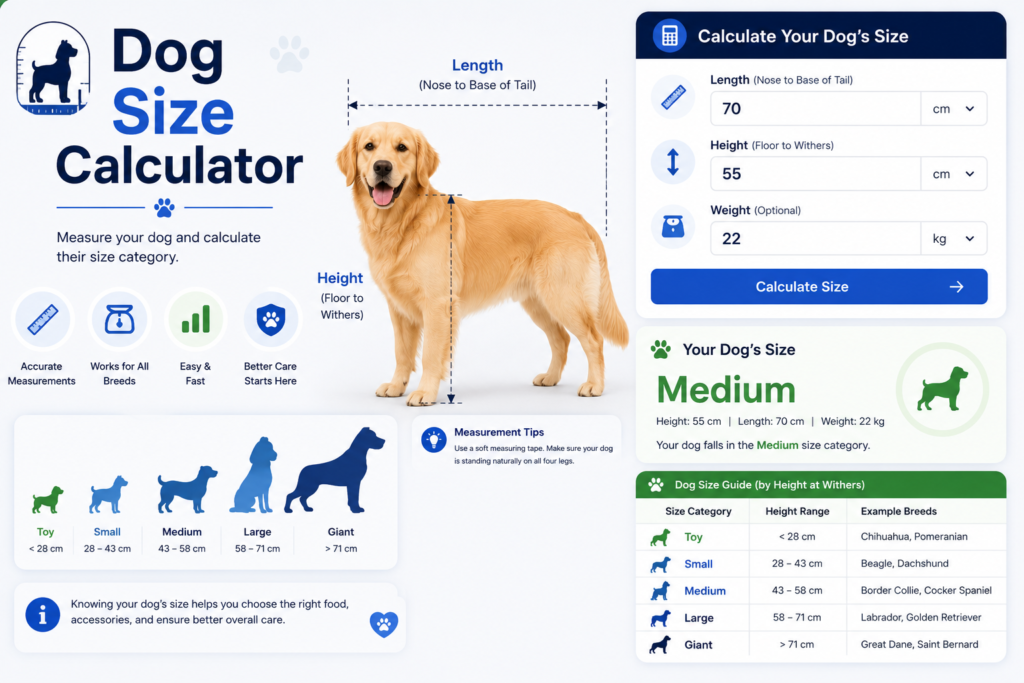
Dog Size Calculator: How Big Will Your Dog Get?
Bringing home a new puppy is one of the most exciting experiences a pet owner can have — but it also comes with plenty of questions. One of the most common? “How big is my dog going to get?” That’s exactly where a dog size calculator comes in. This handy tool helps pet owners predict the adult size of their dog based on a few simple inputs, taking the guesswork out of planning for the future.
Whether someone is figuring out which dog crate to buy, whether their apartment can accommodate their furry companion, or simply satisfying their curiosity, a dog size calculator gives reliable estimates that make pet ownership a little easier and a lot more informed.
What Is a Dog Size Calculator?
A dog size calculator is an online tool designed to estimate a puppy’s adult size — including weight and sometimes height — based on factors like current age, current weight, and breed. Some calculators also factor in the size of the dog’s parents, which can significantly improve prediction accuracy.
The tool uses established growth formulas and breed-specific data to generate an estimated adult weight range. While no calculator can guarantee a 100% precise result, a good dog size calculator provides a reliable ballpark that helps owners make smarter decisions about food, housing, accessories, and veterinary care.
It’s worth noting that dog size calculators aren’t just for puppies. Adult dogs whose background is unknown — such as rescues or mixed breeds — can also benefit from these tools, giving owners a clearer picture of what their dog’s healthy weight range should look like.
Why Does Knowing Your Dog’s Adult Size Matter?
Understanding a dog’s projected adult size isn’t just a fun fact — it has real practical value. Here’s why so many dog owners and breeders rely on dog size calculators:
1. Choosing the Right Food and Portion Sizes
Nutrition needs vary significantly between small, medium, large, and giant breed dogs. Puppies of large breeds, for example, need food with specific calcium-to-phosphorus ratios to support healthy bone development. A dog food calculator can work hand-in-hand with a size calculator to ensure puppies receive the right amount of nutrients at each stage of their growth.
2. Selecting Appropriate Gear
Dog beds, crates, harnesses, collars, and carriers are all size-dependent. Buying a crate that’s too small is a waste of money and uncomfortable for the dog; buying one that’s too large can make a puppy feel insecure. Knowing the expected adult size in advance helps owners invest wisely from day one.
3. Planning Living Arrangements
Not all living spaces are suitable for all dog sizes. A great Dane might struggle in a small studio apartment, while a chihuahua would thrive. Before adopting or purchasing a puppy, knowing its expected adult size helps ensure the match between dog and home is a good one.
4. Monitoring Healthy Growth
Tracking whether a puppy is growing at a healthy rate is an important part of responsible pet ownership. If a puppy appears to be growing too quickly or too slowly compared to projections, it may signal a nutritional issue or an underlying health concern worth discussing with a veterinarian.
5. Breed-Specific Health Awareness
Certain health conditions are more common in specific size categories. Giant breeds are prone to joint issues and shorter lifespans, while toy breeds can be susceptible to dental overcrowding and hypoglycemia. Knowing where a dog falls on the size spectrum helps owners and vets proactively address these concerns.
How Does a Dog Size Calculator Work?
Most dog size calculators use a combination of the following inputs to generate a size prediction:
- Current age (in weeks or months)
- Current weight
- Breed or breed mix
- Sex (male or female)
- Parent sizes (if known)
Once the data is entered, the calculator applies a growth formula. One of the most common methods is the puppy weight formula, which estimates adult weight by dividing the puppy’s current weight by its age in weeks and then multiplying by 52. However, this simple formula works best for certain growth phases and may be less accurate outside of them.
More advanced calculators use breed-specific growth curves, which account for the fact that different breeds mature at different rates. A German Shepherd, for example, reaches its adult size much later than a Cavalier King Charles Spaniel.
Dog Size Categories: What to Expect
Dogs are generally grouped into five main size categories. Understanding where a breed falls helps set realistic expectations before even entering data into a calculator.
Toy Breeds (Under 12 lbs)
Toy breeds are the smallest of the bunch. Chihuahuas, Pomeranians, Yorkshire Terriers, and Maltese fall into this category. These dogs typically reach their adult size by six to eight months of age, making them one of the fastest-maturing groups. Despite their small stature, toy breeds are often known for big personalities and long lifespans.
Small Breeds (12–25 lbs)
Dogs like Beagles, French Bulldogs, and Shih Tzus fall into the small breed category. They usually reach adult size between eight and twelve months. Small breeds tend to be manageable for apartment living and are popular among first-time dog owners.
Medium Breeds (25–60 lbs)
Medium breeds such as Border Collies, Cocker Spaniels, and Basset Hounds typically reach full size between twelve and fifteen months. This size range is often considered the “sweet spot” — large enough to be robust and active, but not so large that they’re difficult to manage.
Large Breeds (60–100 lbs)
Labrador Retrievers, Golden Retrievers, and German Shepherds are classic examples of large breeds. These dogs take longer to mature, often reaching full adult size between eighteen months and two years. They require more food, more exercise, and often more space than smaller breeds. Owners planning to use a dog calorie calculator will find it especially useful for managing the dietary needs of large breeds throughout their growth phase.
Giant Breeds (Over 100 lbs)
Great Danes, Saint Bernards, Mastiffs, and Newfoundlands are among the giant breed dogs. They may not reach full size until two to three years of age. Giant breeds have specific health needs, shorter average lifespans, and require careful monitoring of their weight and joint health throughout puppyhood and beyond.
How Accurate Are Dog Size Calculators?
This is one of the most common questions pet owners ask — and the honest answer is: it depends. For purebred dogs with well-documented breed standards, a dog size calculator tends to be quite accurate. Breed data helps the calculator apply the right growth curve, and parental size (if known) refines the estimate further.
For mixed-breed or “designer” dogs, accuracy can vary more. The genetic combination of two or more breeds can produce unpredictable size outcomes. A Labradoodle, for example, might lean toward the Labrador parent’s size or the Poodle parent’s — or land somewhere in between. In these cases, a dog size calculator provides a useful estimate, but owners should treat the result as a range rather than a fixed prediction.
DNA testing has become increasingly popular among mixed-breed owners, and some of the more sophisticated dog size calculators can incorporate DNA breed composition data to improve accuracy. While not infallible, these tools represent the most science-backed approach to predicting a mixed-breed dog’s adult size.
Using a Dog Size Calculator Alongside Other Dog Health Tools
A dog size calculator is most powerful when used as part of a broader toolkit for responsible dog care. Several related calculators can help owners build a complete picture of their dog’s health and development:
- Dog BMI Calculator: Once a dog reaches adulthood, this tool helps assess whether they’re at a healthy weight relative to their size — an important metric for long-term health management.
- Dog Age Calculator: Understanding a dog’s age in human years helps put their development and health milestones in context, especially for large and giant breeds that age differently than smaller ones.
- Dog Pregnancy Calculator: For breeders expecting a litter, knowing the expected size of the parent breeds can help prepare for the likely size range of the puppies — making this a natural companion tool to any size estimator.
Using these tools together gives dog owners a more complete understanding of their pet’s development, nutrition, and long-term health trajectory.
Tips for Getting the Most Accurate Dog Size Estimate
Getting a reliable prediction from a dog size calculator comes down to the quality of the inputs. Here are a few practical tips:
Weigh the puppy accurately. Even small differences in weight measurements can affect the output. Use a digital scale and weigh the puppy at the same time of day for consistency.
Know the exact age in weeks. Many calculators are sensitive to age, especially during rapid growth phases. Knowing the puppy’s birthday makes a significant difference in result accuracy.
Include both parent sizes when possible. If the puppy came from a reputable breeder, asking for information about the sire and dam’s adult weights is always worthwhile. This data point is one of the strongest predictors of adult size.
Use the calculator at multiple growth checkpoints. Tracking predictions at six weeks, ten weeks, sixteen weeks, and so on allows owners to see how the estimate evolves and whether the puppy is growing as expected.
Consult a veterinarian. While a dog size calculator is a great starting point, a vet can provide additional insight based on a physical exam, bone structure assessment, and overall health evaluation. For complex cases or unusual growth patterns, professional guidance is irreplaceable.
Common Misconceptions About Dog Size Prediction
There are a few myths floating around when it comes to predicting a dog’s adult size — it’s worth clearing them up.
“Paw size predicts adult size.” This is one of the most popular beliefs among dog owners, but it’s largely unreliable as a standalone metric. Paw size can be a rough indicator, but it’s not a scientifically validated measurement for size prediction and shouldn’t replace a proper calculator.
“All puppies of the same breed will be the same size.” Breed standards define a range, not a fixed number. Individual genetics, nutrition, health history, and environment all influence where within that range a particular dog lands.
“If the puppy is small now, it will always be small.” Runts of a litter can sometimes catch up significantly once they receive proper nutrition and veterinary care. Conversely, a large puppy doesn’t always become the largest adult in a litter.
Final Thoughts
A dog size calculator is one of the most practical tools available to modern pet owners. Whether someone is preparing to welcome a new puppy into their home or trying to better understand the growth trajectory of a rescue dog, this tool provides valuable, data-driven insight that helps with everything from nutrition planning to lifestyle compatibility.
By combining a dog size calculator with complementary tools — covering nutrition, age, body condition, and reproductive health — dog owners can approach their pet’s care with confidence and clarity. After all, knowing what to expect is the first step toward giving any dog the happy, healthy life it deserves.