Dog Life Expectancy Calculator

Ahmad zee
Table of Contents
Toggle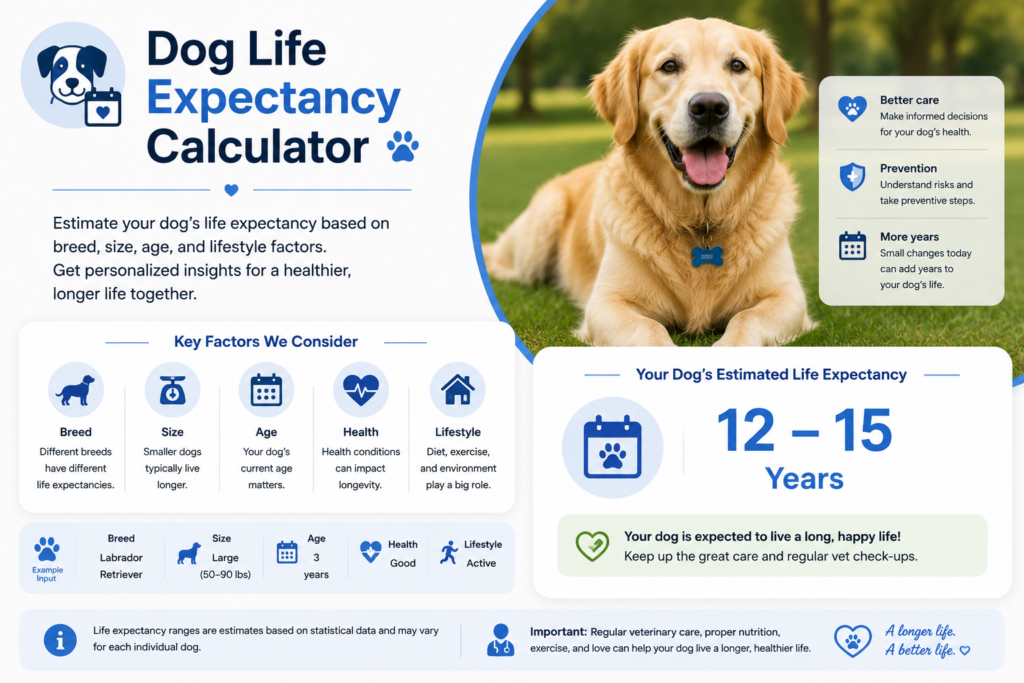
Dog Life Expectancy Calculator: How Long Will Your Dog Live?
Every dog owner asks the same question at some point — how long will my dog live? It’s one of the most emotionally charged questions in pet ownership, and while no one can predict the future with certainty, a dog life expectancy calculator can offer a meaningful, science-backed estimate. These tools take the guesswork out of the equation by factoring in breed, size, weight, and overall health to help dog owners plan a longer, healthier life for their companions.
What Is a Dog Life Expectancy Calculator?
A dog life expectancy calculator is an online tool that estimates how many years a dog is likely to live based on several biological and breed-related factors. It uses established veterinary research and lifespan data to generate a realistic estimate of a dog’s remaining years.
Unlike general assumptions such as “small dogs live longer,” these calculators go deeper. They consider the dog’s current age, breed classification, size category, and sometimes even health conditions or lifestyle habits. The result gives dog owners something concrete to work with — a lifespan estimate that helps them make better decisions about care, nutrition, veterinary check-ups, and quality of life planning.
Why Does a Dog’s Life Expectancy Matter?
Understanding a dog’s expected lifespan is about more than just satisfying curiosity. It plays a direct role in responsible pet ownership. Knowing roughly how many healthy years a dog has ahead allows owners to:
- Plan for age-appropriate care at each life stage
- Budget for veterinary costs as the dog grows older
- Adjust diet and exercise routines to match the dog’s current age
- Recognize when a dog has entered its senior years and needs extra attention
- Make informed decisions about preventive care and health screenings
Using the Dog Age Calculator alongside a life expectancy tool can help owners understand not just how old their dog is in human years, but how that age translates to their dog’s overall health trajectory.
Key Factors That Influence Dog Life Expectancy
A dog life expectancy calculator relies on well-documented biological patterns to generate its estimates. Here are the most significant factors it takes into account:
1. Breed and Genetics
Breed is one of the strongest predictors of how long a dog will live. Purebred dogs often carry breed-specific health vulnerabilities — some are prone to heart disease, others to hip dysplasia, and some to respiratory issues. Mixed-breed dogs tend to benefit from what scientists call “hybrid vigor,” which can sometimes result in longer, healthier lives.
Certain breeds are simply wired to live longer. Chihuahuas, Dachshunds, Toy Poodles, and Beagles are well-known for their longevity. On the other end of the spectrum, large and giant breeds like Great Danes, Saint Bernards, and Irish Wolfhounds tend to have shorter lifespans, often living just seven to ten years.
2. Body Size and Weight
One of the most well-established patterns in canine biology is the inverse relationship between body size and lifespan. Smaller dogs tend to live significantly longer than larger ones. This is the opposite of what we see in most other mammals, where larger body size often correlates with a longer life.
Scientists believe that larger dogs age faster at a cellular level, which may explain why a ten-kilogram Shih Tzu can often outlive a fifty-kilogram Rottweiler by several years. Keeping track of a dog’s weight is equally important — obesity shortens lifespan considerably. The Dog BMI Calculator is a practical resource that helps owners monitor their dog’s body condition and avoid weight-related health complications.
3. Spaying and Neutering
Research suggests that spayed and neutered dogs tend to live longer than intact dogs. Neutering eliminates the risk of certain reproductive cancers and reduces behaviors that can lead to injury or disease. While the exact impact on lifespan varies by breed and size, most veterinary experts agree that the procedure has a net positive effect on longevity.
4. Diet and Nutrition
A nutritionally balanced diet is one of the most powerful tools owners have for extending their dog’s healthy years. Dogs that receive high-quality food appropriate for their age, size, and activity level are less likely to suffer from obesity, diabetes, joint problems, and organ failure — all of which can shorten lifespan. Using the Dog Food Calculator can help owners determine the right daily feeding amounts to keep their dogs at a healthy weight throughout their lives.
5. Veterinary Care and Preventive Health
Regular veterinary visits, vaccinations, dental cleanings, parasite prevention, and health screenings all add years to a dog’s life. Dogs that receive consistent preventive care are more likely to have health issues caught early, when they are still treatable. Skipping vet visits to save money often results in much higher costs — and much shorter lifespans — later on.
6. Exercise and Mental Stimulation
Physical activity keeps a dog’s muscles strong, joints mobile, cardiovascular system healthy, and weight in check. Mental stimulation reduces stress and prevents cognitive decline in older dogs. Dogs that are regularly exercised and mentally engaged tend to remain active and alert well into their senior years.
7. Environment and Living Conditions
A safe, stress-free living environment contributes meaningfully to a dog’s longevity. Dogs that live indoors or in protected outdoor environments, away from traffic, extreme weather, and aggressive animals, tend to live longer than dogs exposed to constant environmental hazards. Access to clean water, comfortable shelter, and regular social interaction also play important roles.
Average Life Expectancy by Dog Size
While every dog is different, size-based lifespan averages give a useful starting point:
| Size Category | Weight Range | Average Lifespan |
|---|---|---|
| Toy / Extra Small | Under 5 kg | 14–16 years |
| Small | 5–10 kg | 13–15 years |
| Medium | 10–25 kg | 11–14 years |
| Large | 25–40 kg | 10–12 years |
| Giant | Over 40 kg | 7–10 years |
These are general ranges. Individual dogs may live significantly above or below these averages depending on genetics, care quality, and lifestyle.
Average Life Expectancy by Popular Breeds
Certain breeds have become well-known for their longevity or unfortunately short lifespans. Here is a look at some popular breeds and their typical life expectancy:
Longest-Living Breeds:
- Chihuahua: 14–17 years
- Toy Poodle: 14–18 years
- Dachshund: 12–16 years
- Beagle: 12–15 years
- Shih Tzu: 13–16 years
- Jack Russell Terrier: 13–16 years
- Miniature Schnauzer: 12–15 years
Shorter-Lived Breeds:
- Great Dane: 7–10 years
- Saint Bernard: 8–10 years
- Bernese Mountain Dog: 7–10 years
- Irish Wolfhound: 6–10 years
- Bulldog: 8–10 years
- Mastiff: 6–10 years
Mixed-breed dogs tend to fall somewhere in between, often benefiting from greater genetic diversity.
How a Dog Life Expectancy Calculator Works
A well-designed dog life expectancy calculator typically asks the user to input a few key details:
- Breed or breed mix — to account for genetic predispositions
- Current age — to understand where the dog sits in its life cycle
- Size or weight — one of the strongest lifespan predictors
- Sex and reproductive status — spayed/neutered vs. intact
- Health conditions (optional) — some calculators allow users to flag known health issues
The calculator then processes this information using veterinary lifespan databases and statistical models to output an estimated remaining lifespan. Many tools also provide a “dog age in human years” conversion, which helps owners contextualize their dog’s life stage.
For dog owners who are also thinking about their pet’s reproductive life, the Dog Pregnancy Calculator is a useful companion resource that helps track gestation periods and plan for whelping.
Understanding Dog Life Stages
To make the most of a dog life expectancy calculator, it helps to understand the life stages dogs go through. These stages influence what kind of care, nutrition, and veterinary attention a dog needs at each point in its life.
Puppy Stage (0–1 Year)
This is a period of rapid physical and mental development. Puppies need frequent veterinary visits, vaccinations, socialization, and a diet specifically designed for growth. It is also the ideal window for spaying or neutering.
Junior / Adolescent Stage (1–2 Years)
Dogs in this stage have reached physical maturity but may still show youthful energy and some behavioral immaturity. Training and socialization remain important, and dietary needs shift from puppy to adult formulas.
Adult Stage (2–7 Years for Most Breeds)
This is a dog’s prime. They are physically mature, energetically active, and generally at their healthiest. Regular wellness check-ups, dental care, and maintaining a healthy weight are the priorities here.
Senior Stage (Varies by Breed and Size)
Large and giant breeds enter their senior years as early as five or six years old. Small breeds may not be considered senior until nine or ten. During this stage, dogs benefit from more frequent veterinary visits, joint supplements, adjusted diets, lower-impact exercise, and increased attention to cognitive health.
Geriatric Stage
The final life stage brings more significant health challenges — arthritis, organ decline, cognitive dysfunction, reduced mobility, and increased vulnerability to disease. Palliative care, pain management, and quality-of-life considerations become central at this stage.
Tips to Help Your Dog Live Longer
A dog life expectancy calculator gives an estimate — but the real power lies in what owners do with that information. Here are evidence-based strategies that have been shown to extend a dog’s healthy years:
Maintain a Healthy Weight
Obesity is one of the leading causes of shortened dog lifespan. Overweight dogs are at significantly higher risk for diabetes, joint disease, heart problems, and certain cancers. Keeping a dog at its ideal body weight is one of the most effective longevity strategies available.
Feed a High-Quality Diet
A diet rich in high-quality protein, healthy fats, and essential nutrients supports organ function, immune health, and energy levels at every age. Avoid fillers, artificial preservatives, and excessive carbohydrates. Consult a veterinarian for age-specific feeding recommendations.
Exercise Consistently
Daily physical activity is essential for maintaining a healthy weight, strong muscles, good joint health, and a sharp mind. The type and intensity of exercise should match the dog’s age, breed, and physical condition.
Schedule Regular Veterinary Checkups
Annual or biannual wellness exams catch developing health issues before they become serious. Blood panels, urinalysis, dental evaluations, and parasite screenings are all part of comprehensive preventive care that adds healthy years to a dog’s life.
Prioritize Dental Health
Dental disease is extremely common in dogs and is linked to systemic health problems including heart and kidney disease. Regular tooth brushing, dental chews, and professional cleanings help prevent costly and life-shortening oral health issues.
Reduce Environmental Stressors
Chronic stress weakens the immune system and accelerates aging. Providing a calm, predictable environment with positive social interactions, plenty of rest, and mental enrichment supports both physical and emotional wellbeing.
Stay Up to Date on Vaccinations and Parasite Prevention
Preventable diseases and parasites can significantly impact a dog’s quality and length of life. Keeping vaccinations current and using recommended flea, tick, and heartworm preventatives are non-negotiable aspects of responsible dog ownership.
Dog Life Expectancy vs. Cat Life Expectancy
Many people wonder how dog lifespans compare to those of cats. On average, cats tend to outlive dogs — particularly indoor cats, which commonly live into their late teens or even early twenties. The difference comes down to several factors, including size (cats are generally smaller than most dogs), lifestyle (indoor cats face fewer hazards), and genetics.
For those who also care for feline companions and want to explore longevity tools for cats, the Cat Age Calculator offers similar insights tailored to feline biology, helping owners understand their cat’s life stage and plan appropriate care.
Signs Your Dog Is Aging Well
Not all older dogs age the same way. Some show remarkable vitality well into their senior years, while others show signs of decline earlier. Here are positive signs that a dog is aging well:
- Maintaining a healthy appetite and weight
- Remaining engaged and curious about its surroundings
- Moving with reasonable mobility and energy
- Clear, bright eyes without excessive discharge
- Healthy coat and skin without excessive dryness or hair loss
- Regular bathroom habits without significant incontinence
- Showing interest in play and social interaction
Any sudden changes in behavior, appetite, mobility, or appearance should prompt a veterinary visit, as these can be early signs of underlying health issues.
When to Start Using a Dog Life Expectancy Calculator
There is never a wrong time to use a dog life expectancy calculator, but there are moments when it becomes especially valuable:
- When adopting a new dog — to understand roughly how many years of companionship to expect
- When a dog enters its senior years — to start planning for age-related care changes
- When a health diagnosis is received — to contextualize how a condition may impact lifespan
- When making long-term financial plans — to account for pet care costs over the dog’s remaining life
- When considering a second pet — to understand how a new pet’s lifespan aligns with the existing dog’s
Limitations of a Dog Life Expectancy Calculator
While a dog life expectancy calculator is a genuinely useful tool, owners should understand its limitations. These calculators provide statistical estimates based on population data — they cannot account for every individual variable. A dog from a breed with a short average lifespan might surprise everyone and live well into its late teens with exceptional care. Conversely, a dog from a long-lived breed may face unexpected health challenges.
Think of the calculator as a planning tool, not a verdict. It helps owners ask better questions, plan more thoughtfully, and focus their energy on the factors within their control.
Frequently Asked Questions
What is the average lifespan of a dog?
The average lifespan of a dog across all breeds is approximately ten to thirteen years. Smaller breeds typically live longer, with some reaching sixteen to eighteen years, while giant breeds may live only seven to ten years.
Can a mixed-breed dog live longer than a purebred dog?
Mixed-breed dogs often benefit from greater genetic diversity, which can reduce the prevalence of inherited health conditions. This sometimes results in longer, healthier lives compared to certain purebred lines — though the difference varies significantly depending on the specific mix.
At what age is a dog considered a senior?
The answer depends on the dog’s size. Large and giant breeds are often considered senior at five to six years of age. Medium breeds typically reach senior status around seven, and small breeds around eight to ten years.
How accurate are dog life expectancy calculators?
Dog life expectancy calculators provide estimates based on statistical lifespan data. They are useful for planning and awareness but cannot predict any individual dog’s lifespan with certainty. Individual care quality, genetics, and luck all play roles that no calculator can fully capture.
What health conditions most reduce a dog’s lifespan?
Heart disease, cancer, kidney disease, diabetes, obesity, and certain inherited conditions associated with specific breeds are among the most significant lifespan-reducing health challenges in dogs.
Conclusion
A dog life expectancy calculator is one of the most thoughtful tools a dog owner can use. It transforms a vague worry into a concrete estimate — and more importantly, it turns that estimate into a plan. By understanding how long a dog is expected to live and what factors most influence that timeline, owners can give their dogs the highest possible quality of life at every age.
Whether someone is bringing home a new puppy, navigating a senior dog’s golden years, or simply trying to be the best possible pet owner, a dog life expectancy calculator is a meaningful starting point. The years may be limited, but the care, attention, and love that go into them are entirely within an owner’s hands.
For more helpful biology and pet-related calculators, explore the full collection at OmniCalculator Store’s Biology section.