Rabbit Gestation Calculator

Ahmad zee
Table of Contents
Toggle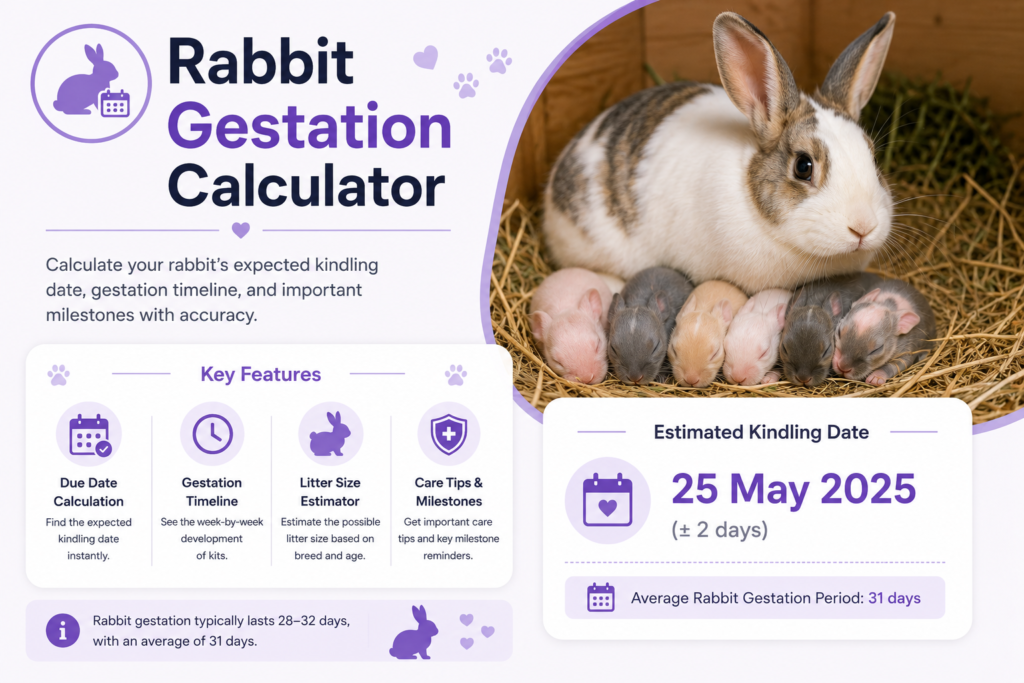
Rabbit Gestation Calculator: A Complete Guide to Rabbit Pregnancy
Rabbits are well-known for their prolific breeding — and for good reason. A doe (female rabbit) can carry a litter in as little as 28 days, making accurate pregnancy tracking essential for any rabbit owner or breeder. A rabbit gestation calculator makes it easy to estimate a doe’s kindling (birth) date, monitor pregnancy milestones, and prepare a safe environment well before the litter arrives.
This guide covers everything rabbit owners need to know — from how a rabbit pregnancy calculator works, to week-by-week development, common pregnancy signs, and kindling preparation tips.
What Is a Rabbit Gestation Calculator?
A rabbit gestation calculator is an online tool that estimates the due date (kindling date) of a pregnant doe based on her breeding date. By entering the date when the rabbit was mated, the calculator applies the average rabbit gestation period to generate a projected birth window.
Because rabbit pregnancies are short and litter management is time-sensitive, having a reliable rabbit due date calculator removes the guesswork from the process. It helps breeders schedule nest box placement, adjust feeding routines, and time veterinary check-ins appropriately.
These tools fall under the broader family of Animal Pregnancy Calculators — a category designed to give pet owners and breeders accurate, species-specific pregnancy tracking without the need for complex manual calculations.
What Is the Rabbit Gestation Period?
The rabbit gestation period is remarkably short compared to most mammals. On average, a rabbit’s pregnancy lasts between 28 and 35 days, with most litters arriving around day 31–32 after mating.
Here’s a quick reference table:
| Parameter | Details |
|---|---|
| Average gestation period | 28–35 days |
| Most common kindling window | Day 31–32 |
| Gestation period in weeks | Approximately 4–5 weeks |
| Litter size range | 1–14 kits (average 4–8) |
| Age of sexual maturity (doe) | 4–6 months (small breeds), 5–8 months (large breeds) |
Understanding how long rabbits are pregnant is the first step in effective pregnancy management. Because the gestation window is narrow, even a few days’ difference can matter when it comes to nest box placement and labor preparation.
How to Use a Rabbit Gestation Calculator
Using a rabbit breeding calculator is simple and requires minimal information. Here’s how the process typically works:
- Enter the mating date — the date the doe was bred with the buck (male rabbit).
- Select the breed (if applicable) — some calculators factor in breed-specific variations in gestation length.
- View the kindling date estimate — the tool calculates the projected due date based on the average rabbit gestation length.
- Review pregnancy milestones — some tools provide a breakdown of what happens at different stages throughout the pregnancy.
A few practical tips for using a rabbit pregnancy duration calculator effectively:
- If the doe was bred multiple times over consecutive days, use the first breeding date for the earliest possible estimate.
- Cross-reference with physical signs to validate the calculator’s output.
- Use the projected kindling date to set a reminder to place the nest box inside the hutch by day 27–28 at the latest.
For owners who care for multiple small animals, tools like the Guinea Pig Pregnancy Calculator or Dog Pregnancy Calculator are also available in the same biology hub, covering gestation periods across a wide range of species.
Signs and Symptoms of Rabbit Pregnancy
Knowing how to tell if a rabbit is pregnant can be tricky, especially in the early stages. Unlike some animals, does don’t always display obvious outward signs right away. Here are the most common pregnant rabbit signs to watch for:
Physical Signs
- Abdominal enlargement — visible rounding of the belly, usually noticeable from around day 10–14
- Weight gain — the doe’s body weight increases noticeably as the pregnancy progresses
- Nipple development — the nipples may become more prominent or slightly enlarged, especially as kindling approaches
- Fur pulling — in the final days before birth, does often pull fur from their dewlap (chin/chest area) to line the nest
Behavioral Signs
- Nesting behavior — the doe begins gathering hay, straw, or loose bedding material into a corner or nest area
- Increased territorial behavior — some pregnant does become more defensive of their space, especially as the due date nears
- Changes in appetite — appetite usually increases significantly from mid-pregnancy onward
- Reduced sociability — some does prefer to spend more time alone as the pregnancy progresses
The “Palpation” Method
Experienced breeders can gently palpate the doe’s abdomen around day 10–14 to detect the small, marble-like embryos. However, this technique requires practice and a very gentle touch — improper handling can cause harm to the developing embryos or stress the doe unnecessarily. When in doubt, it’s always safer to leave this to a veterinarian.
Rabbit Pregnancy Stages: What Happens Week by Week
The rabbit pregnancy week by week timeline is condensed compared to larger mammals, but each phase brings significant developmental changes:
Week 1 (Days 1–7): Fertilization and Cell Division
After mating, fertilization occurs rapidly — often within hours. The fertilized eggs begin dividing and travel toward the uterus for implantation. No visible signs are present during this week, and the doe’s behavior and appetite remain largely unchanged.
Week 2 (Days 8–14): Implantation and Early Embryonic Development
The embryos implant into the uterine wall and begin forming basic structures. By around day 10–12, an experienced handler may be able to detect small embryos through gentle abdominal palpation. Appetite may begin increasing slightly.
Week 3 (Days 15–21): Rapid Fetal Growth
Fetal development accelerates rapidly during the third week. Organs, limbs, and fur begin taking shape. The doe’s abdomen becomes more visibly rounded, and her food and water intake increases noticeably. This is a critical nutritional window — high-quality hay, fresh water, and appropriate pellets should be available at all times.
Week 4 (Days 22–28): Pre-Kindling Preparations
The doe’s nesting instincts kick in strongly during week 4. She will begin gathering materials to build a nest and may start pulling fur from her body. This is when the nest box should be placed in her enclosure — typically by day 27–28 — lined with soft hay or straw for her to arrange as she sees fit.
By the end of week 4, the doe is nearing the end of her pregnancy. Most litters arrive between day 28 and 35, with the peak window falling around days 31–32.
Rabbit Pregnancy Care Tips
Caring for a pregnant doe involves more than just tracking dates on a rabbit gestation calculator. Proper care throughout the pregnancy directly impacts the health of the mother and the survival rate of the kits:
- Provide unlimited fresh hay — timothy hay or orchard grass supports digestive health and forms the basis of the nest
- Increase pellet portions gradually — from mid-pregnancy onward, the doe needs more calories to support the growing litter
- Keep fresh water available at all times — hydration is critical, particularly in the final week before kindling
- Minimize handling stress — especially after day 14, avoid unnecessary handling that could stress the doe or disrupt the embryos
- Maintain a quiet, comfortable environment — a calm, low-traffic space reduces cortisol levels and supports a smoother pregnancy
- Monitor body weight weekly — significant weight loss mid-pregnancy can signal complications
Proper housing is equally important. A spacious, clean enclosure gives the doe room to nest comfortably and move freely. For owners planning a dedicated breeding setup, the Rabbit Cage Size Calculator can help determine the appropriate enclosure dimensions for a doe with a litter.
Preparing for Kindling: Rabbit Birth
Kindling is the term used for the rabbit birth process. Unlike some animals, rabbits tend to give birth very quickly — most litters are delivered within 30 minutes, though some may take up to an hour. Does usually kindle in the early morning hours.
Here’s how to prepare:
Set up the nest box by day 27:
Place a wooden or cardboard nest box inside the enclosure with a layer of clean, soft bedding. The doe will customize it with fur and hay once her nesting instincts fully engage.
Watch for pre-kindling signs:
- Restlessness and frequent circling
- Aggressive fur-pulling behavior
- Refusal of food
- Visible contractions or straining
During kindling:
It’s generally best to give the doe privacy and avoid disturbing her during labor. Checking the nest within a few hours after kindling — without removing the doe — is sufficient to assess litter size and condition.
Immediately after kindling:
- Count the kits carefully
- Remove any stillborn kits to prevent health risks to the mother
- Ensure the doe has access to fresh water and food right after birth
- Monitor the nest over the next 24–48 hours to confirm the kits are nursing
Rabbit Litter Size: What to Expect
Rabbit litter sizes vary considerably depending on the breed, the doe’s age, and her health status. On average, most domestic rabbit breeds deliver between 4 and 8 kits per litter, though litters of 10 or more are not unusual in highly prolific breeds like New Zealands or Californians.
| Breed Type | Average Litter Size |
|---|---|
| Small breeds (e.g., Netherland Dwarf) | 2–4 kits |
| Medium breeds (e.g., Dutch, Rex) | 4–6 kits |
| Large breeds (e.g., Flemish Giant) | 6–10 kits |
| Prolific commercial breeds | 8–14 kits |
Younger does (first-time mothers) often produce smaller litters. Litter size tends to increase over the first few pregnancies before gradually declining as the doe ages.
When to Consult a Veterinarian
While rabbit pregnancies generally proceed without intervention, certain situations warrant prompt veterinary attention:
- No kindling by day 35 — a pregnancy extending beyond 35 days may indicate a stillbirth situation or health complication
- Signs of distress during labor — prolonged straining without delivering kits after 20–30 minutes
- Unusually small or pale kits — may indicate nutritional deficiency or developmental issues
- The doe rejecting the litter — especially in first-time mothers; a vet can advise on hand-rearing protocols
- Post-kindling bleeding that doesn’t stop — some discharge is normal, but heavy bleeding is a red flag
- Mastitis (inflamed mammary glands) — the doe’s milk glands may become swollen, hot, or painful, requiring treatment
Having a trusted exotic animal or small mammal veterinarian on call before the kindling date is always a wise precaution.
Related Small Animal Pregnancy Tools
For households with multiple pet species, tracking gestation periods across animals can become complex. The Animal Pregnancy Calculators section on the biology hub covers a wide variety of species — including the Cat Pregnancy Calculator for feline pregnancies and the Dog Pregnancy Calculator for canine gestation tracking — all following the same simple input-and-calculate format that makes these tools so practical.
Frequently Asked Questions About Rabbit Gestation
How accurate is a rabbit gestation calculator?
A rabbit gestation calculator provides a reliable estimate based on the breeding date and average gestation length. Since most does kindle between days 28 and 35, the tool gives a practical planning window rather than an exact hour.
Can a doe get pregnant immediately after giving birth?
Yes. Does can become fertile again within hours of giving birth. Responsible breeders typically wait at least 4–6 weeks after kindling before rebreeding to allow the doe to recover and continue nursing.
How many times a year can a rabbit get pregnant?
In theory, a doe could have up to 8 litters per year — but this is not recommended for health and welfare reasons. Most responsible breeders limit does to 3–5 litters per year to prevent physical burnout.
Do rabbits show obvious pregnancy signs early on?
Not always. Early signs are subtle and easy to miss. The most reliable early indicator is abdominal palpation around day 10–14, best performed by someone experienced in rabbit handling.
What’s the difference between kindling and whelping?
Both terms refer to animal birth. “Kindling” is the term specific to rabbits, while “whelping” is used for dogs. The biology behind the processes is similar — only the species-specific terminology differs.
Conclusion
A rabbit gestation calculator is an indispensable tool for anyone involved in rabbit breeding or caring for a pregnant doe. By providing a clear, reliable estimate of the kindling date and helping owners plan week-by-week care, these tools take much of the uncertainty out of rabbit pregnancy management.
Combined with proper nutrition, a calm environment, a well-prepared nest box, and timely veterinary support, using a rabbit pregnancy calculator helps ensure that both the mother and her kits get the best possible start.
For a full suite of animal pregnancy tools and biology-related calculators in one convenient location, visit the Animal Pregnancy Calculators and Biology Tools hub.