Cat Pregnancy Calculator

Ahmad zee
Table of Contents
Toggle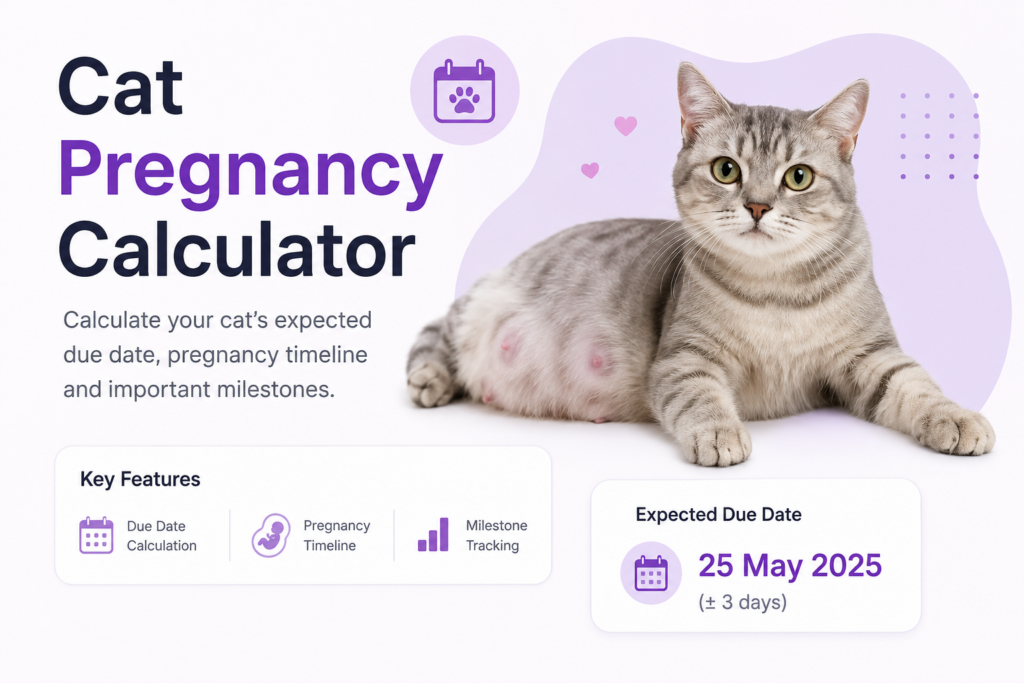
Cat Pregnancy Calculator: Everything Cat Owners Need to Know About Feline Gestation
Introduction to Cat Pregnancy
Welcoming a litter of kittens into the world is one of the most rewarding experiences a cat owner can have. Whether the pregnancy was planned or came as a surprise, understanding the feline gestation process helps owners provide the best possible care for their expecting cat. A cat pregnancy calculator takes the guesswork out of this exciting journey, helping owners track important milestones, prepare for birth, and ensure both mother and kittens stay healthy throughout the entire process.
A cat pregnancy calculator works by taking the estimated mating date or conception date and calculating when key stages of pregnancy occur, along with predicting the expected due date. This simple but powerful tool gives cat owners a clear timeline to follow, making preparation much easier and far less stressful.
Understanding Cat Pregnancy and Feline Gestation
Before diving into how a cat pregnancy calculator works, it helps to understand what actually happens during feline gestation. Cat pregnancy, also known as feline gestation, follows a relatively predictable timeline that differs significantly from human pregnancy in both duration and developmental stages.
How Long Is a Cat Pregnant?
A cat’s pregnancy lasts approximately 63 to 67 days from the date of conception, with the average feline gestation period sitting right around 65 days. Some cats deliver as early as 61 days or as late as 72 days, and both ends of this range can still produce healthy kittens. A cat pregnancy calculator uses the 63–67 day window as its standard reference point while acknowledging natural variation.
When Can Cats Become Pregnant?
Female cats, known as queens, reach sexual maturity between four and six months of age, though this varies by breed. Smaller breeds tend to mature earlier, while larger breeds like Maine Coons and Ragdolls may take longer. Once a queen enters her first heat cycle, she becomes capable of becoming pregnant. Since cats are seasonally polyestrous — meaning they experience multiple heat cycles throughout the breeding season — an unspayed queen can become pregnant multiple times per year if not managed carefully.
How Many Kittens Can a Cat Have?
The average cat litter contains between four and six kittens, though litters can range from just one kitten to as many as twelve. First-time mothers tend to have smaller litters, while experienced queens often deliver larger ones. Breed, age, nutrition, and overall health all influence litter size. A cat pregnancy calculator focuses on timing rather than litter size prediction, though some advanced tools offer general litter size estimates based on breed data.
How a Cat Pregnancy Calculator Works
A cat pregnancy calculator is a user-friendly digital tool designed to estimate key dates throughout a cat’s pregnancy based on one simple input — the mating or conception date. Understanding how this tool functions helps owners use it effectively and interpret its results with confidence.
What Information Does It Need?
Most cat pregnancy calculators require just one piece of information: the date when mating occurred. Some calculators also accept the date of a veterinary confirmation of pregnancy, using a typical gestational age at diagnosis to back-calculate the approximate conception date and predict the due date from there.
What Does a Cat Pregnancy Calculator Produce?
Once the mating date is entered, a cat pregnancy calculator generates a complete pregnancy timeline that typically includes:
- Estimated due date based on the standard 63–65 day gestation window
- Week-by-week developmental milestones showing what’s happening inside the womb at each stage
- Care and nutrition reminders indicating when dietary changes become important
- Veterinary visit recommendations highlighting optimal times for ultrasounds and health checks
- Nesting preparation reminders so owners have the birthing environment ready well in advance
This comprehensive output transforms a cat pregnancy calculator from a simple date predictor into a complete pregnancy management guide.
Accuracy of Cat Pregnancy Calculators
While a cat pregnancy calculator provides highly useful estimates, owners should understand that the results are approximations rather than guarantees. The exact due date depends on when fertilization actually occurred, which may differ slightly from the observed mating date. Additionally, individual variation means some cats naturally carry their litters for slightly longer or shorter periods. Using the calculator’s predicted dates as a planning framework while remaining flexible about the actual delivery date gives owners the most realistic expectations.
The Three Stages of Cat Pregnancy
A cat’s pregnancy unfolds across three broad stages, each bringing distinct physical and behavioral changes. A cat pregnancy calculator helps owners track which stage their cat is in at any given point.
First Stage: Early Pregnancy (Weeks 1–3)
During the first three weeks of pregnancy, fertilized eggs travel to the uterus and implant into the uterine wall. Outwardly, most cats show few obvious signs during this stage, making it easy to miss the early weeks entirely. Some cats experience mild morning sickness around weeks two and three, occasionally vomiting or showing reduced appetite, similar to early pregnancy nausea in humans.
Around three weeks after conception, a veterinarian can sometimes detect pregnancy through careful abdominal palpation, though this method carries some risk if performed incorrectly. Ultrasound provides a safer and more reliable confirmation method during this early window.
Second Stage: Middle Pregnancy (Weeks 4–6)
The middle stage of feline pregnancy brings the most visible physical changes. The queen’s abdomen begins rounding and expanding visibly around week four to five. Around week three to four, the nipples undergo a notable change called “pinking up” — they enlarge slightly and turn a deeper pink color. This nipple change often serves as one of the earliest visual signs that pregnancy has occurred.
By week four, a veterinary ultrasound can clearly detect individual fetuses and even count heartbeats. By week six, X-ray imaging becomes possible and provides the most accurate fetal count, helping owners and veterinarians prepare for the upcoming birth. A cat pregnancy calculator pinpoints these optimal diagnostic windows, reminding owners when to schedule important veterinary visits.
Third Stage: Late Pregnancy (Weeks 7–9)
The final weeks of feline pregnancy bring rapid fetal growth and significant physical changes for the mother. The queen’s abdomen becomes dramatically enlarged, and fetal movement may be visible or palpable from the outside. The queen’s appetite typically increases substantially during this stage as she nourishes rapidly developing kittens.
During weeks seven and eight, the queen usually begins nesting behavior — restlessly searching for a quiet, secure location to give birth. Providing a dedicated nesting box well before the expected due date gives her time to become comfortable with the space. A cat pregnancy calculator reminds owners to set up this nesting area approximately two weeks before the predicted due date.
As delivery approaches within the final 24 to 48 hours, the queen’s body temperature drops slightly below normal, dropping from the typical 38.3–39.2°C (101–102.5°F) range to around 37.8°C (100°F) or lower. This temperature drop serves as one of the most reliable indicators that labor will begin soon.
Signs of Cat Pregnancy: What to Watch For
While a cat pregnancy calculator handles the timeline, recognizing physical and behavioral signs of pregnancy helps owners confirm that pregnancy has occurred and understand what their cat is experiencing at each stage.
Physical Signs
Nipple Changes (Pinking Up) One of the earliest and most reliable physical signs of feline pregnancy, nipple pinking typically appears around 15 to 18 days after conception. The nipples enlarge noticeably and take on a distinctly rosier color compared to their pre-pregnancy appearance.
Abdominal Enlargement The queen’s belly begins rounding visibly around weeks four to five. By week six or seven, the enlargement becomes quite pronounced, and the outline of individual kittens may be visible or felt through the abdominal wall.
Weight Gain Pregnant cats typically gain between one and two kilograms (roughly two to four pounds) throughout the pregnancy, though this varies with litter size. Most weight gain occurs during the second half of pregnancy when fetal growth accelerates.
Increased Appetite Food intake typically increases noticeably during the second half of pregnancy, particularly during weeks six through nine when fetuses grow most rapidly.
Behavioral Signs
Increased Affection Many pregnant cats become noticeably more affectionate and attention-seeking, spending more time near their owners and seeking physical contact.
Nesting Behavior As the due date approaches, the queen begins searching for a suitable birthing location, often investigating closets, under beds, or other quiet, enclosed spaces. Providing a dedicated nesting box channels this instinct productively.
Reduced Activity As pregnancy advances, most queens become calmer and less active, spending more time resting and sleeping.
Morning Sickness Some queens experience mild nausea and vomiting during the early weeks, similar to morning sickness in human pregnancy. This typically resolves by week four.
Nutrition and Care During Cat Pregnancy
Proper nutrition and attentive care during pregnancy directly influence kitten health and the ease of delivery. A cat pregnancy calculator helps owners know when to make important dietary and care adjustments.
Dietary Changes During Pregnancy
During the first half of pregnancy, a cat’s nutritional needs remain relatively similar to her pre-pregnancy requirements. However, switching her to a high-quality kitten food or a food specifically formulated for pregnant and nursing cats from the midpoint of pregnancy onward provides the increased calories, protein, and nutrients that growing kittens require.
Kitten food contains higher levels of protein, fat, calcium, and phosphorus than adult maintenance formulas, making it ideal for supporting fetal development and preparing the queen’s body for lactation. Free-choice feeding during the second half of pregnancy ensures the queen can consume enough calories to support her expanding litter.
Supplements and Vitamins
Most high-quality commercial cat foods formulated for pregnancy provide complete nutrition without requiring additional supplements. Over-supplementing certain nutrients, particularly calcium, can actually cause problems during and after delivery. Always consult a veterinarian before adding any supplements to a pregnant cat’s diet.
Veterinary Care Throughout Pregnancy
Regular veterinary care during feline pregnancy supports both maternal and fetal health. A cat pregnancy calculator helps owners schedule visits at the most productive points in the pregnancy timeline:
Week 3–4: Initial pregnancy confirmation through ultrasound or palpation Week 6: Fetal count via X-ray to prepare for delivery Week 8: Pre-birth health check to ensure the queen is ready for labor
Exercise and Activity
Moderate activity remains healthy throughout most of the pregnancy. Normal play and movement support cardiovascular health and muscle tone, which benefit the delivery process. As the pregnancy advances and the abdomen enlarges, the queen will naturally reduce her activity level on her own. Preventing access to high jumps or falls becomes more important during the final weeks when abdominal size may affect balance and landing ability.
Parasite Control
Intestinal parasites can transfer from mother to kittens during nursing, making pre-birth deworming an important part of pregnancy care. A veterinarian can recommend safe deworming protocols appropriate for use during feline pregnancy. Many common dewormers are safe to use after the first trimester.
Preparing for Kitten Birth
A cat pregnancy calculator gives owners the predicted due date well in advance, allowing ample time to prepare everything needed for a smooth delivery. Preparation reduces stress for both the cat and her owner.
Setting Up the Nesting Box
The nesting box should be ready at least two weeks before the predicted due date, giving the queen time to investigate and become comfortable with the space. An ideal nesting box features:
- Appropriate size: Large enough for the queen to stretch out comfortably, with room for kittens
- Low entry point: A front opening low enough for easy entry but with sides tall enough to contain newborn kittens
- Privacy: Placed in a quiet, low-traffic area of the home
- Comfortable bedding: Soft, washable bedding that can be changed after birth
- Warmth: Positioned away from drafts and cold floors
Assembling a Kitten Birth Kit
Gathering necessary supplies in advance prevents scrambling during labor. A basic birth kit includes:
- Clean towels and washcloths
- Sterile scissors and unwaxed dental floss (for emergency cord cutting)
- Bulb syringe for clearing airways if needed
- Digital thermometer for monitoring the queen’s temperature
- Latex gloves
- Heating pad set to low (for warming kittens if necessary)
- Veterinarian’s emergency contact number
Knowing When to Call the Veterinarian
While most cat deliveries proceed without complications, knowing the warning signs that require veterinary intervention is essential. Contact a veterinarian immediately if:
- More than four hours pass between kitten births with obvious straining
- The queen strains actively for more than 30 minutes without producing a kitten
- A kitten appears stuck in the birth canal
- The queen shows signs of extreme distress, weakness, or loss of consciousness
- Any discharge appears bright red, green, or has a foul odor before labor begins
The Birthing Process: What to Expect
Understanding what normal feline labor looks like helps owners distinguish routine delivery from situations requiring veterinary assistance.
Stage One: Early Labor
Early labor involves uterine contractions beginning and the cervix dilating. The queen may appear restless, repeatedly visiting and rearranging her nesting box. She may vocalize more than usual, refuse food, and show visible discomfort. This stage typically lasts two to twelve hours before active labor begins.
Stage Two: Active Labor and Kitten Delivery
Active labor involves visible abdominal contractions and the delivery of kittens. Most cats deliver kittens in their amniotic sacs, which the queen immediately opens and removes. She then chews through the umbilical cord and vigorously licks each kitten to stimulate breathing and circulation. Kittens typically arrive every 30 to 60 minutes, though gaps of up to two hours between kittens can be normal in large litters.
Stage Three: Placental Delivery
Each kitten is followed by its placenta, which the queen typically consumes. While this behavior may seem alarming to first-time observers, consuming the placenta is entirely normal and instinctive. Keeping track of placental deliveries helps confirm that all placentas are expelled, since a retained placenta can cause serious postpartum infection.
Postpartum Care for Mother and Kittens
A cat pregnancy calculator focuses on the pregnancy itself, but understanding what comes after delivery helps owners support the mother and kittens through the critical newborn period.
Immediate Postpartum Period
In the hours following delivery, the queen focuses intensely on nursing, cleaning, and warming her kittens. She should receive fresh water, a small nutritious meal, and complete privacy during this bonding period. Minimizing disturbances during the first 24 to 48 hours supports successful bonding and nursing establishment.
Nutrition During Lactation
Nursing cats have dramatically increased caloric needs, often requiring two to four times their normal food intake to produce adequate milk for a full litter. Continuing the high-quality kitten food started during pregnancy supports lactation effectively. Free-choice feeding ensures she can consume enough calories throughout the nursing period.
Monitoring Kitten Health
Healthy newborn kittens nurse frequently, stay warm by clustering together or nursing, and gain weight steadily from birth. Weekly weight checks using a kitchen scale help confirm that all kittens are growing appropriately. Kittens that consistently lose weight or fail to nurse may require veterinary attention or supplemental feeding.
Postpartum Veterinary Visit
A veterinary check for both mother and kittens within 24 to 48 hours of birth confirms that all kittens are healthy, the queen is recovering normally, and no retained kittens or placentas remain. This visit also provides an opportunity to discuss kitten vaccination scheduling, deworming protocols, and the queen’s own postpartum health.
Using Calculators for Broader Animal and Biological Insights
Understanding feline reproductive biology connects naturally to broader biological principles that tools across the omnicalculator.store platform help explore. Cat owners interested in understanding how different species compare in their reproductive biology can explore the Dog Pregnancy Calculator to see how canine gestation differs from feline pregnancy in length, stages, and care requirements.
For owners interested in tracking their cat’s health across her entire life rather than just during pregnancy, the Cat Age Calculator provides valuable perspective on how a cat’s age in human-equivalent years influences her reproductive capacity and overall health needs at different life stages.
Those curious about the biological principles underlying animal development and cell growth can explore the Cell Doubling Time Calculator, which illustrates how the rapid cellular division driving kitten development during gestation follows mathematically predictable patterns.
For breeders managing multiple cats and tracking genetic traits across litters, the Punnett Square Calculator helps predict how coat color, pattern, and other heritable traits will likely distribute across offspring when cats with known genotypes are paired.
Cat owners wanting to understand the nutritional needs of their pregnant queen relative to her body weight and condition can also explore the Cat Calorie Calculator to ensure she receives optimal nutrition throughout pregnancy and lactation.
Special Considerations for Cat Breeders
Professional and hobby breeders working with purebred cats have additional considerations when using a cat pregnancy calculator and managing feline pregnancies.
Breed-Specific Gestation Variations
While the standard 63–67 day gestation window applies across most domestic cat breeds, some breeders report consistent breed-specific tendencies. Siamese cats, for example, sometimes carry litters for slightly longer periods, while certain other breeds may trend toward the shorter end of the normal range. Experienced breeders often track their specific queens’ gestation lengths over multiple pregnancies to establish individual baselines.
Managing Multiple Queens
Catteries managing multiple breeding queens benefit enormously from cat pregnancy calculator tools, which allow breeders to maintain clear timelines for all pregnant cats simultaneously. When multiple queens are due within a short period, organized timeline tracking prevents missed milestones and ensures each queen receives appropriate attention.
Record Keeping for Breeding Programs
Maintaining detailed records of each queen’s pregnancy — including mating dates, litter sizes, kitten birth weights, and any complications — helps breeders identify patterns, optimize breeding pairs, and improve outcomes over successive litters. A cat pregnancy calculator provides the timeline framework around which these records are organized.
Health Testing Before Breeding
Responsible breeders complete health testing for hereditary conditions relevant to their breed before proceeding with planned matings. Conditions such as hypertrophic cardiomyopathy (HCM), polycystic kidney disease (PKD), and various genetic disorders can be screened for before breeding, reducing the likelihood of producing affected kittens.
Common Questions About Cat Pregnancy Calculators
Pet owners new to feline reproduction often have questions about how cat pregnancy calculators work and what they can reliably predict.
Can a Cat Pregnancy Calculator Predict Litter Size?
Standard cat pregnancy calculators focus on gestational timing rather than litter size prediction. Litter size depends on the number of eggs ovulated and successfully fertilized, which varies between individuals and cannot be reliably predicted from external information alone. Veterinary ultrasound and X-ray provide the most accurate litter size estimates during pregnancy.
What If the Mating Date Is Unknown?
When the exact mating date is unknown — which happens frequently with cats that were exposed to males over an extended period or with unexpected pregnancies — a veterinarian can estimate gestational age through ultrasound or physical examination. The estimated conception date derived from this assessment can then be entered into a cat pregnancy calculator to generate an approximate due date.
How Accurate Is the Predicted Due Date?
A cat pregnancy calculator provides a prediction window rather than a specific date. Most calculators display a range of several days around the central estimate to reflect natural variation in feline gestation length. Planning for birth during the entire predicted window, rather than fixating on a single date, gives owners the most realistic expectations.
Can a Cat Become Pregnant While Already Pregnant?
A rare condition called superfetation — becoming pregnant while already pregnant — has been documented in cats, though it is uncommon. More commonly, a queen who mates with multiple males during a single heat cycle may produce a litter with kittens from different fathers, a phenomenon called superfecundation. This affects paternity rather than gestational timing and doesn’t change how a cat pregnancy calculator should be used.
Preventing Unwanted Cat Pregnancies
While cat pregnancy calculators serve owners managing planned pregnancies, understanding feline reproductive patterns also highlights the importance of responsible population management.
Spaying as the Responsible Choice
Spaying (ovariohysterectomy) permanently prevents pregnancy by removing the ovaries and uterus. Beyond preventing unwanted litters, spaying eliminates the risk of life-threatening conditions including pyometra (uterine infection) and significantly reduces the risk of mammary cancer. Spaying before the first heat cycle provides the maximum health benefit.
The Importance of Timing
Queens can become pregnant during their very first heat cycle, as early as four months of age. Scheduling spay surgery before this point prevents any possibility of accidental pregnancy. For cats already pregnant, discussing options with a veterinarian helps owners make informed decisions about their specific situation.
Conclusion: Your Essential Tool for Feline Pregnancy Management
A cat pregnancy calculator serves as an invaluable companion throughout the entire feline pregnancy journey, transforming what can feel like an overwhelming experience into an organized, manageable process. By providing a clear week-by-week timeline from conception to birth, a cat pregnancy calculator helps owners prepare their home, schedule veterinary visits at optimal times, recognize normal developmental milestones, and know when to seek professional help.
Whether managing a carefully planned breeding program or navigating an unexpected pregnancy, cat owners who use a cat pregnancy calculator feel more confident, more prepared, and better equipped to give their queen and her kittens the attentive care they deserve. The 63–67 day countdown from conception to birth moves surprisingly quickly, and having a reliable timeline tool ensures no important milestone gets missed along the way.
From setting up the nesting box at the right time to scheduling the post-birth veterinary check, a cat pregnancy calculator keeps everything organized so owners can focus on what matters most — welcoming a healthy, thriving litter of kittens into the world.